plateau false foxglove Care (Agalinis edwardsiana)

Also known as: Plateau Agalinis
plateau false foxglove

About plateau false foxglove

Plateau false foxglove (Agalinis edwardsiana) is a small, short-lived wildflower native to limestone and rocky grasslands of the Edwards Plateau region in Texas. It belongs to a group of plants that often live only one season.

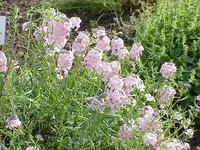
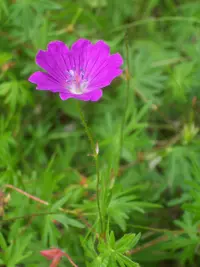
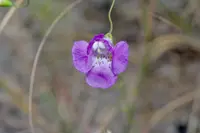
This species typically forms slender, upright stems with fine leaves and delicate tubular pink to purple flowers that attract pollinators. Plants usually appear airy rather than dense.

Agalinis edwardsiana is partly hemiparasitic, meaning it taps the roots of nearby plants for some nutrients. This trait makes it more challenging to establish and explains why it is not a typical garden ornamental.

Gardeners who want to care for plateau false foxglove should provide sunny, open conditions with well-drained, preferably calcareous or rocky soil that mimics its native habitat.

Main Plant Requirements

Care Difficulty

Hard Care

Light Preference

Full Sun

Water Requirements

Moderate Water

Temperature Preference

Warm Climate

Hardiness Zone

7–9

Soil Texture

Sandy, Loamy, Rocky

Soil pH

Slightly acidic (6.5–7.0), Neutral (7.0)

Soil Drainage

Well-drained

Fertilization

Minimal (feed rarely)

Get Personalized Care Plan

Scan your plant to receive care tips personalized for your specific plant

Available on iOS and Android

How to Care for the plateau false foxglove

This species prefers strong sun typical of its open, rocky habitat.

  • Provide 6–8 hours of direct sun daily; plateau false foxglove performs best in full, unobstructed exposure.
  • Accepts light afternoon shade in very hot regions, but flowering and compact growth decrease if it receives less than 4–5 hours of direct sun.
  • Avoid dense shade, which causes weak, lanky stems and sparse blooms; in summer, monitor for leaf scorch only on unusually reflective, exposed sites.

This annual is adapted to dry, fast-draining sites and is sensitive to prolonged wetness.

  • Water only when the top 5–7 cm of soil feel completely dry, using a deep soak rather than frequent light splashes.
  • Ensure sharply draining, sandy or rocky soil; standing water, slow drainage, or consistently damp soil often lead to root rot and stem collapse in Agalinis edwardsiana.
  • During prolonged drought, watch for dull, folding foliage as a sign to water, but reduce or stop supplemental watering in cool or rainy seasons.

This plant is a warm-season annual adapted to hot, dry regions with mild winters.

  • Active growth and flowering occur best around 75–90°F (24–32°C), with good tolerance of short spikes up to about 95°F (35°C) if soil is not waterlogged.
  • Seeds and young plants are vulnerable to frost; growth usually stops near 35°F (2°C), and hard frost below 30°F (-1°C) can kill above-ground parts.
  • In cooler climates, sow after risk of frost has passed; in hot areas, natural populations handle summer heat if roots are in freely draining, low-humidity conditions.

This species tolerates a wide range of outdoor humidity and usually does not need special humidity management.

This species prefers open, mineral soils with fast drainage rather than rich, heavy substrates.

  • Use a sandy or gravelly mix with minimal organic matter to mimic its native calcareous prairie and plateau habitats.
  • Aim for slightly alkaline to neutral pH, roughly 7.0–8.0, avoiding strongly acidic potting mixes and peat-heavy blends.
  • Improve drainage and aeration by blending coarse sand and small gravel into any base mix so water passes through within seconds.
  • Avoid compacted clay, waterlogged spots, or thick mulch layers that hold moisture around the crown of Agalinis edwardsiana.

This species is generally not ideal for container growing beyond short-term observation or study.

This native wildflower typically grows in lean soils and usually does not need supplemental fertilizer.

Pruning needs for Agalinis edwardsiana are minimal and mainly focused on sanitation.

  • Cut back spent flowering stems in late summer or early fall to keep plants tidy and reduce self-seeding if needed.
  • Remove dead, diseased, or storm-damaged stems at ground level using clean, sharp hand pruners.
  • Avoid heavy cutting into green, healthy growth, as this short-lived species relies on current-season stems for flowering.

This species is rarely kept in containers and is best managed by careful transplanting in its native-style bed.

  • Transplant only young seedlings, as older plants resent disturbance and may fail to reestablish.
  • Schedule any moves in early spring, after frost risk passes but before strong heat, to reduce stress.
  • Choose a sunny, well-drained, low-fertility site that matches the original soil as closely as possible.
  • Water gently but thoroughly after transplanting, then keep soil just lightly moist until new growth resumes.

Propagation of Agalinis edwardsiana is usually done by seed rather than vegetative methods.

  • Collect mature, dry seed heads at the end of the flowering season and store seeds cool and dry.
  • Sow seeds in fall outdoors so natural winter chilling aids germination in spring.
  • Press seeds lightly onto the soil surface in a sunny, well-drained site without burying them deeply.
  • Avoid division or cuttings, as this species does not respond well to root disturbance or vegetative propagation.

This short-lived native is adapted to typical outdoor winters in its range and usually needs no special care.

  • In cold regions, allow stems to stand through winter to mark the planting area and catch snow for light insulation.
  • Container-grown plateau false foxglove, if attempted, should be overwintered in a cold but frost-free, very bright location.
  • Do not overwater dormant or dead-top plants in winter, as consistently wet soil increases root loss.

Care Tips

Annual reseeding

Collect seed from mature brown capsules in late summer and broadcast it immediately over adjacent suitable ground to maintain populations, since this annual species rarely persists long in one spot without renewal.

Host grass management

Maintain a mosaic of low, sparse native grasses by mowing or trimming nearby vegetation in late fall or very early spring so roots can access suitable hosts while still receiving full light at ground level.

Controlled disturbance

Lightly disturb or scuff the top 0.5–1 cm of soil in fall before seed drop to create small patches of bare mineral soil that greatly improve germination and establishment.

Avoid soil enrichment

Do not amend the planting area with compost or rich fertilizers, since this encourages aggressive competitors that can quickly shade out this small hemiparasitic wildflower.

Seed source planning

Source regionally appropriate, ethically collected seed and sow it in multiple nearby micro-sites rather than a single patch to spread risk and improve long-term success when caring for plateau false foxglove.

Common Pests and Diseases

Dodder parasitism

This pest is a leafless, threadlike parasitic vine that twines around stems and draws nutrients from the host, leading to stunting and reduced flowering. Symptoms include orange or yellow stringy stems wrapped tightly around plateau false foxglove and connected by small suckers called haustoria.

Solution

Cut and remove all visible dodder stems as soon as they appear, clipping several inches below each attachment point and bagging the material so it cannot re-root. In small plantings, hand-weed dodder seedlings before they attach to hosts and avoid moving contaminated soil, seed, or plant material between sites as part of careful Agalinis edwardsiana care.

Orobanchaceae rust

This disease causes small yellow to brown spots on leaves and stems that can merge into larger lesions, sometimes forming powdery orange pustules on the surface. Symptoms include early leaf yellowing and premature leaf drop in dense, humid stands.

Solution

Remove and destroy heavily infected stems to reduce the spore load, and avoid overhead watering so foliage dries quickly. In restoration or garden settings, thin overly dense patches to improve airflow and rotate plantings to new sites if severe rust recurs year after year.

Leaf spot complex

This disease is caused by several fungi that produce irregular brown, tan, or purple-edged spots on leaves, often starting on lower foliage in late season. Symptoms include scattered lesions that may coalesce, leading to partial defoliation and reduced seed set.

Solution

Prune and discard spotted, dying foliage and end-of-season plant debris to break the fungal cycle and keep the canopy less crowded. Provide full sun exposure and good air circulation, and if overhead irrigation is used, water early in the day so leaves dry rapidly.

Stem-boring caterpillars

These insects tunnel inside stems, causing wilting, stem breakage, and hollow or discolored stems that may die back from the tunneling point upward. Symptoms include frass (sawdust-like droppings) at small entry holes and sudden collapse of individual flowering stems.

Solution

Cut and remove wilted or suspect stems below the boring site and destroy them to remove larvae before they complete development. Encourage local predators and parasitoids by maintaining diverse native vegetation nearby, and avoid broad-spectrum insecticides that may harm beneficial insects associated with this hemiparasitic species.

Interesting Facts

Specialist limestone endemic

This species is restricted to thin, rocky soils over Edwards Plateau limestone in central Texas and does not naturally occur outside this region. Its distribution closely tracks the outcrop pattern of this specific geologic formation.

Delicate hemiparasitic lifestyle

Like other Agalinis species, it is a hemiparasite, meaning it photosynthesizes but also taps into the roots of nearby grasses and forbs to obtain water and dissolved nutrients through specialized organs called haustoria.

Late-summer pollinator resource

It produces small, tubular pink to rose flowers in late summer to early fall, providing nectar and pollen when many warm-season grasses have already finished flowering, supporting native bees and other pollinators on the Edwards Plateau rangelands.

FAQs about plateau false foxglove

This species behaves as an annual wildflower. Each plant grows, flowers, sets seed, and dies within one growing season. Long-term persistence in a site depends on successful reseeding and suitable habitat conditions each year.

Grow Healthy Plants with Botan Care

Keep your plants happy and healthy with plant identification, disease detection, and easy care guidance.

Botan plant care app — identify plants on mobile

Explore More Plants