Siberian bugloss Care (Brunnera macrophylla)

Also known as: Siberian bugloss, largeleaf brunnera, Great Forget-me-not
Siberian bugloss

About Siberian bugloss

Siberian bugloss, Brunnera macrophylla, is a herbaceous perennial valued mainly for its large, heart-shaped leaves and delicate spring flowers. It forms low, spreading clumps that create a dense groundcover over time.

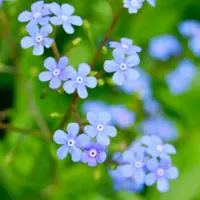
Leaves are typically rich green or silver-variegated, giving strong contrast in shaded borders and under shrubs. In spring, airy stems carry small blue flowers that resemble forget-me-nots.

This species is native to woodland areas of Eastern Europe and western Asia, so it naturally favors cool conditions, partial shade, and moist, humus-rich soil. These traits make it generally reliable and long-lived if planted in a suitable site.

Understanding how to care for Siberian bugloss mainly involves providing consistent moisture, some shade, and protection from strong afternoon sun and very dry soil.

Main Plant Requirements

Care Difficulty

Easy Care

Light Preference

Partial Shade

Water Requirements

Regular Water

Temperature Preference

Cold Hardy

Hardiness Zone

3–8

Soil Texture

Loamy, Silty, Organic-rich

Soil pH

Acidic (5.5–6.5), Slightly acidic (6.5–7.0)

Soil Drainage

Moist but well-drained

Fertilization

Minimal (feed rarely)

Get Personalized Care Plan

Scan your plant to receive care tips personalized for your specific plant

Available on iOS and Android

How to Care for the Siberian bugloss

Brunnera macrophylla prefers cool, shaded conditions with only gentle direct sun.

  • Provide dappled or filtered light with 1–3 hours of mild morning sun; avoid harsh midday and afternoon sun that can scorch foliage, especially variegated forms.
  • Plant in partial to full shade; Siberian bugloss grows well under open tree canopies, on the north or east side of buildings, or in other bright-shade locations.
  • In hotter summers, increase shade as light intensifies; in cooler climates, very light morning sun can improve flowering without stressing the plant.

This plant prefers consistently moist but not saturated soil, especially during active growth.

  • Aim for soil that stays evenly damp; water when the top 2–3 cm feels slightly dry, focusing on spring and early summer when growth and flowering are strongest.
  • Use soil with good drainage and added organic matter so water moves through freely; standing water around roots increases risk of rot and leaf yellowing.
  • In hot, dry weather, check moisture more often for wilting or drooping leaves; reduce watering in late fall and winter as Brunnera macrophylla goes dormant and uses less water.

This cool-climate perennial handles a wide temperature range but dislikes extreme heat combined with strong sun.

  • Optimal growing temperatures are about 55–75°F (13–24°C); foliage looks best in the cooler part of this range, especially in spring and early summer.
  • Dormant crowns tolerate winter cold down to about -20°F (-29°C) when planted in the ground with mulch for insulation.
  • In summer, growth may slow when temperatures stay above 85°F (29°C); provide extra shade and mulch to keep roots cooler and reduce heat stress.

This woodland perennial manages well in typical outdoor humidity but dislikes prolonged very dry air.

  • Target 40–60% humidity in garden settings, which is usually met naturally in shaded beds.
  • Short-lived wilting, leaf edge crisping, and slow recovery after watering can indicate humidity stress in Siberian bugloss during hot, dry spells.
  • Increase humidity outdoors by mulching 5–8 cm deep and grouping plants to reduce air movement around foliage.

This species grows best in consistently moist, humus-rich soil with stable structure.

  • Use a loamy, organic-rich base that holds moisture but still feels springy and open around the roots.
  • Aim for slightly acidic to neutral pH, roughly 6.0–7.0, which supports nutrient availability without additional correction.
  • Blend garden loam with 30–40% compost and 10–20% fine bark or leaf mold to improve organic content and long-term moisture buffering.
  • Avoid heavy, compacted clay or spots where water pools; where drainage is slow, incorporate coarse sand or fine grit into the top 20–25 cm to increase aeration.

This plant is suitable for container growing in shaded patios or balconies.

  • Choose a pot at least 25–30 cm wide with more breadth than depth to allow its clumping root system to spread laterally.
  • Use a heavier material such as ceramic or stone when placed outdoors so wind cannot tip over the leafy mound.
  • Select a container mix that drains freely yet retains moisture, then raise the pot slightly on feet to prevent the drain holes from sealing against the ground.

Brunnera macrophylla is a modest feeder that benefits from light nutrition in spring and early summer.

  • Apply a balanced, slow-release granular fertilizer (around 10-10-10) once in early spring as new growth appears.
  • Supplement with a thin layer of compost around the root zone to improve soil structure and steady nutrient supply.
  • During active growth, liquid feed at 1/2 strength every 4–6 weeks if soil is poor; skip on rich beds.
  • Stop feeding Siberian bugloss in late summer and do not fertilize during winter dormancy.

Brunnera macrophylla responds well to light, targeted pruning that keeps the clump tidy and healthy.

  • In late spring or after flowering, remove spent flower stalks at the base to maintain a neat appearance.
  • Trim yellowing, tattered, or diseased leaves during the growing season to reduce fungal issues.
  • In late fall or very early spring, cut back dead foliage to just above crown level to encourage fresh growth.
  • Use clean, sharp hand pruners or scissors and disinfect blades when removing diseased tissue.

This woodland perennial is usually grown in the ground, with transplanting or occasional division more common than frequent repotting.

  • Transplant or divide clumps every 3–5 years in early spring or early fall, when temperatures are mild.
  • Move plants when growth becomes crowded, flowering declines, or roots fill and circle a container.
  • Lift the clump carefully, tease apart or slice into sections with at least 2–3 buds and a good root portion.
  • Replant divisions promptly at the same depth, water thoroughly, and shade for a few days to limit transplant shock.

Brunnera macrophylla is most reliably propagated by division, with seeds used when breeding or increasing numbers more slowly.

  • Divide established clumps in early spring or early fall, when soil is cool and moist.
  • Lift the plant, then cut or pull apart sections, keeping healthy roots and several growing buds on each piece.
  • Replant divisions at original depth, firm soil gently, and water consistently until well rooted.
  • For seed, sow fresh seed in trays outdoors in fall; a natural cold period aids germination in spring.

This perennial is cold hardy in much of the US and usually needs only minimal winter care once established.

  • Tolerates frost and freezing temperatures when grown in the ground, with foliage naturally dying back.
  • After hard frost, remove collapsed leaves to limit rot and overwintering pests, leaving crown undisturbed.
  • Apply a 5–8 cm layer of mulch around the root zone in colder regions, keeping mulch slightly away from crowns.
  • Move container-grown plants into a sheltered, unheated but frost-sheltered spot to prevent rootball freezing solid.

Care Tips

Mulch Collar Placement

Keep an open 2–3 in mulch-free ring around the crown to prevent rot while still mulching the root zone to keep the soil cool and evenly moist.

Leaf Tatter Management

In midsummer, shear back heavily tattered or slug-damaged leaves to just above the crown, then water and mulch lightly to encourage a fresh flush of foliage.

Slugs Targeted Control

Place shallow traps or iron phosphate slug bait at dusk around clumps in early spring, when emerging leaves are most vulnerable, and repeat after heavy rain for consistent protection.

Division For Rejuvenation

Divide congested clumps every 3–5 years in early spring or early fall, replanting only firm, healthy sections with several buds to maintain vigor and stable leaf variegation when growing Siberian bugloss.

Edge And Neighbor Choice

Site plants just inside a bed edge or among shallow-rooted companions so their fine roots are not outcompeted by aggressive groundcovers or thirsty shrubs.

Common Pests and Diseases

Slugs and snails

This pest is one of the main problems for Brunnera in moist, shady beds, chewing irregular holes in leaves and sometimes stripping young foliage overnight.

Solution

Hand-pick in the evening, use iron phosphate bait around plants, and reduce hiding spots such as dense mulch or debris; copper tape barriers around containers or raised beds can also help. Keep soil evenly moist but not soggy and avoid overhead watering late in the day to make the area less attractive.

Powdery mildew

This disease causes a white, powdery coating on the upper leaf surface, leading to dull, distorted foliage and reduced vigor, especially in crowded or dry, shady sites.

Solution

Remove and discard affected leaves to reduce spores, then improve air movement by thinning nearby plants and avoiding overcrowding. Water at soil level, keep foliage dry, and if needed use a sulfur or potassium bicarbonate fungicide labeled for ornamentals, following package directions.

Leaf spot

This disease produces brown or black spots on leaves, often with a yellow halo, which can merge into larger dead patches in prolonged wet or humid conditions.

Solution

Cut off and dispose of spotted leaves and fallen debris to limit spread, and avoid overhead irrigation so foliage dries quickly. Increase spacing and airflow, and in severe cases use a copper-based fungicide labeled for leaf spot on ornamentals, applying only as directed.

Aphids

These insects cluster on soft stems and the undersides of leaves, sucking sap and causing curling, distortion, and sticky honeydew that can attract sooty mold.

Solution

Spray colonies off with a firm stream of water, then treat remaining insects with insecticidal soap or a ready-to-use neem oil product, covering leaf undersides thoroughly. Encourage natural predators such as lady beetles by avoiding broad-spectrum insecticides in the garden.

Spider mites

This pest becomes more noticeable in hot, dry conditions, causing fine stippling, dulling of foliage color, and sometimes delicate webbing on the undersides of leaves.

Solution

Rinse foliage thoroughly with water, focusing on leaf undersides, and repeat several times a week to knock down populations. Increase humidity around the plant, reduce heat stress, and if needed use horticultural oil or insecticidal soap labeled for mites, applied in repeated treatments according to directions for Brunnera macrophylla care.

Interesting Facts

Heart-shaped shade leaves

This species naturally forms dense clumps of large, heart-shaped leaves that are adapted to capture limited light on forest floors, giving it strong performance in dappled or partial shade compared to many other ornamentals.

Forget-me-not mimic flowers

Its small blue flowers closely resemble those of true forget-me-nots (Myosotis), but genetically it belongs to a different family section within Boraginaceae, illustrating convergent evolution in flower appearance to attract similar pollinators.

Selected for leaf variegation

Many modern garden cultivars have been bred from this species for striking silver or variegated foliage, which results from reduced chlorophyll in some leaf tissues, making the leaf veins and green areas stand out more strongly.

Botan icon

Did you know?

The species is native to the humid woodlands of Eastern Europe and Western Asia, including regions around the Caucasus, where it naturally occurs along stream banks and in deciduous forests, contributing to the understory layer that helps stabilize soil and maintain moisture.

FAQs about Siberian bugloss

This species forms slow, expanding clumps and spreads mainly by short rhizomes, not running roots. It can gently enlarge over several years but is not usually considered aggressive if given moderate space and basic Brunnera macrophylla care.

Grow Healthy Plants with Botan Care

Keep your plants happy and healthy with plant identification, disease detection, and easy care guidance.

Botan plant care app — identify plants on mobile

Explore More Plants