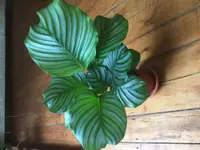
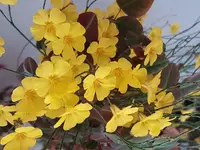
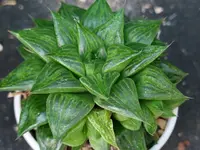
Pygmy tree orchid Care (Bulbophyllum pygmaeum)

Pygmy tree orchid

About Pygmy tree orchid

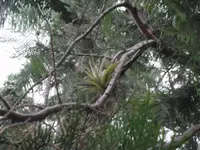
Bulbophyllum pygmaeum, commonly called the pygmy tree orchid, is a miniature epiphytic orchid that often grows on tree trunks and branches. It forms tight clumps of tiny pseudobulbs and small, often subtly colored flowers.

This species is native to parts of Southeast Asia, where it thrives in warm, humid forests with moving air and regular moisture. Its small size makes it suitable for mounts or small pots.

The plant can be moderately challenging, as it dislikes drying out completely and is sensitive to poor air circulation. Understanding how to care for Pygmy tree orchid mainly involves providing stable humidity, gentle indirect light, and consistently moist but not waterlogged roots.

Main Plant Requirements

Care Difficulty

Hard Care

Light Preference

Partial Shade

Water Requirements

Keep Soil Moist

Temperature Preference

Tropical / Frost Sensitive

Hardiness Zone

11–13

Soil Texture

Peaty, Organic-rich, Loamy

Soil pH

Acidic (5.5–6.5)

Soil Drainage

Moist but well-drained

Fertilization

Light (every 4–6 weeks)

Get Personalized Care Plan

Scan your plant to receive care tips personalized for your specific plant

Available on iOS and Android

How to Care for the Pygmy tree orchid

This miniature epiphytic orchid prefers bright, gentle light that mimics its forest habitat.

  • Provide 6–8 hours of bright, filtered light each day, such as dappled shade under taller plants or 30–50% shade cloth outdoors.
  • Allow soft morning sun but avoid direct midday or afternoon sun, which can scorch leaves and cause yellowing or reddish patches on Pygmy tree orchid foliage.
  • In winter, increase exposure by moving to a brighter spot or thinning shade, but still protect from low-angle harsh sun and sudden light changes.

Bulbophyllum pygmaeum prefers consistently moist conditions without waterlogging.

  • Water when the surface to about 1–2 cm deep feels just starting to dry, keeping the root zone evenly moist but never saturated.
  • Ensure very free-draining orchid media so excess water runs off quickly, reducing the risk of root rot, limp pseudobulbs, and sour smells from overwatering.
  • In warmer months, expect to water more often and watch for wrinkling pseudobulbs or dull leaves as signs of underwatering; reduce frequency slightly in cooler seasons.

This species thrives in intermediate to warm conditions with stable temperatures.

  • Aim for daytime temperatures of 70–80°F (21–27°C) and nighttime temperatures of 60–68°F (16–20°C) for steady growth.
  • Protect from cold; growth slows below about 55°F (13°C) and the plant should not be exposed to temperatures near 40°F (4°C) or frost, which can damage tissues.
  • During hot spells above 86°F (30°C), increase air movement and humidity and shade slightly more to prevent heat stress and leaf scorch.

This miniature epiphytic orchid needs high, stable humidity to grow well indoors.

  • Aim for 70–90% humidity; it tolerates brief dips near 60% but declines in drier rooms.
  • Crisping leaf tips, stalled growth, and wrinkled pseudobulbs indicate air that is too dry.
  • Use a small humidifier, grouped plants, and a pebble tray under the Pygmy tree orchid to raise local humidity.

Bulbophyllum pygmaeum prefers an airy, moisture-retentive, bark-based medium rather than dense mineral soil.

  • Use a fine orchid mix of small bark, chopped sphagnum moss, and a little perlite to keep roots moist yet aerated.
  • Ensure very rapid drainage; water should flush through in seconds without leaving the mix waterlogged.
  • Aim for slightly acidic conditions around pH 5.5–6.5, which favor nutrient availability for epiphytic orchids.
  • Avoid compact peat soils, heavy garden loam, or sand-heavy mixes that suffocate roots or stay soggy around the rhizome.

This species is well suited to container growing, especially in shallow orchid pots or mounted baskets.

  • Choose a shallow, wide pot so the creeping rhizome can spread horizontally without forcing thick layers of medium over it.
  • Use numerous side slits or mesh-style containers to keep the fine, surface roots well aerated while still holding moisture.
  • Place the container in a stable outer cachepot or tray to prevent tipping from uneven, spreading foliage and wet medium weight.

This miniature epiphytic orchid benefits from light, consistent feeding during active growth.

  • Use a balanced orchid fertilizer (for example 20-20-20) diluted to 1/4–1/2 strength in low-mineral water.
  • Feed every 2–3 weeks during the warm growing season when new roots and pseudobulbs are forming.
  • In autumn and winter, reduce feeding to monthly or pause if growth stops in your conditions.
  • Flush the medium with plain water every 3–4 feedings to prevent salt buildup on the Pygmy tree orchid roots.

Pruning Bulbophyllum pygmaeum is minimal and mainly hygienic rather than shaping.

  • Best timing is after flowering flushes, when it is easy to see spent spikes and dead tissue.
  • Remove only dead, damaged, or desiccated leaves, pseudobulbs, and flower spikes using fine sterilized scissors.
  • Avoid cutting healthy pseudobulbs, as they store water and nutrients and support future flowering.
  • Disinfect tools with alcohol or flame between plants to reduce the risk of spreading fungal or bacterial disease.

This compact Bulbophyllum prefers infrequent repotting and reacts poorly to frequent disturbance.

  • Plan to repot every 2–3 years or when roots overrun the mount or circle the pot and growth slows.
  • Best timing is early spring, just before active growth, so new roots can quickly anchor into fresh medium.
  • Use a small, well-draining orchid mix or mount on cork or bark, keeping the rhizome just at the surface.
  • Handle roots gently, keep them slightly moist during the process, and shade the plant for 1–2 weeks afterward to reduce stress.

Bulbophyllum pygmaeum is most reliably propagated by careful division of mature clumps.

  • Divide in late spring or early summer when active root growth supports recovery.
  • Select a healthy section with at least 3–5 connected pseudobulbs and several viable roots.
  • Cut the rhizome with a sterile blade, then secure each division to fresh bark mount or fine orchid mix.
  • Maintain high humidity, bright filtered light, and gentle air movement until new roots and shoots develop.

This warmth-loving orchid is not frost tolerant and needs sheltered conditions in winter.

  • Keep temperatures above 55°F; aim for 60–70°F during the coldest months for reliable survival.
  • Grow Bulbophyllum pygmaeum indoors or in a heated greenhouse wherever outdoor frost is possible.
  • Maintain moderate humidity (50–70%) with good air movement to avoid fungal outbreaks in cool, still air.
  • Reduce watering slightly in low light, keeping the medium just barely moist, never soggy or bone dry.

Care Tips

Mounting strategy

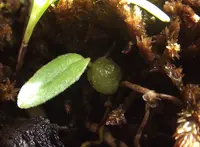
Use a small piece of cork or hardwood with a thin layer of sphagnum moss and secure the plant with soft wire or nylon fishing line so roots have firm contact but are not strangled as they thicken.

Microclimate shielding

Place the plant inside a ventilated orchid case or use a clear plastic storage box with several drilled holes to stabilize humidity and airflow around this miniature while preventing cold or dry drafts.

Targeted hydration

When mounted, dip only the root zone in room-temperature water for a few minutes and then let it drain fully, keeping the rhizome and leaves from staying visibly wet for more than 30–40 minutes to limit rot.

Bloom protection

During flowering, reduce handling and avoid strong air blasts from fans so the tiny, short-lived blooms are not desiccated or knocked off prematurely when caring for Pygmy tree orchid.

Compact-spacing setup

Group several small mounts close together on a tray of damp leca or pebbles so they share a stable humid micro-layer while still allowing air to move freely between them to reduce fungal issues when you grow Bulbophyllum pygmaeum.

Common Pests and Diseases

Spider mites

This pest thrives on Bulbophyllum foliage in warm, dry, still air and can quickly damage the thin leaves and pseudobulbs. Symptoms include very fine webbing, tiny moving dots on the underside of leaves, and a dull, stippled look to the foliage.

Solution

Rinse plants thoroughly with lukewarm water, focusing on the underside of leaves, and increase humidity and air movement around the plant. For persistent mites, use repeated applications of insecticidal soap or a horticultural oil labeled for orchids, making sure to spray all leaf surfaces and nearby mounts or slabs.

Soft scale

These insects attach along leaf bases, pseudobulbs, and rhizomes, feeding on sap and excreting sticky honeydew that promotes sooty mold. Symptoms include small tan, brown, or whitish bumps that do not wipe off easily and a sticky residue on leaves or benches.

Solution

Isolate the plant, then wipe affected areas with cotton swabs dipped in isopropyl alcohol to remove adult scales and their protective covers. Follow up with several rounds of insecticidal soap or a lightweight horticultural oil at 7–10 day intervals, and reduce overcrowding so air circulates freely around the clump when caring for Pygmy tree orchid.

Bacterial brown spot

This disease often develops on constantly wet leaves and crowded Bulbophyllum mounts with poor air circulation. Symptoms include soft, water-soaked spots that turn brown or black and may spread quickly along thin leaves or into pseudobulbs.

Solution

Immediately remove and discard affected leaves or pseudobulbs with sterile tools, cutting well into healthy tissue, and keep the plant drier on the foliage for a time. Improve air movement, water early in the day, and avoid standing water on leaves; in severe cases, apply a bactericide labeled for orchids according to the product directions.

Leaf fungal blotch

This disease appears when plants stay cool and damp, especially on tight mounts or in shaded, poorly ventilated conditions. Symptoms include irregular dark spots or blotches on leaves, sometimes with a yellow halo, that may merge and cause partial leaf dieback.

Solution

Remove spotted leaves or cut out affected sections with a sterile blade, and allow the plant to dry more quickly between waterings by improving air circulation and light levels within the recommended range. If new spots continue to appear, apply a broad-spectrum fungicide approved for orchids and avoid prolonged leaf wetness, especially at night.

Mealybugs

These insects hide in crevices between pseudobulbs, around roots, and beneath sheaths, where they suck sap and weaken the plant. Symptoms include white cottony clusters, distorted new growth, and sticky honeydew that can attract sooty mold.

Solution

Inspect all tight spaces on the mount or pot, then dab visible mealybugs with isopropyl alcohol using a cotton swab and rinse the plant thoroughly. Repeat physical removal and treat with insecticidal soap or a systemic insecticide suitable for orchids, and quarantine the plant until no new mealybugs appear.

Interesting Facts

Miniature epiphytic growth

This species forms tiny, mat-like clumps on tree trunks or branches, often only a few centimeters across, making it one of the truly miniature orchids in its genus.

Specialized pseudobulbs

Its very small, closely spaced pseudobulbs store water and nutrients, allowing the plant to withstand short dry spells in exposed tree-canopy microhabitats.

Fly-oriented flowers

The flowers are minute and often inconspicuous to humans but are structured to attract small insects, likely tiny flies, which act as pollinators in its native forest habitat.

Botan icon

Did you know?

Despite its tiny size, this orchid can form extensive mats over bark or moss, creating a living carpet that supports microhabitats for small invertebrates and microorganisms in humid forests.

FAQs about Pygmy tree orchid

This species usually performs best in controlled indoor or greenhouse conditions where warmth, humidity, and airflow stay stable. Outdoor growing suits only frost-free, humid, shaded microclimates that mimic cloud forest conditions. Many growers focus on Pygmy tree orchid indoor care instead.

Grow Healthy Plants with Botan Care

Keep your plants happy and healthy with plant identification, disease detection, and easy care guidance.

Botan plant care app — identify plants on mobile

Explore More Plants