Pinch For Bushiness
When young plants reach 8–10 cm tall, pinch out the soft shoot tips above the third or fourth leaf pair to encourage branching and a denser flowering display.

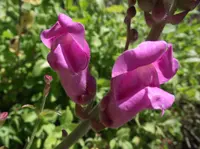
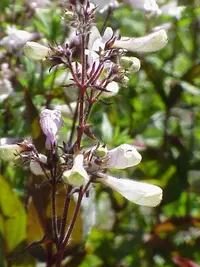
Antirrhinum australe is a perennial snapdragon relative with upright stems, narrow leaves, and showy tubular flowers that attract pollinators. It typically forms loose clumps or patches rather than a dense mat. Native to parts of South America, it grows on rocky slopes and open, sunny sites with good natural drainage. This background makes it generally tolerant of poor, well-drained soils and periods of dryness once established. It is moderately easy to grow for gardeners who provide full sun, regular but not excessive moisture, and avoid waterlogged conditions. Understanding how to care for Antirrhinum australe starts with replicating its bright, open, and relatively dry natural habitat.

Care Difficulty
Moderate Care

Light Preference
Full Sun

Water Requirements
Moderate Water

Temperature Preference
Warm Climate

Hardiness Zone
8–10

Soil Texture
Sandy, Loamy, Rocky

Soil pH
Acidic (5.5–6.5), Slightly acidic (6.5–7.0)

Soil Drainage
Well-drained

Fertilization
Minimal (feed rarely)
Scan your plant to receive care tips personalized for your specific plant
Available on iOS and Android
This species prefers bright outdoor conditions with consistent direct light for strongest flowering.
This plant prefers evenly moist but not saturated soil, with short dry periods between waterings.
This species favors mild conditions and does best without temperature extremes.
This species grows well in typical outdoor humidity and rarely needs special humidity management.
Antirrhinum australe prefers loose, well-drained, moderately fertile soil that does not stay waterlogged.
This species can be grown successfully in containers outdoors when drainage and root depth are managed carefully.
This species usually manages in lean soils, but light feeding can support flowering in cultivated settings.
Thoughtful pruning keeps Antirrhinum australe compact, healthy, and floriferous in garden settings.
This plant is more often transplanted in the ground than kept as a long-term container specimen.
Gardeners usually propagate this species from seed, with some potential for softwood cuttings in controlled conditions.
This species has some cold tolerance but benefits from basic winter preparation in colder regions.

Plant Health Check
Not sure what's wrong with your plant? Check your plant's health inside the app.
This species is naturally restricted to steep, granitic rock faces in a small area of coastal southern California and northern Baja California, where it grows in narrow rock crevices with minimal soil.
It is a narrow regional endemic, occurring only in the maritime influence zone near the Pacific, often within sight of the ocean, and does not extend far inland like many other snapdragon relatives.
Habitat loss, cliff disturbance, and its already limited range have led conservation assessments to treat the species as vulnerable in parts of its range, so wild populations are monitored and of concern to regional botanists.
This species is generally treated as a short-lived perennial in mild climates. In colder areas it may behave like an annual, often reseeding itself. Flowering performance usually declines after 2–3 years, so gardeners often replant regularly.
Keep your plants happy and healthy with plant identification, disease detection, and easy care guidance.