Foxglove beardtongue Care (Penstemon digitalis)

Also known as: foxglove beardtongue
Foxglove beardtongue

About Foxglove beardtongue

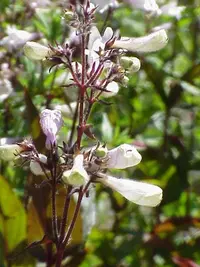
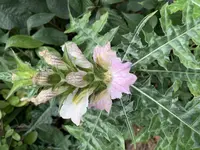
Foxglove beardtongue (Penstemon digitalis) is a North American perennial wildflower grown for its upright stems and showy, tubular white flowers. It forms clumps of lance-shaped green to burgundy-tinged leaves and sends up tall spikes that attract bees, butterflies, and hummingbirds. This species typically grows in prairies, open woods, and roadsides, so it adapts well to garden beds and naturalistic plantings. It is valued for its cold hardiness, drought tolerance once established, and relatively low maintenance needs, which makes it easier to grow than many ornamental perennials. In gardens, it prefers full sun, well-drained soil, and moderate moisture, which simplifies how to care for Foxglove beardtongue.

Main Plant Requirements

Care Difficulty

Easy Care

Light Preference

Full Sun

Water Requirements

Moderate Water

Temperature Preference

Cold Hardy

Hardiness Zone

3–8

Soil Texture

Sandy, Loamy, Rocky

Soil pH

Slightly acidic (6.5–7.0), Neutral (7.0)

Soil Drainage

Well-drained

Fertilization

Minimal (feed rarely)

Get Personalized Care Plan

Scan your plant to receive care tips personalized for your specific plant

Available on iOS and Android

How to Care for the Foxglove beardtongue

Penstemon digitalis thrives in open, bright conditions typical of prairie or meadow plantings.

  • Provide full sun for 6–8 hours daily; in hotter zones, light afternoon shade helps prevent leaf scorch and supports longer flowering.
  • Plant Foxglove beardtongue where it receives morning sun and, if possible, some filtered light after 3 p.m. in regions with very intense summer sun.
  • In partial shade (3–4 hours direct sun), expect fewer flowers and taller, more leggy growth; move or thin nearby plants if stems lean strongly toward the light.

Penstemon digitalis prefers moderately dry conditions once established and is sensitive to excess moisture.

  • Water new outdoor plants when the top 3–5 cm of soil is dry, then reduce frequency after the first growing season as roots deepen.
  • Ensure sharply drained soil; mix in grit or sand on heavy clay sites to reduce standing water and lower the risk of root rot or yellowing leaves from overwatering.
  • Watch foliage and stems for cues: limp, dull leaves that perk up after rain suggest underwatering, while blackened, mushy crowns signal chronic excess moisture.

This hardy perennial tolerates a wide temperature range when planted outdoors in suitable climates.

  • Active growth and flowering occur best around 60–80°F (16–27°C), common in late spring and early summer across many temperate regions.
  • Established plants usually survive winter lows down to about -20°F (-29°C) under typical garden conditions, especially with snow cover or light mulch.
  • During heat waves above 90°F (32°C), flowering may slow; maintain soil moisture without waterlogging to help roots handle combined heat and drought stress.

Humidity is rarely critical for Penstemon digitalis, which adapts well to typical outdoor air.

Penstemon digitalis grows best in lean, well-drained ground that never stays waterlogged.

  • Use a mineral-lean mix such as sandy or gravelly loam with only modest organic matter to prevent excess moisture retention.
  • Aim for slightly acidic to neutral pH, roughly 6.0–7.5, which suits most garden soils without special amendments.
  • Improve drainage and aeration by mixing in coarse sand or fine gravel, especially in heavier clay-based sites.
  • Avoid compacted, peaty, or consistently wet soils, which promote root rot and shorten plant lifespan.

This species can be grown in containers if the pot is prepared to keep roots evenly aerated and stable.

  • Choose a deep, heavy container that resists tipping, as tall flower stems can make the plant top-heavy in wind.
  • Blend standard potting mix with 30–40% coarse sand or grit so water drains quickly through the root zone.
  • Raise the container slightly on pot feet or bricks so drainage holes stay clear and excess water exits freely.

Penstemon digitalis is adapted to lean soils and usually needs only light supplemental feeding.

  • Apply a thin layer of compost or a low-dose balanced NPK fertilizer in early spring to support flowering in Foxglove beardtongue.
  • Use a slow-release granular product at 1/2 the label rate to avoid lush, floppy growth.
  • In average garden soil, skip further feeding during summer unless growth appears weak.
  • Do not fertilize in fall or winter, when the plant is dormant.

Pruning helps Penstemon digitalis maintain a neat shape and encourages longer blooming.

  • In late spring to early summer, deadhead spent flower spikes down to a set of healthy leaves to promote rebloom.
  • Remove dead, damaged, or crossing stems at the base with clean, sharp pruners to reduce disease risk.
  • In late fall or very early spring, cut back old stems to 5–10 cm to refresh growth.
  • Thin crowded stems slightly to improve air flow while keeping the plant’s natural upright form.

This species is most often grown in garden beds, so care focuses on transplanting rather than frequent repotting.

  • Transplant young plants in early spring or early fall, when temperatures are mild and soil is workable.
  • Move container plants if roots circle the pot, drainage is poor, or growth slows despite good care.
  • Typical garden clumps need lifting and replanting only every 3–5 years, mainly to refresh crowded plants.
  • Water thoroughly before and after moving, keep roots shaded, and disturb the root ball as little as possible to limit stress.

Penstemon digitalis can be propagated by seed, basal cuttings, or division under suitable conditions.

  • Collect ripe seeds in late summer, then sow in fall outdoors or cold-stratify 4–6 weeks in a fridge before spring sowing.
  • Provide bright light, well-drained sandy mix, and light moisture for germination, avoiding waterlogging.
  • Take non-flowering basal cuttings in late spring, inserting them in a sterile, free-draining mix with high humidity until rooted.
  • Divide mature clumps in early spring or early fall, replanting sections promptly at the same soil depth.

This perennial is generally cold hardy in much of the US and needs minimal winter care in the ground.

  • Tolerates typical frosts in USDA zones around 3–8 once established.
  • After hard frost, optional light mulching with 2–5 cm of shredded leaves or bark helps stabilize soil temperature.
  • Leave some stems over winter for structure and wildlife habitat, then cut back in late winter or early spring.
  • For container plants in colder zones, move pots to a sheltered, unheated but frost-moderated spot.

Care Tips

Spring stem thinning

In early spring, remove a few of the weakest or most crowded basal shoots at ground level to improve air movement through the clump and reduce foliar disease pressure later in the season.

Timed deadheading cut

After the first main flush of flowers fades, cut stems back to just above a set of strong lower leaves to encourage a lighter rebloom while still allowing some later stems to set seed for wildlife.

Self-seeding management

If you want controlled patches rather than random seedlings, leave seed heads only on selected plants and cut the rest before seed ripens, then transplant desirable seedlings while they are still under 5 cm tall.

Staking only in wind

In exposed, windy sites, insert low, unobtrusive hoop supports around young clumps in spring so tall flowering stems stay upright without snapping during storms.

Winter crown protection

In colder regions with freeze–thaw cycles, apply a light, open mulch such as shredded bark or pine needles around but not over the crown in late fall to prevent heaving while keeping the crown itself dry and firm, which is important when caring for Foxglove beardtongue.

Common Pests and Diseases

Leaf spot

This disease causes small brown to tan spots on foliage that may merge into larger blotches, especially in humid or crowded plantings.

Solution

Remove and discard affected leaves, avoid overhead watering, and thin or divide clumps to improve air circulation; in persistent cases, use a copper- or chlorothalonil-based fungicide labeled for ornamental perennials, applied according to the label.

Powdery mildew

This disease appears as white to gray powdery patches on leaves and stems, often during warm days with cool, humid nights.

Solution

Increase spacing and airflow, water at soil level in the morning, remove heavily infected foliage, and if needed apply a sulfur or potassium bicarbonate fungicide labeled for powdery mildew on ornamentals.

Spider mites

These pests cause stippled, pale foliage, fine webbing on stems and leaves, and overall decline during hot, dry weather.

Solution

Spray plants thoroughly with a strong stream of water to knock mites off, raise humidity around the plants, remove heavily infested stems, and if needed use insecticidal soap or a horticultural oil, ensuring full coverage of leaf undersides.

Aphids

These insects cluster on new growth and flower stems, sucking sap and leaving behind sticky honeydew that can lead to sooty mold.

Solution

Rinse colonies off with water, pinch back heavily infested tips, encourage or introduce natural predators like lady beetles, and use insecticidal soap or neem oil on persistent populations, repeating as needed according to the product label.

Botrytis blight

This disease produces soft, water-soaked spots on leaves and flower spikes that turn brown and may develop fuzzy gray mold in cool, wet conditions.

Solution

Promptly remove and discard infected flowers and foliage, keep mulch away from the crowns, improve sun exposure and airflow, and in severe or recurrent cases use a labeled ornamental fungicide at the first sign of symptoms as part of broader Penstemon digitalis care.

Interesting Facts

Prairie-clay specialist

This species naturally occurs in moist to seasonally wet prairies, open wood edges, and roadsides on clay or loam soils, showing a notable tolerance for heavy, compacted substrates compared with many other penstemons.

Bee-adapted floral shape

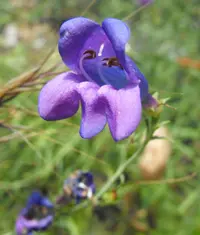
Its tubular, slightly flared white flowers with faint purple lines function as nectar guides and are shaped to fit medium-sized bees, which often crawl deep into the tube and contact the anthers and stigma for efficient pollen transfer.

Burgundy foliage forms

Some wild populations and cultivars, such as ‘Husker Red’, show deep burgundy to purple-tinted leaves, a trait linked to higher anthocyanin pigments that can offer protection from strong sun and temperature stress.

Botan icon

Did you know?

Genetic and field studies in central North America have shown that this species can hybridize with closely related penstemons, and where their ranges overlap it sometimes forms mixed populations that help researchers study natural hybridization and speciation in flowering plants.

FAQs about Foxglove beardtongue

This species is highly attractive to native bees, bumblebees, and some butterflies. Its tubular flowers provide nectar and pollen, supporting pollinators from late spring into early summer and increasing overall biodiversity in garden plantings.

Grow Healthy Plants with Botan Care

Keep your plants happy and healthy with plant identification, disease detection, and easy care guidance.

Botan plant care app — identify plants on mobile

Explore More Plants