Regular deadheading
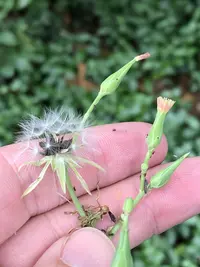
Remove spent flowers before seed pods form to reduce self-seeding and keep plants directing energy into fresh growth rather than unwanted spread.

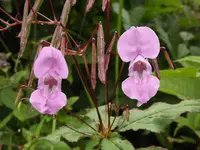
Himalayan balsam, Impatiens glandulifera, is a fast-growing annual herb known for its hollow, reddish stems and showy pink to white helmet-shaped flowers. It can reach impressive heights in a single season and often forms dense stands along rivers, streams, and damp woodland edges in its native Himalayan range and in many introduced regions.
The plant prefers moist, fertile soils and partial to full sun, which makes it easy to establish but also highly invasive outdoors. Anyone wanting to learn how to care for Himalayan balsam should first check local regulations, as cultivation is restricted or discouraged in many areas due to its strong spreading habit.

Care Difficulty
Moderate Care

Light Preference
Partial Sun

Water Requirements
Keep Soil Moist

Temperature Preference
Cool Climate

Hardiness Zone
3–8

Soil Texture
Loamy, Silty, Organic-rich

Soil pH
Slightly acidic (6.5–7.0), Neutral (7.0)

Soil Drainage
Moist but well-drained

Fertilization
Minimal (feed rarely)
Scan your plant to receive care tips personalized for your specific plant
Available on iOS and Android
This fast-growing annual needs consistent light levels to flower and set seed well.
This species prefers evenly moist conditions, especially during its rapid summer growth phase.
This annual grows best in mild, temperate conditions typical of cool to warm summers.
This species grows best in consistently moist air but adapts to outdoor humidity in most temperate regions.
Impatiens glandulifera prefers moist, fertile, well-structured soil that never dries out completely.
This species can be grown in large outdoor containers but demands careful moisture and stability management.
This fast-growing annual usually needs little feeding in fertile soil, but light fertilization can support container or nutrient-poor plantings of Himalayan balsam.
Pruning Impatiens glandulifera focuses on controlling height, tidying appearance, and limiting unwanted spread.
Transplanting this vigorous annual is more common than repotting, as it is often grown outdoors rather than as a long-term container plant.
Propagation is most often done from seed, as this annual produces large quantities that germinate well under suitable conditions.
This annual usually dies back after frost, so long-term winter care for outdoor plantings is minimal.

Plant Health Check
Not sure what's wrong with your plant? Check your plant's health inside the app.
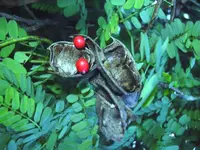
Its seed capsules eject seeds explosively when touched, a mechanism called ballistic dispersal, flinging them several meters away and helping the plant colonize riverbanks rapidly.
The large pink to purple flowers produce abundant nectar and are highly attractive to bees, which can alter local pollinator behavior by focusing on this species instead of native plants.
Fallen leaves decompose quickly and can change soil chemistry and light conditions at the surface, which may disadvantage some native seedlings and favor its own reestablishment.

In many European countries and parts of North America, this Himalayan riverbank species is formally listed as an invasive plant because dense stands can die back completely in winter, leaving bare soil that increases riverbank erosion and alters natural flood dynamics.
This species spreads very aggressively through explosive seed pods and self-seeding. In many regions it is legally classified as invasive and should not be planted outdoors, as it quickly outcompetes local vegetation along rivers, wetlands, and damp soils.
Keep your plants happy and healthy with plant identification, disease detection, and easy care guidance.