firecracker penstemon Care (Penstemon eatonii)

Also known as: Firecracker Beardtongue, Eaton's Beardtongue
firecracker penstemon

About firecracker penstemon

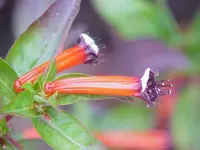
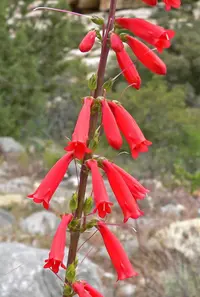
Firecracker penstemon (Penstemon eatonii) is a hardy, clump-forming perennial native to arid regions of the western United States. It is known for tall spikes of narrow, bright red tubular flowers that attract hummingbirds and other pollinators.

Plants usually grow in rocky or sandy soils and have a naturally tidy, upright habit, making them suitable for xeriscapes and low-water gardens. Once established, Penstemon eatonii is drought tolerant and prefers full sun with well-drained soil.

Gardeners who want to care for firecracker penstemon should focus on avoiding excess moisture and overly rich soil, which can shorten the plant’s lifespan and reduce flowering.

Main Plant Requirements

Care Difficulty

Easy Care

Light Preference

Full Sun

Water Requirements

Low Water

Temperature Preference

Cold Hardy

Hardiness Zone

4–9

Soil Texture

Sandy, Loamy, Rocky

Soil pH

Slightly acidic (6.5–7.0), Neutral (7.0)

Soil Drainage

Well-drained

Fertilization

Minimal (feed rarely)

Get Personalized Care Plan

Scan your plant to receive care tips personalized for your specific plant

Available on iOS and Android

How to Care for the firecracker penstemon

This sun-loving perennial thrives in bright, open sites typical of arid landscapes.

  • Provide 6–8 hours of direct sun daily; firecracker penstemon flowers best in full sun, especially with strong morning light.
  • In very hot climates, allow light afternoon shade or filtered light after 2–3 p.m. to reduce leaf scorch and premature flower fade.
  • If stems stretch, lean, or bloom sparsely, the site is too shaded; move to a brighter, south- or west-facing position for the next season.

This species prefers dry, fast-draining conditions and is highly sensitive to excess moisture.

  • Allow the top 5–8 cm of soil to dry fully before deep watering; in established garden plants, this often means waiting until foliage looks slightly less turgid in hot weather.
  • Use sharply draining, gravelly soil or a slope so water drains within 30–60 minutes; soggy soil, yellowing leaves, and sudden collapse indicate root rot from overwatering.
  • During winter, water only during extended dry spells if the soil becomes powder-dry; wilting, crisp foliage in summer usually signals underwatering rather than dormancy.

This desert-adapted perennial handles a wide temperature range once established outdoors.

  • Optimal growing and flowering temperatures are about 60–85°F (16–29°C), with strong performance in warm, low-humidity conditions.
  • Mature plants typically tolerate down to about 0–10°F (-18 to -12°C) when soil drains well and crowns are not waterlogged in winter.
  • Heat tolerance is good up to about 95–100°F (35–38°C) if soil is dry to slightly moist; prolonged heat with high humidity increases stress and disease risk.

This species is adapted to arid climates and does not have specific humidity requirements indoors or outdoors.

Penstemon eatonii prefers lean, fast-draining, mineral-rich soil that mimics rocky desert or open slope conditions.

  • Use a sandy or gravelly loam with at least 40–60% mineral grit such as coarse sand, small gravel, or pumice.
  • Aim for slightly alkaline to neutral pH around 6.8–7.5, avoiding strongly acidic mixes that hold excess moisture.
  • Incorporate only a modest amount of compost (no more than 10–15%) to avoid overly rich, moisture-retentive conditions.
  • Avoid clay-heavy, compacted, or peat-dominant mixes, which slow drainage and increase risk of root and crown rot.

This species can be grown in containers if the potting setup maintains very sharp drainage and avoids prolonged moisture around the crown.

  • Choose a container at least 25–30 cm deep so the taproot can extend downward without curling tightly at the base.
  • Use a rigid, heavier pot material like ceramic or clay to stabilize tall flowering stems against wind sway.
  • Raise the pot slightly on feet or spacers so drainage holes stay clear and excess water exits quickly after rain or irrigation.

This desert-native Penstemon eatonii needs only light feeding to maintain healthy growth and flowering.

  • Use a low-dose, balanced NPK fertilizer (around 5-5-5) or a thin layer of compost in early spring to support growing firecracker penstemon in poor soils.
  • Feed once in spring; a second very light application in midsummer is enough in lean, fast-draining ground.
  • Dilute liquid fertilizer to 1/4–1/2 strength to avoid excessive, weak growth and reduced flowering.
  • Do not fertilize in fall or winter, when the plant is semi-dormant, to prevent tender, frost-prone shoots.

Penstemon eatonii benefits from light, timely pruning to maintain a compact, floriferous clump.

  • In late spring to early summer, deadhead spent flower spikes down to a strong set of leaves to encourage further blooming.
  • Remove dead, damaged, or crossing stems at the base with clean, sharp pruners to reduce disease risk and improve air flow.
  • In late fall or very early spring, lightly trim back leggy growth to shape the plant without cutting into the woody crown.
  • Disinfect pruning tools before and after use, especially in damp climates, to limit transmission of fungal pathogens.

This species is usually grown in-ground, so management focuses more on careful transplanting than frequent repotting.

  • Transplant in early spring or early fall, when temperatures are mild and soil moisture is steady, to limit shock.
  • Move only when necessary: signs include poor vigor despite good care, crowding by other plants, or unsuitable drainage.
  • Lift with a wide root ball, disturb roots as little as possible, and replant into sharply drained, gritty soil at the same depth.
  • Water in thoroughly once, then allow soil to dry between waterings so roots re-establish without sitting in saturated conditions.

Penstemon eatonii is commonly propagated by seed and softwood cuttings under suitable conditions.

  • Sow fresh seed in late fall outdoors or use cold stratification (4–6 weeks at 35–40°F) before spring sowing to improve germination.
  • Provide a very well-drained, sandy mix and bright light; keep slightly moist, not wet, until seedlings establish.
  • Take non-flowering softwood cuttings in late spring, use rooting hormone, and place in a warm, bright spot with high humidity.
  • Avoid overwatering young plants and gradually acclimate them to full sun before planting in their permanent position.

This western US native is quite cold hardy and usually needs minimal winter care in well-drained soil.

  • In regions with wet winters, ensure excellent drainage to prevent root rot in cold, saturated ground.
  • Apply a light, breathable mulch around but not over the crown to moderate soil temperature in colder zones.
  • Leave some stems standing until late winter to protect the crown and provide slight insulation, then cut back dead growth.

Care Tips

Encourage Deep Roots

In the first growing season, water less often but for a longer duration so moisture penetrates 15–20 cm deep, which trains the plant to form a drought-resilient root system instead of shallow, weak roots.

Gravel Collar Mulch

Apply a 3–5 cm collar of coarse gravel or small rock chips around the base instead of organic mulch to suppress weeds, keep the crown dry, and reduce the risk of crown rot in wet periods.

Avoid Summer Deadheading

Allow spent flower spikes to remain after the main bloom so the plant can self-seed lightly and maintain a more natural stand, only removing stems that look diseased or badly damaged.

Winter Drainage Check

Before winter, check that the planting area sheds water within a few hours after heavy rain and, if needed, gently mound soil or add gravel to improve runoff and prevent root loss from waterlogging.

Companion Plant Spacing

When growing firecracker penstemon in mixed beds, keep neighboring plants at least 30–40 cm away to ensure good air movement around foliage and reduce fungal leaf spot issues.

Common Pests and Diseases

Leaf spot

This disease causes small tan, brown, or purplish spots on foliage that may merge and lead to premature leaf drop, especially in humid or overhead-watered conditions.

Solution

Remove and discard affected leaves, water at soil level instead of overhead, and increase spacing or airflow around plants; in persistent cases, apply a copper- or chlorothalonil-based fungicide labeled for ornamental perennials according to directions.

Powdery mildew

This disease produces white, powdery patches on leaves and stems, which can lead to distorted growth and reduced vigor during cool, dry periods with poor air movement.

Solution

Thin or prune dense growth to improve airflow, avoid overhead watering, and remove heavily infected foliage; if needed, use a sulfur or potassium bicarbonate fungicide labeled for powdery mildew on ornamentals, applied early in the infection cycle.

Spider mites

These pests cause fine stippling, dulling, and bronzing of leaves, often with delicate webbing on the undersides in hot, dry weather.

Solution

Spray foliage thoroughly with a strong stream of water to dislodge mites, then use insecticidal soap or a horticultural oil labeled for mites, repeating applications as needed and focusing on leaf undersides while also reducing drought stress.

Aphids

These insects cluster on young stems and flower spikes, sucking sap and excreting sticky honeydew that can attract sooty mold and ants.

Solution

Wash colonies off with a firm water spray, pinch back heavily infested tips, and if populations remain high, apply insecticidal soap or a low-impact horticultural oil, ensuring good coverage of tender growth and flower stems as part of Penstemon eatonii plant care.

Crown rot

This disease leads to browning and collapse of stems at the soil line, often following prolonged wet or poorly drained conditions that stress this drought-adapted species.

Solution

Remove and discard affected plants or plant parts, improve drainage with gritty soil and raised beds, avoid mulching tightly around crowns, and water deeply but infrequently so the crown dries quickly between waterings.

Interesting Facts

Hummingbird specialist

This species has long, narrow, bright red tubular flowers that match the bill shape and color preferences of North American hummingbirds, making it a key early-season nectar source in its native desert and montane habitats.

Thrives in lean soils

In the wild it grows on rocky slopes, sand, and gravelly washes in the Intermountain West and Southwest, showing strong adaptation to low-organic, fast-draining soils where many other perennials struggle.

Cold-hardy desert native

Although associated with arid regions, it tolerates winter cold across much of the western US, naturally occurring from low desert elevations up into foothills and open pinyon–juniper woodlands.

Botan icon

Did you know?

This species often appears as one of the first vivid red wildflowers to bloom in late winter to spring in some of its native desert ranges, providing an important nectar bridge for hummingbirds and early-emerging pollinators before many other flowering plants are active.

FAQs about firecracker penstemon

Poor flowering usually comes from plants being too young, overly fertilized with high-nitrogen products, or stressed by transplanting. Excess shade, waterlogged soil, or heavy pruning in late winter can also reduce the number of flower spikes produced.

Grow Healthy Plants with Botan Care

Keep your plants happy and healthy with plant identification, disease detection, and easy care guidance.

Botan plant care app — identify plants on mobile

Explore More Plants