Support Tall Stems
Install low stakes or a simple string grid early in the season so the tall, soft stems stay upright in wind and rain, which reduces breakage and keeps flowers clean and visible.

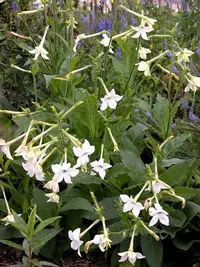
Jasmine tobacco, Nicotiana alata, is a fast-growing, flowering annual often used in garden beds, borders, and containers for its showy, night-scented blooms. Plants usually form upright clumps with soft, sticky leaves and star-shaped flowers held on tall, branching stems.
It is native to South America but is now widely grown in temperate gardens. Fragrance, flower color, and relatively quick growth make it popular, but plants can be short-lived and may need regular deadheading.
Nicotiana alata prefers sun to light shade, moderately moist soil, and good drainage. Understanding these basic needs helps gardeners know how to care for jasmine tobacco with less trial and error.

Care Difficulty
Easy Care

Light Preference
Full Sun

Water Requirements
Regular Water

Temperature Preference
Tropical / Frost Sensitive

Hardiness Zone
10–11

Soil Texture
Sandy, Loamy, Organic-rich

Soil pH
Acidic (5.5–6.5), Slightly acidic (6.5–7.0)

Soil Drainage
Moist but well-drained

Fertilization
Light (every 4–6 weeks)
Scan your plant to receive care tips personalized for your specific plant
Available on iOS and Android
Nicotiana alata grows best with bright, gentle sun and protection from intense midday heat.
This plant prefers evenly moist, well-drained soil and reacts quickly to both drought and waterlogging.
This species is a warm-season plant that thrives in mild to moderately warm conditions and dislikes frost.
This species grows best in moderately humid air but usually handles typical indoor and outdoor conditions.
Nicotiana alata prefers loose, fertile, well-aerated soil that drains quickly yet retains some moisture.
This species is well suited to container growing on patios, balconies, and near seating areas.
Nicotiana alata responds well to modest feeding that supports flowering without producing excessively lush, weak growth.
Pruning Nicotiana alata focuses on deadheading and tidying to extend blooming and maintain a neat form.
Most Nicotiana alata plants are grown as seasonal bedding and benefit more from careful transplanting than from long-term container repotting.
Nicotiana alata is most commonly propagated from seed, which germinates reliably in warm, moist conditions.
In most climates Nicotiana alata is treated as a tender annual that dies back with hard frost and needs minimal winter care.

Plant Health Check
Not sure what's wrong with your plant? Check your plant's health inside the app.
This species opens most of its tubular flowers at dusk and releases a strong, sweet scent at night, adapted to attract nocturnal moth pollinators rather than daytime insects.
In parts of its South American range, some wild and ornamental forms with longer tubes and red or pink coloration are visited and pollinated by hummingbirds, showing flexibility in its pollination strategy.
It has been widely used in breeding programs to create modern ornamental tobacco hybrids with larger flowers, diverse colors, and stronger fragrance for evening gardens.

Nicotiana alata is one of the few commonly cultivated ornamentals in the nightshade family that is grown primarily for its evening and nighttime scent, making it a classic choice for so-called moon gardens designed to be enjoyed after dark.
Lack of flowers usually comes from low light, excess nitrogen fertilizer, or heat stress. Check that the plant gets strong outdoor light, use a balanced fertilizer, and avoid letting containers dry out completely during bud formation.
Keep your plants happy and healthy with plant identification, disease detection, and easy care guidance.