Encourage Compact Mounding
Pinch back soft shoot tips lightly after the first flush of bloom to keep plants dense, reduce lodging, and stimulate more uniform side branching for the next season.

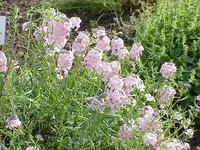
Persian candytuft, Aethionema grandiflorum, is a compact, low-growing perennial often used in rock gardens, edging, and sunny slopes. It forms small mounded cushions covered in clusters of soft pink flowers in spring.
The plant has narrow blue-green leaves and a tidy habit that suits small spaces and containers. It naturally occurs in rocky, mountainous areas of the eastern Mediterranean, where soils are well drained and conditions are relatively dry.
Its preference for sun, light soil, and good drainage makes it fairly easy to grow if excess moisture is avoided. Gardeners who learn how to care for Persian Candytuft usually find it reliable and long-lived in suitable sites.

Care Difficulty
Moderate Care

Light Preference
Full Sun

Water Requirements
Low Water

Temperature Preference
Cold Hardy

Hardiness Zone
5–7

Soil Texture
Sandy, Loamy, Rocky

Soil pH
Slightly acidic (6.5–7.0), Slightly alkaline (7.0–7.5)

Soil Drainage
Well-drained

Fertilization
Minimal (feed rarely)
Scan your plant to receive care tips personalized for your specific plant
Available on iOS and Android
This sun-loving alpine perennial needs bright, prolonged light to flower well and stay compact.
This plant prefers slightly dry conditions and is sensitive to excess moisture around the roots.
This species prefers cool to mild conditions and tolerates substantial cold once established.
This species prefers dry, airy conditions and does not need elevated humidity.
This alpine subshrub needs very well-drained, mineral-rich soil to avoid root problems.
This compact, mat-forming species is suitable for containers, troughs, and rock garden pots.
This alpine perennial needs only light feeding to maintain compact, floriferous growth.
Light pruning keeps Aethionema grandiflorum dense, tidy, and flowering well.
This rock-garden perennial is usually grown in the ground and dislikes frequent disturbance.
New plants are most reliable from softwood cuttings and fresh seed.
Established plants are fairly cold hardy but need sharp drainage to avoid winter losses.

Plant Health Check
Not sure what's wrong with your plant? Check your plant's health inside the app.
This species is naturally found on limestone cliffs and rocky slopes in Turkey and the Caucasus, where it forms cushions that anchor into thin, stony soil with very little organic matter.
Its fragrant pink flower clusters open in mid to late spring and provide an early food source for bees and other pollinating insects emerging from winter dormancy.
Despite its delicate appearance, this species tolerates both summer heat and winter cold in many temperate climates, as long as the roots stay well-drained and never waterlogged.
This species usually has its main flowering flush in spring to early summer. In cooler climates, a lighter second flush can appear if old flower stems are lightly trimmed soon after blooming and the plant is kept healthy.
Keep your plants happy and healthy with plant identification, disease detection, and easy care guidance.