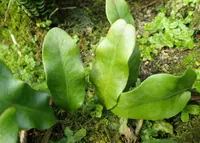
Contain Rhizome Spread
Plant in a sturdy, bottomless container or root barrier sunk 20–30 cm into the ground to confine the aggressive rhizomes and prevent the clump from invading nearby beds or lawns.

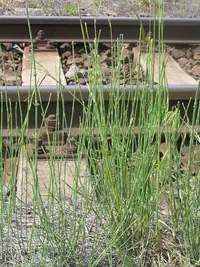
Branched scouringrush, Equisetum ramosissimum, is a perennial horsetail relative with hollow, jointed, reed-like stems and fine, whorled branches. It has a distinctly architectural, upright look. This species naturally occurs in riverbanks, wetlands, and disturbed sandy or gravelly soils across parts of Europe, Asia, and North Africa, and in some regions it behaves like a tough, spreading colonizer. It prefers consistently moist conditions and poor to moderately fertile soils, often tolerating waterlogged spots that many ornamentals dislike. Once established, it is hardy and low maintenance but can become invasive if not contained. Gardeners who want to care for branched scouringrush should plan for strong root barriers or containers to control its vigorous underground rhizomes.

Care Difficulty
Moderate Care

Light Preference
Full Sun

Water Requirements
Aquatic

Temperature Preference
Warm Climate

Hardiness Zone
8–11

Soil Texture
Sandy, Loamy, Silty

Soil pH
Acidic (5.5–6.5), Slightly acidic (6.5–7.0)

Soil Drainage
Waterlogged tolerant

Fertilization
Minimal (feed rarely)
Scan your plant to receive care tips personalized for your specific plant
Available on iOS and Android
This rush-like species prefers bright, open conditions but tolerates some shade.
This is a moisture-loving species that naturally grows in wet, often saturated soils.
This species prefers mild to warm conditions and tolerates a fairly wide outdoor temperature range.
This species prefers consistently moist air but adapts to a wide range of outdoor humidity.
This rhizomatous species thrives in saturated, poorly drained substrates rather than typical potting soils.
This species is suitable for container growing when moisture and spread are carefully controlled.
This species is nutrient-efficient and usually needs only light feeding, especially when grown in wet, mineral-rich soils.
Pruning Equisetum ramosissimum focuses on hygiene and containment rather than shaping.
This rush spreads by rhizomes and is more often transplanted or contained than traditionally repotted.
Propagation of Equisetum ramosissimum is most reliable through division of its rhizome-based clumps.
This species is generally cold hardy in mild to moderately cold climates and often needs minimal winter care.

Plant Health Check
Not sure what's wrong with your plant? Check your plant's health inside the app.
This species shows much more complex branching than most other horsetails, forming dense, feathery side branches along the main green shoots, which increases its photosynthetic surface in bright, open habitats.
It is frequently found on sandy or gravelly riverbanks, dunes, and coastal embankments in parts of Europe, North Africa, and Asia, where its extensive rhizome system helps stabilize loose, shifting substrates.
Like other horsetails it deposits silica in its outer tissues, but this species often forms especially rough, abrasive stems that were traditionally used in some regions as a natural scouring material for cleaning metal and wood.

Fossil and comparative data show that this modern species belongs to a lineage whose horsetail ancestors were already present in the late Paleozoic era, meaning its basic structural plan has persisted with relatively little change for more than 300 million years.
This species spreads vigorously through creeping rhizomes and can become difficult to control in open soil or wet areas. Use root barriers, containers, or lined beds if planting near lawns, ponds, or mixed borders to prevent unwanted spread.
Keep your plants happy and healthy with plant identification, disease detection, and easy care guidance.