Mounting on Slabs
Instead of a traditional pot, attach the root mass to a hardwood slab or cork board with sphagnum and breathable ties to mimic its natural epiphytic habit and improve air flow around the roots.

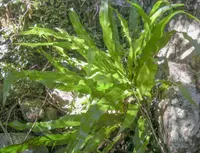
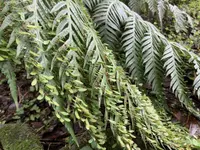
Elkhorn fern, Microsorum punctatum, is an evergreen epiphytic or lithophytic fern, often growing on tree trunks or rocks rather than in regular soil. It forms arching, strap-like fronds that create a loose, fountain-shaped clump.
In nature it occurs in warm, humid forests of Southeast Asia and the Pacific, where it benefits from filtered light and constant moisture. It is generally considered a moderately easy fern, as long as its roots do not dry out completely and it is kept out of harsh sun.
Many indoor growers care for Elkhorn fern by mounting it or using a very loose, airy mix that mimics its natural habitat, with regular moisture and good airflow.

Care Difficulty
Moderate Care

Light Preference
Partial Shade

Water Requirements
Keep Soil Moist

Temperature Preference
Tropical / Frost Sensitive

Hardiness Zone
10–11

Soil Texture
Loamy, Peaty, Organic-rich

Soil pH
Acidic (5.5–6.5), Slightly acidic (6.5–7.0)

Soil Drainage
Moist but well-drained

Fertilization
Light (every 4–6 weeks)
Scan your plant to receive care tips personalized for your specific plant
Available on iOS and Android
This fern prefers bright, filtered light that mimics a forest understory.
This species prefers consistently moist conditions without becoming waterlogged.
This fern thrives in warm, stable temperatures with no exposure to frost.
This fern prefers consistently moist air and benefits from elevated humidity indoors.
This species prefers a loose, airy, organic-rich substrate that drains freely yet retains moderate moisture.
This fern is well suited to container growing, including hanging baskets and mounted displays.
Microsorum punctatum benefits from light, consistent feeding during the active growing season.
Pruning Microsorum punctatum focuses on hygiene and maintaining an open, healthy clump.
Repotting and transplanting help this fern maintain healthy roots and steady growth in containers or mounted displays.
Propagation of Microsorum punctatum is most reliable by division of the rhizome rather than by spores.
Winter care depends on climate, as this fern is frost sensitive and prefers mild conditions.

Plant Health Check
Not sure what's wrong with your plant? Check your plant's health inside the app.
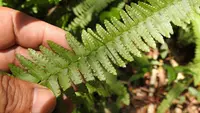
This fern develops thick, leathery fronds with a slightly wavy margin, an adaptation that helps reduce water loss and tolerate brighter, drier sites than many other tropical ferns.
In nature it often grows both epiphytically on tree trunks and terrestrially on rocks or soil, using a creeping rhizome to anchor itself and spread across surfaces.
Its sori, the spore-producing structures, form in irregular rows or scattered patches on the underside of the fronds, a pattern that helps botanists distinguish it from similar Microsorum species.

Microsorum punctatum is naturally widespread from tropical Asia through parts of the Pacific, often appearing as a spontaneous colonizer on tree trunks, rock faces, and even old walls in humid lowland forests and gardens, which has made it a useful indicator of consistently moist, warm microclimates.
Brown fronds usually result from low humidity, chronic underwatering, or exposure to hot, dry air. Salt or fertilizer buildup and strong direct sun can also scorch tissue. Trim dead parts only and correct the underlying environmental cause.
Keep your plants happy and healthy with plant identification, disease detection, and easy care guidance.