Staggered Lifting
In colder zones, lift and store only a portion of the rhizomes each fall and leave some in the ground, so you maintain a backup stock while also testing which clumps prove hardier over several winters.

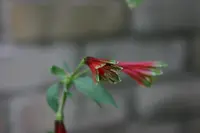
Lily of the Incas, Alstroemeria psittacina, is a rhizomatous perennial grown for its exotic, speckled, red and green flowers and upright, leafy stems. It forms spreading clumps that return each year in mild climates and can become gently invasive in ideal conditions.
This species is native to Brazil, Paraguay, and Argentina, where it grows in open, sunny to lightly shaded areas with well-drained, fertile soil. It is considered moderately easy to grow but dislikes waterlogged roots and extreme heat or frost. Gardeners who learn how to care for lily of the Incas usually find it reliable and long-lived in borders, containers, or cutting gardens.

Care Difficulty
Moderate Care

Light Preference
Partial Sun

Water Requirements
Moderate Water

Temperature Preference
Warm Climate

Hardiness Zone
8–11

Soil Texture
Loamy, Sandy, Organic-rich

Soil pH
Acidic (5.5–6.5), Slightly acidic (6.5–7.0)

Soil Drainage
Moist but well-drained

Fertilization
Light (every 4–6 weeks)
Scan your plant to receive care tips personalized for your specific plant
Available on iOS and Android
Alstroemeria psittacina grows best with bright, cool sun and some protection from intense heat.
Alstroemeria psittacina prefers steady soil moisture without staying saturated.
This species grows best in mild, frost-free conditions with moderate summer heat.
This species prefers moderately moist air but usually adapts to typical home and garden humidity.
This rhizomatous perennial needs loose, well-drained, fertile soil to flower reliably and avoid rot.
This species grows well in containers if the pot supports its spreading rhizomes and tall stems.
Alstroemeria psittacina responds well to moderate feeding that supports flowering without forcing soft, weak growth.
Alstroemeria psittacina benefits from light, targeted pruning to maintain flowering performance and tidy growth.
This rhizomatous perennial is usually grown in the ground, so transplanting crowded clumps is more common than repotting.
Alstroemeria psittacina is most reliably propagated by division of its rhizomes rather than from seed.
Alstroemeria psittacina has moderate cold tolerance but benefits from some winter preparation, especially in colder regions.

Plant Health Check
Not sure what's wrong with your plant? Check your plant's health inside the app.
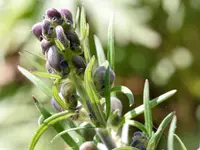
This species has crimson to purple flowers with green-tipped outer petals and dark speckling that resemble the plumage of parrots, which is why it is commonly called parrot lily or parrot flower.
It spreads by underground rhizomes that can travel outward from the original planting site, allowing dense colonies to form and, in some mild climates, leading to naturalized or invasive populations.
In its native and many introduced ranges, foliage and flowering occur mainly in the cooler months, then the plant can become semi-dormant or die back in summer heat, a growth pattern that differs from many garden perennials.

In parts of New Zealand and eastern Australia, this species is officially listed as an environmental weed because escaped garden plants have formed large, persistent stands that displace native vegetation, leading to active control programs and legal restrictions on its sale in some regions.
This species establishes moderately fast once rhizomes are settled, often producing noticeable new shoots within a season. Growth rate increases in rich, loose soil and mild climates, and slows in compacted soil, heatwaves, or cold conditions.
Keep your plants happy and healthy with plant identification, disease detection, and easy care guidance.