Toxicity handling
Wear gloves and long sleeves when cutting or dividing plants, wash tools and hands afterward, and avoid planting near vegetable beds or areas where children or pets play.

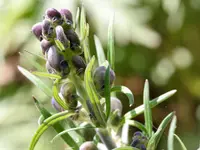
Aconitum tauricum is a perennial flowering plant from mountainous regions of Central and Eastern Europe. It belongs to the buttercup family and is closely related to other monkshoods. Plants usually form upright clumps with deeply divided, dark green leaves and tall stems topped with hood-shaped blue to violet flowers. In gardens it is valued for late-season color and a vertical accent in cooler climates. It prefers cool conditions, consistently moist but well-drained soil, and partial shade. Due to its toxicity and need for stable moisture, it suits careful gardeners rather than completely hands-off situations, so learning how to care for Aconitum tauricum helps avoid problems.

Care Difficulty
Moderate Care

Light Preference
Partial Shade

Water Requirements
Regular Water

Temperature Preference
Cold Hardy

Hardiness Zone
4–7

Soil Texture
Loamy, Silty, Organic-rich

Soil pH
Acidic (5.5–6.5), Slightly acidic (6.5–7.0)

Soil Drainage
Moist but well-drained

Fertilization
Minimal (feed rarely)
Scan your plant to receive care tips personalized for your specific plant
Available on iOS and Android
This perennial prefers cool, bright conditions with protection from intense midday sun.
This species prefers evenly moist, cool soil that never stays waterlogged.
This hardy perennial thrives in cool to mild outdoor climates.
This species grows well in typical outdoor humidity but benefits from slightly moist air in hot, dry regions.
This perennial prefers cool, moist, well-drained, humus-rich soil for stable growth and flowering.
This species can be grown in containers outdoors if the pot is deep and drainage is carefully managed.
This mountain monkshood prefers modest feeding, especially in poorer soils, and excessive fertilizer can reduce its vigor.
Pruning needs for this perennial are low and focus on tidiness and flower performance rather than reshaping the plant.
This species is usually grown in the ground; transplanting is done infrequently due to its dislike of root disturbance.
Propagation of Aconitum tauricum is possible but should be done carefully, as all parts of the plant are toxic if ingested.
This hardy perennial tolerates normal winters in most temperate climates and generally needs only basic care.

Plant Health Check
Not sure what's wrong with your plant? Check your plant's health inside the app.
This species is native mainly to the high mountain regions of the Eastern and Southern Carpathians, where it grows in subalpine meadows, forest clearings, and rocky slopes, often on moist, humus-rich soils.
Compared with many other monkshoods, its upper sepal forms a relatively narrow, high helmet over the flower’s reproductive organs, a shape that helps guide bumblebee pollinators to the nectar while ensuring effective pollen transfer.
In its native range it usually flowers from mid to late summer into early autumn, providing a late-season nectar source for alpine and montane pollinators when many earlier meadow species have finished blooming.
All parts of this species are highly toxic to humans and pets if ingested, and sap can irritate skin. Always wear gloves when handling, avoid contact with broken skin, and prevent children or animals from accessing plants or clippings.
Keep your plants happy and healthy with plant identification, disease detection, and easy care guidance.