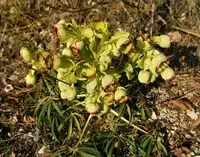
Divide Mature Clumps
Every 3–4 years, lift and divide congested clumps in early spring or early fall to maintain vigor and quickly increase your planting area with healthy offsets.

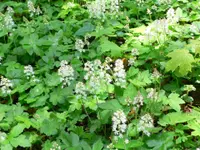
Heartleaf foamflower, Tiarella cordifolia, is a low-growing perennial valued for its clumping habit and dense groundcover effect. It forms heart-shaped, often patterned leaves that create a soft, textured carpet.
In spring, it sends up airy spikes of small, foamy white flowers that rise above the foliage. The plant spreads gently by runners, but usually remains well-behaved in garden settings.
It occurs naturally in woodland areas of eastern North America, where it grows in partial shade and moist, humus-rich soil. Once established, it is fairly resilient, which makes it straightforward to care for heartleaf foamflower in most shaded gardens.

Care Difficulty
Moderate Care

Light Preference
Partial Shade

Water Requirements
Keep Soil Moist

Temperature Preference
Cold Hardy

Hardiness Zone
4–9

Soil Texture
Loamy, Silty, Organic-rich

Soil pH
Acidic (5.5–6.5), Slightly acidic (6.5–7.0)

Soil Drainage
Moist but well-drained

Fertilization
Minimal (feed rarely)
Scan your plant to receive care tips personalized for your specific plant
Available on iOS and Android
This woodland perennial prefers soft, filtered light rather than strong, direct sun.
This plant prefers consistently moist, cool soil without becoming waterlogged.
This species is cold-hardy but grows best in cool to mild conditions.
This woodland perennial prefers moderate, steady humidity similar to shaded outdoor conditions.
Tiarella cordifolia grows best in moist, humus-rich soil that stays airy yet does not dry out quickly.
This species adapts well to container growing when moisture and space are carefully managed.
Tiarella cordifolia prefers modest nutrition and benefits from light, consistent feeding during active growth.
Tiarella cordifolia responds well to light, targeted pruning that keeps the clump tidy and encourages fresh growth.
Heartleaf foamflower is most often grown in the ground and benefits from occasional division or transplanting rather than frequent repotting.
Tiarella cordifolia is commonly propagated by division and by encouraging its natural runners to root into new clumps.
Tiarella cordifolia is cold hardy in most temperate US gardens and usually needs only minimal winter care.

Plant Health Check
Not sure what's wrong with your plant? Check your plant's health inside the app.
In much of its native range in eastern North America, this species keeps its foliage through winter, forming a low, semi-evergreen carpet on forest floors where snow cover is intermittent or light.
Its spring flowers provide nectar and pollen for early-emerging native bees, including small mining bees that rely heavily on early woodland bloomers for their first foraging flights.
This plant often spreads by short stolons and forms clonal colonies, which help stabilize moist, humus-rich forest soils and occupy gaps where tree leaves create a shifting patchwork of light and shade.

The species is a key genetic parent of many modern foamflower hybrids, contributing its shade tolerance, evergreen habit, and distinctive heart-shaped leaves to widely used ornamental cultivars.
This species spreads slowly to moderately by short stolons, forming a loose patch rather than a fast-running colony. It is generally considered non-aggressive and easy to contain with normal edging and occasional division.
Keep your plants happy and healthy with plant identification, disease detection, and easy care guidance.