Staggered Planting Blocks
Plant corms in irregular drifts or triangular groupings instead of straight rows to create a fuller vertical display and improve wind buffering for tall flower spikes.

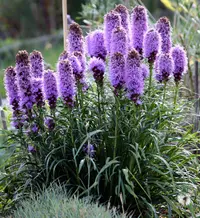
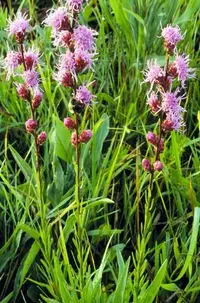
Dense blazing star, Liatris spicata, is a perennial wildflower known for its tall, upright spikes packed with purple, tufted flower heads. It grows from corms, forming vertical accents above narrow, grass-like foliage.
This species is native to prairies and open meadows in eastern and central North America, where it thrives in full sun and well-drained soil. It tolerates poor, dry ground once established and attracts bees, butterflies, and other pollinators.
Because it is hardy, drought tolerant, and relatively resistant to pests, many gardeners find it straightforward to care for Dense blazing star in borders, wildlife gardens, and cut-flower beds.

Care Difficulty
Easy Care

Light Preference
Full Sun

Water Requirements
Moderate Water

Temperature Preference
Cold Hardy

Hardiness Zone
3–9

Soil Texture
Sandy, Loamy

Soil pH
Acidic (5.5–6.5), Slightly acidic (6.5–7.0)

Soil Drainage
Well-drained

Fertilization
Minimal (feed rarely)
Scan your plant to receive care tips personalized for your specific plant
Available on iOS and Android
This sun-loving perennial flowers best with strong, direct light in open sites.
This species prefers dry to moderately moist soil and resents standing water.
This prairie perennial is cold hardy yet also tolerates typical summer heat when established.
Humidity is not a major factor for Liatris spicata grown outdoors in typical garden conditions.
Liatris spicata prefers lean, well-drained soil that does not stay wet after rain or watering.
This species can be grown in containers outdoors if the pot is prepared for its deep, upright growth habit.
Liatris spicata grows best in lean, well-drained soil and usually needs only light fertilization.
Pruning Liatris spicata is simple and mainly supports tidy growth and repeat flowering.
This species is usually grown in garden beds, so transplanting clumps is more common than repotting.
Liatris spicata is commonly propagated by division or seed to expand plantings.
This perennial is cold hardy and normally requires minimal winter care in most temperate climates.

Plant Health Check
Not sure what's wrong with your plant? Check your plant's health inside the app.
Its flower spikes open from the top downward, which is the reverse of most spike-flowering perennials and helps maintain pollen availability over a longer period.
In its native North American prairies and wet meadows, this species is an important nectar source for monarch butterflies, various long-tongued bees, and swallowtail butterflies during mid to late summer.
Instead of a typical fibrous root system, it grows from underground corms that store starches and nutrients, allowing the plant to resprout reliably after winter and moderate disturbance such as fire or mowing.

This species is often used in tallgrass prairie restoration projects because its deep, fibrous roots and corms help stabilize soil and contribute to long-term rebuilding of native plant communities in formerly degraded fields.
Poor flowering is usually due to insufficient light, overly rich or wet soil, or overcrowded corms. Avoid high-nitrogen fertilizer, ensure full sun, and divide clumps every few years to maintain strong bloom production.
Keep your plants happy and healthy with plant identification, disease detection, and easy care guidance.