Control Water Depth
Use bricks or inverted pots under the planting container so the foliage stays within 5–20 cm of the water surface, which keeps growth vigorous and prevents the stems from becoming weak and overly elongated.

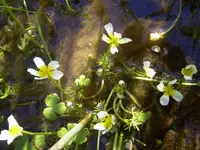
White water crowfoot (Ranunculus aquatilis) is an aquatic flowering plant that grows submerged or floating in ponds, slow streams, and ditches. It forms delicate, trailing stems with finely divided underwater leaves and small white flowers held at the surface.
This species is native to cooler regions of Europe, North America, and parts of Asia, usually in clean, still or gently moving freshwater. It tends to spread quickly in suitable conditions, which makes it useful for naturalistic ponds but less suited to very small containers.
To care for white water crowfoot, provide cool, unpolluted water, steady moisture, and good light, as it prefers bright conditions and stable, low-nutrient aquatic environments.

Care Difficulty
Moderate Care

Light Preference
Full Sun

Water Requirements
Aquatic

Temperature Preference
Cool Climate

Hardiness Zone
3–9

Soil Texture
Silty, Peaty, Organic-rich

Soil pH
Slightly acidic (6.5–7.0), Neutral (7.0)

Soil Drainage
Waterlogged tolerant

Fertilization
Minimal (feed rarely)
Scan your plant to receive care tips personalized for your specific plant
Available on iOS and Android
This aquatic species needs strong light to flower and maintain compact growth in ponds or slow-moving water.
Ranunculus aquatilis is fully aquatic and depends on stable, clean, oxygenated water rather than traditional soil watering.
This aquatic plant prefers cool to mild water temperatures and shows best growth in stable, non-extreme conditions.
This aquatic species depends on high humidity and constant water contact rather than moist air alone.
Ranunculus aquatilis grows best rooted in soft, organic-rich sediment under shallow water or in managed aquatic containers.
This species is suitable for containers when grown in water-filled tubs, half-barrels, or ponds with stable water levels.
This aquatic species grows in nutrient-poor water and usually needs only minimal fertilization in cultivation.
Light pruning keeps Ranunculus aquatilis healthy, controls spread, and supports flowering in managed ponds or tanks.
This plant is most often managed by transplanting within ponds, streams, or aquatic containers rather than traditional repotting.
Ranunculus aquatilis is commonly propagated vegetatively in cultivation to maintain desired forms and coverage.
In much of its range this aquatic buttercup is cold hardy and often overwinters outdoors with little intervention.

Plant Health Check
Not sure what's wrong with your plant? Check your plant's health inside the app.
This aquatic buttercup produces two distinct leaf types on the same plant: finely divided, thread-like submerged leaves that reduce water resistance, and small floating leaves that resemble typical buttercup foliage when conditions allow.
In cold, fast-flowing streams where forming floating leaves is difficult, its white flowers can develop and open fully underwater, an unusual trait among flowering plants that usually require air exposure for pollination.
Dense mats of its submerged leaves create shelter and breeding microhabitats for aquatic invertebrates and small fish, increasing local biodiversity in streams, ponds, and ditches.

In some nutrient-rich European waters, this species can form extensive underwater meadows that significantly slow water flow, which in turn promotes sediment deposition and can subtly reshape small stream channels over time.
Lack of flowers usually comes from too little light, water that is too deep or warm, or nutrient-poor conditions. Ensure cool, clean, slow-moving water, moderate nutrients, and stable water depth to support bud and flower formation.
Keep your plants happy and healthy with plant identification, disease detection, and easy care guidance.