regal lily Care (Lilium regale)

Also known as: Royal Lily
regal lily

About regal lily

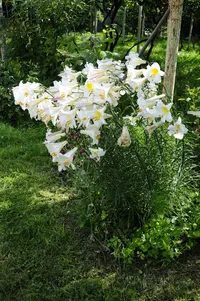
Regal lily, Lilium regale, is a hardy bulbous perennial grown for its large, trumpet-shaped white flowers with golden throats and a strong fragrance. It usually forms tall, upright stems with narrow leaves and a cluster of blooms near the top.

This species is native to western China, where it grows on rocky slopes and well-drained mountain soils. It adapts well to many temperate gardens but needs stable soil conditions and good drainage to thrive.

Regal lily is considered moderately easy to grow for gardeners who understand how to care for regal lily, especially regarding proper light, moisture, and soil preparation.

Main Plant Requirements

Care Difficulty

Moderate Care

Light Preference

Full Sun

Water Requirements

Moderate Water

Temperature Preference

Cold Hardy

Hardiness Zone

4–8

Soil Texture

Sandy, Loamy, Organic-rich

Soil pH

Acidic (5.5–6.5), Slightly acidic (6.5–7.0)

Soil Drainage

Well-drained

Fertilization

Light (every 4–6 weeks)

Get Personalized Care Plan

Scan your plant to receive care tips personalized for your specific plant

Available on iOS and Android

How to Care for the regal lily

This species needs bright outdoor conditions to flower well and maintain sturdy stems.

  • Provide 6–8 hours of direct sun daily, with morning sun and light afternoon shade ideal in hot summers.
  • Tolerates light partial shade (around 4 hours direct sun), but flowering and stem strength decrease as light levels drop.
  • In very intense summer climates, protect regal lily from harsh midafternoon sun to reduce leaf scorch and faded blooms.

This bulb prefers evenly moist, not saturated, soil around the root zone.

  • Water when the top 3–5 cm of soil feels dry, applying a deep soak so moisture reaches the bulbs, then let excess drain away.
  • During active growth and flowering, monitor after hot, dry spells; in cool or rainy periods, extend the interval to prevent soggy soil.
  • Yellowing, limp leaves and a soft bulb suggest overwatering, while drooping, dry foliage and shrinking buds indicate the need for more moisture for Lilium regale.

This hardy lily tolerates a wide temperature range but flowers best in moderate conditions.

  • Optimal growth occurs around 60–75°F (16–24°C), with strong stems and good bud formation in these mild temperatures.
  • Dormant bulbs withstand winter cold down to about 0°F (−18°C) in well-drained soil, but new spring shoots are more vulnerable to late frosts.
  • In summer heat above 85–90°F (29–32°C), provide mulch to cool the soil and ensure consistent moisture to reduce stress and bud drop.

This species prefers moderate, outdoor-like air humidity around 40–60% and usually copes well with typical home conditions.

  • Tolerates relatively dry air if soil moisture is kept steady, but prolonged air below 30% can slow growth and cause crisp leaf tips.
  • Watch for browning edges, curled buds, or stalled buds as signs that air is too dry or fluctuating sharply.
  • Outdoors, group plants and mulch soil to buffer swings; indoors, use a shallow pebble tray with water under (not touching) the pot for gentle humidity lift.

Lilium regale needs free-draining, aerated soil that stays evenly moist but never waterlogged.

  • Use a loose loam or sandy-loam with 30–40% coarse material such as sharp sand, grit, or perlite to prevent compaction around the bulbs.
  • Aim for slightly acidic to neutral pH, roughly 6.0–7.0, which supports nutrient uptake and reduces the risk of nutrient lockout.
  • Mix in a modest amount of well-rotted compost or leaf mold for organic matter, but avoid heavy clay or peat-heavy blends that hold standing water.
  • On heavy native soil, plant on a slight mound or raised bed to improve drainage and protect bulbs from rot in wet seasons.

This species can grow successfully in containers when the pot depth and drainage are carefully managed.

  • Choose a tall, heavy pot that allows 20–25 cm of soil below the bulbs and resists tipping once stems reach full height.
  • Use a gritty, fast-draining mix and raise the container slightly on pot feet so excess water clears the drainage holes quickly.
  • Position the container where wind exposure is limited or brace tall stems with discreet supports to prevent rocking that can damage roots.

Nutrient-rich but well-drained soil supports strong growth and flowering in regal lily.

  • Use a balanced granular or slow-release fertilizer (around 10-10-10) in early spring as shoots emerge.
  • Apply a light top-dressing of compost or bulb fertilizer once more just before flowering for sustained nutrients.
  • Water in soluble feed at half-strength every 4–6 weeks during active growth only, avoiding dry soil.
  • Stop feeding after foliage begins yellowing in late summer so bulbs can enter dormancy undisturbed.

Thoughtful pruning of Lilium regale focuses on spent flowers and declining stems rather than reshaping the plant.

  • Deadhead individual flowers as they fade, cutting just below the bloom to reduce seed set and direct energy to the bulb.
  • Remove entire flower stalks at the base only once all blooms have finished and stems turn brown and hollow.
  • Trim away damaged, diseased, or storm-bent stems promptly using clean, sharp pruners to reduce infection risk.
  • Avoid cutting green, healthy leaves during summer, as they are essential for photosynthesis and next year’s flowering strength.

Lilium regale is usually grown in beds and borders, with transplanting focused on clump management rather than frequent pot changes.

  • Transplant or lift clumps only when flowering declines, bulbs crowd, or stems emerge thinner and fewer than before.
  • Plan moves for late summer to early fall after foliage dies back, allowing bulbs to recharge and then re-establish roots.
  • Divide crowded clumps gently, keeping bulb scales intact and replanting at 15–20 cm depth in well-drained soil.
  • Water newly transplanted bulbs thoroughly, then keep soil just moist, not saturated, to limit transplant shock and rot.

Multiplying Lilium regale is usually done by bulb division or scaling, with seed used mainly for breeding or larger projects.

  • Divide mature clumps in late summer or early fall after stems die back, separating firm, healthy bulbs by hand.
  • Plant divisions at their original depth in free-draining soil, spacing bulbs so stems will not be overcrowded next season.
  • For scaling, break off clean outer bulb scales, place in a slightly moist, sterile medium, and keep warm until bulblets form.
  • Sow seeds in trays of gritty mix, keep evenly moist at 60–70°F, and expect flowering after several years of growth.

Established Lilium regale is generally cold hardy in much of the US, needing only light winter preparation in the ground.

  • After hard frost blackens stems, cut them down to soil level to limit disease carryover.
  • Apply a 5–8 cm mulch layer over the root zone in late fall, especially in colder zones or exposed sites.
  • Use a gritty, free-draining soil mix and shelter for containers, moving pots into a cold but frost-sheltered area if possible.

Care Tips

Sturdy stake support

Install slim bamboo stakes or hoop supports when shoots reach 15–20 cm, then loosely tie stems with soft ties to prevent wind snap and keep tall flower spikes upright.

Bulb division timing

Lift and divide crowded clumps in late summer to early fall once foliage has yellowed, replanting firm, healthy bulbs at the same depth to maintain vigor and flowering performance.

Neck protection mulch

Apply a light, free-draining mulch such as composted bark around but not directly over the bulb necks to keep roots cool while avoiding rot at the bulb crown.

Bud blast prevention

Inspect swelling buds weekly in late spring and remove any distorted or browned buds promptly, checking for and hand-picking lily beetles or aphids that can trigger bud loss.

Container refresh cycle

For containers, tip the pot out every 2–3 years in fall, discard any soft or damaged bulbs, replace exhausted mix, and replant firm bulbs slightly spaced apart to keep growing regal lily reliably flowering.

Common Pests and Diseases

Lily beetle

This pest feeds on leaves, buds, and flowers, often leaving ragged holes and black, sticky larval droppings on the plant. Adults are bright red beetles that are easy to spot on foliage and stems.

Solution

Hand-pick and crush adults and larvae daily as soon as they appear, and remove egg clusters from leaf undersides. For heavier infestations, use a pyrethrin-based or spinosad spray directed at the larvae, and clean up plant debris around bulbs to reduce overwintering sites.

Lily aphids

These insects cluster on stems, undersides of leaves, and flower buds, sucking sap and causing curling, distortion, and sticky honeydew that can attract sooty mold. Symptoms include stunted growth and deformed flowers when populations are high.

Solution

Dislodge aphids with a strong stream of water and prune off heavily infested shoots or buds. If needed, apply insecticidal soap or a horticultural oil, coating stems and leaf undersides, and repeat at 5–7 day intervals until populations collapse.

Botrytis leaf blight

This disease causes brown or grayish leaf spots that can merge, leading to blighted foliage and sometimes damaged buds, especially in cool, damp weather. Symptoms include fuzzy gray mold on affected tissue and rapid spread during prolonged leaf wetness.

Solution

Remove and discard affected leaves and spent flowers at once and keep the foliage as dry as possible by watering at soil level. Improve spacing and airflow, avoid overhead watering, and in areas with frequent outbreaks consider preventive fungicide sprays labeled for Botrytis on lilies during wet, cool periods as part of Lilium regale care instructions.

Basal rot

This disease affects the bulbs, causing browning and softening of the basal plate and lower scales, often leading to yellowing, stunted shoots and plant collapse. Symptoms include poor emergence in spring and bulbs that show brown, dry to soft rot when lifted.

Solution

Lift and discard any bulbs showing rot, and avoid replanting lilies in the same spot for several years. Plant only firm, healthy bulbs in well-drained soil, avoid overwatering, and consider using a fungicide bulb dip before planting in sites with a known history of basal rot.

Lily mosaic virus

This disease leads to mottled, streaked, or banded foliage and may cause distorted, reduced flowers and general loss of vigor. Symptoms include persistent leaf streaking that does not match natural variegation and does not clear with better care conditions.

Solution

Promptly remove and destroy symptomatic plants to reduce spread and never propagate from infected stock. Control aphids, which commonly transmit the virus, and source bulbs only from reputable suppliers that test for lily viruses.

Interesting Facts

Origin in Sichuan gorges

This species is native to steep, rocky river gorges in western Sichuan, China, where it grows on limestone cliffs and scree slopes with sharp drainage and high light exposure.

Exceptionally fragrant trumpets

Its large white trumpet-shaped flowers produce a strong, sweet fragrance concentrated in the evening and night, an adaptation that helps attract nocturnal pollinators such as moths.

Key parent in hybrids

Lilium regale has been widely used in lily breeding since the early 20th century, passing on its strong fragrance, large trumpets, and relative disease tolerance to many modern ornamental cultivars.

Botan icon

Did you know?

Seeds collected by plant explorer Ernest Henry Wilson in China in the early 1900s were so successful in cultivation that within a few years Lilium regale spread rapidly through European and North American gardens, becoming one of the most influential wild lilies in ornamental horticulture.

FAQs about regal lily

Lack of flowering usually comes from insufficient bulb energy, overcrowded clumps, or inadequate winter chill. Allow foliage to die back naturally, avoid cutting stems too early, and divide congested bulbs every few years to restore bloom strength.

Grow Healthy Plants with Botan Care

Keep your plants happy and healthy with plant identification, disease detection, and easy care guidance.


Botan plant care app — identify plants on mobile

Explore More Plants