Mark Dormant Clumps
Place discreet labels or stones where the bulbs grow before foliage dies back, so you avoid disturbing the resting corms when digging or weeding in summer.

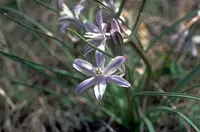
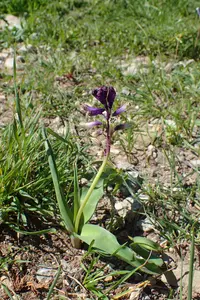
Blue funnel lily, Androstephium coeruleum, is a small spring-blooming bulb from open prairies and grasslands of the central and southwestern United States. It produces slender, grass-like leaves and delicate starry blue to violet flowers held on thin stalks above the foliage.
This plant grows in loose colonies and often appears briefly in spring, then goes dormant in summer heat. It is generally considered moderately easy in cultivation if its seasonal rhythm is respected.
Good drainage, relatively open sun, and soil that dries somewhat after flowering support healthy growth. Gardeners who understand this dormancy pattern usually find it straightforward to care for blue funnel lily.

Care Difficulty
Moderate Care

Light Preference
Full Sun

Water Requirements
Moderate Water

Temperature Preference
Cold Hardy

Hardiness Zone
5–9

Soil Texture
Sandy, Loamy, Rocky

Soil pH
Acidic (5.5–6.5), Slightly acidic (6.5–7.0)

Soil Drainage
Well-drained

Fertilization
Minimal (feed rarely)
Scan your plant to receive care tips personalized for your specific plant
Available on iOS and Android
This small North American bulb prefers open, sunny sites for best flowering.
This bulb prefers moderate, not constant, soil moisture during active growth.
This species is adapted to temperate climates with distinct cool winters and mild springs.
Humidity is not a critical factor for Androstephium coeruleum in typical home or outdoor conditions.
This bulb prefers light, free-draining soil that mimics its native prairie conditions.
This species is suitable for container growing when drainage and soil depth are managed carefully.
This small bulb usually needs minimal feeding when grown in reasonably fertile, well-drained soil.
Pruning needs for Androstephium coeruleum are minimal and mainly focused on cleaning up after flowering.
This bulbous wildflower is usually grown in the ground, with transplanting done only when clumps become crowded or need relocation.
Propagation of this species is mainly done by seed and by separating small offset bulbs from mature clumps.
In most temperate regions this bulb is reasonably cold hardy and requires little specific winter care in the ground.

Plant Health Check
Not sure what's wrong with your plant? Check your plant's health inside the app.
This small bulb-forming perennial is naturally restricted to the central Great Plains of the United States, where it grows in open prairies, shortgrass regions, and lightly grazed pastures with well-drained soils.
The plant behaves as a spring ephemeral, sending up leaves and flowers early in the season, then quickly going dormant as heat and drought increase, which allows it to avoid summer stress on the prairie.
Individual flowers often open a pale bluish to lavender tone and may appear slightly deeper or more muted in color as they age, a common visual cue in many insect-pollinated prairie wildflowers.

This species has experienced significant local declines because many of its native prairie habitats have been converted to agriculture or heavily developed, so some botanists monitor its remaining populations as indicators of relatively intact Great Plains grassland.
This species usually flowers in mid to late spring, often for several weeks. Individual blooms are short-lived, but many buds open in sequence, so the overall display can extend through a good portion of the season.
Keep your plants happy and healthy with plant identification, disease detection, and easy care guidance.