


Mark Dormant Pots
Label pot locations and keep them in the same spot over summer dormancy so bulbs are not accidentally disturbed or discarded when the foliage has completely died back.

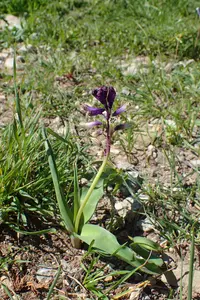
Three-leaved hyacinth, Bellevalia trifoliata, is a small spring-flowering bulb in the asparagus family. It forms compact clumps of slender leaves and short flower spikes. The plant produces tight clusters of tubular, usually bluish to violet flowers, often held just above the foliage, giving it a neat, understated look in pots or rock gardens. It grows from bulbs that rest dormant in summer. In the wild, Bellevalia trifoliata occurs mainly in Mediterranean regions, where winters are mild and moist and summers are dry. Its bulbous nature makes it relatively undemanding if given a well-drained soil and moderate light. Once the basic needs are understood, it is straightforward to care for Three-leaved Hyacinth in a home garden or container setting.

Care Difficulty
Moderate Care

Light Preference
Partial Sun

Water Requirements
Moderate Water

Temperature Preference
Cool Climate

Hardiness Zone
6–9

Soil Texture
Sandy, Loamy, Organic-rich

Soil pH
Slightly acidic (6.5–7.0), Neutral (7.0)

Soil Drainage
Well-drained

Fertilization
Minimal (feed rarely)
Scan your plant to receive care tips personalized for your specific plant
Available on iOS and Android
Bellevalia trifoliata prefers bright conditions with cool, gentle sun rather than intense heat.
Bellevalia trifoliata needs steady moisture in the growing season but must never sit in waterlogged soil.
This bulb prefers cool to mild conditions with a distinct winter chill followed by a gentle spring warm-up.
Humidity is rarely critical for this bulb, which handles typical indoor and outdoor ranges well.
Soil for this small bulb must drain freely while holding moderate, not excessive, moisture.
This species is well suited to container growing for controlled drainage and easy seasonal display.
This small bulb needs only light feeding to flower well in pots or enriched garden soil.
Pruning needs for Bellevalia trifoliata are minimal and focus on hygiene rather than shaping.
This bulb prefers undisturbed clumps, so repotting or transplanting is done infrequently.
Propagation of this species is straightforward through bulbs and seeds when conditions are suitable.
This hardy bulb generally needs little winter care in temperate climates.

Plant Health Check
Not sure what's wrong with your plant? Check your plant's health inside the app.
This bulb species is naturally found in dry, open habitats around the eastern Mediterranean, especially light scrub and rocky grasslands that experience wet winters and hot, dry summers.
Its inflorescences carry small, bell-shaped, often pale bluish to greenish flowers that remain slightly nodding, which helps protect the reproductive parts from rain and dew in early spring.
The plant emerges and flowers in early spring, then retreats back into its bulb as heat and drought increase, a typical geophyte strategy that allows survival through long, dry summers.
This bulb usually flowers in mid to late spring, depending on climate. Flowering lasts about 2–4 weeks, with small, bell-shaped blooms on short spikes. Cooler, stable temperatures help extend the display.
Keep your plants happy and healthy with plant identification, disease detection, and easy care guidance.


Morning Glory
Ipomoea tricolor 'Heavenly Blue'
 POPULAR
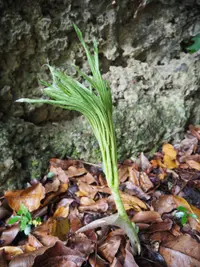
Amorphophallus henryi
Amorphophallus henryi
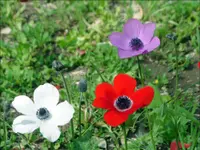
Poppy anemone
Anemone coronaria
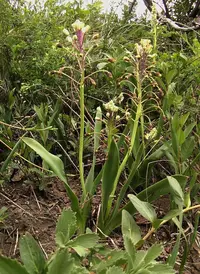
Bellevalia speciosa
Bellevalia speciosa
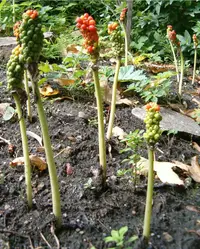
Arum orientale
Arum orientale
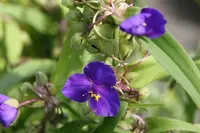
Spiderwort
Tradescantia 'Sweet Kate'
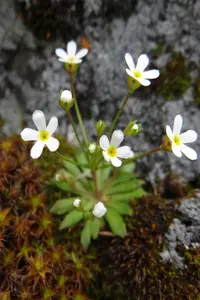
Androsace lactiflora
Androsace lactiflora
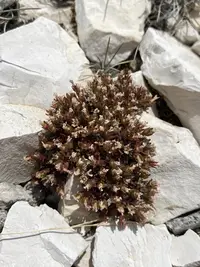
Mountain Douglasia
Androsace montana