Arum orientale Care

Arum orientale

About Arum orientale

Arum orientale is a small, tuberous perennial from the eastern Mediterranean, related to other arums. It grows from underground storage organs and returns each year in suitable climates. This species forms low clumps of arrow-shaped leaves and sends up distinctive hooded flowers, followed by spikes of bright berries that add seasonal interest. In nature it occurs in light woodlands, rocky slopes, and scrubby hillsides. It tends to prefer partial shade, moist but free-draining soil, and a cool dormant period, which influences how easy it is to keep long term. With the right site and soil, it is a manageable plant for gardeners who want to learn how to care for Arum orientale.

Main Plant Requirements

Care Difficulty

Moderate Care

Light Preference

Partial Shade

Water Requirements

Moderate Water

Temperature Preference

Cool Climate

Hardiness Zone

5–8

Soil Texture

Loamy, Silty, Organic-rich

Soil pH

Acidic (5.5–6.5), Slightly acidic (6.5–7.0)

Soil Drainage

Moist but well-drained

Fertilization

Minimal (feed rarely)

Get Personalized Care Plan

Scan your plant to receive care tips personalized for your specific plant

Available on iOS and Android

How to Care for the Arum orientale

This woodland aroid prefers soft, indirect light rather than intense sun exposure.

  • Provide dappled or filtered light with 2–4 hours of gentle morning sun; avoid strong afternoon sun that can scorch leaves and bleach spathes of Arum orientale.
  • Site the plant in partial shade, such as under open shrubs or high tree canopies, where it receives bright shade for most of the day.
  • In summer, increase shade in hot climates; in early spring, when trees are leafless, brief higher light levels are tolerated and support flowering.

This tuberous plant prefers evenly moist, but never waterlogged, soil during its active season.

  • Water when the top 2–4 cm of soil feel dry, using enough to moisten the root zone, then let excess drain completely to protect the tubers from rot.
  • During active growth in spring and early summer, check soil every few days in warm weather; in late summer dormancy, reduce watering sharply and allow the soil surface to dry more deeply.
  • Watch for yellowing, mushy leaf bases as a sign of overwatering, and for limp, folding leaves and dry soil as indicators that Arum orientale needs water.

This species prefers cool to mild conditions and benefits from a marked seasonal cycle.

  • Optimal growth occurs at 55–70°F (13–21°C), with cooler nights; these temperatures support healthy foliage and flower development.
  • The plant tolerates brief dips near 25°F (−4°C) once established, but young plants are safer above 30°F (−1°C) and should be protected from severe, exposed frosts.
  • In hot summers above 85°F (29°C), growth may slow or foliage may go dormant earlier; provide shade and mulch to keep the root zone cooler and more stable.

This species tolerates a wide humidity range and rarely needs special humidity management outdoors.

This tuberous plant prefers loose, moist, well-drained soil that holds organic matter but does not stay waterlogged.

  • Use a loamy, organic-rich soil that crumbles easily, avoiding heavy clay that compacts around the tubers.
  • Aim for slightly acidic to neutral pH, roughly 6.0–7.0, which supports nutrient availability for Arum orientale.
  • In beds, improve structure and drainage by mixing in compost plus coarse sand or fine gravel before planting tubers.
  • Avoid spots where water collects after rain, since prolonged saturation promotes tuber rot and root suffocation.

This species can be grown in containers if the pot allows for deep, stable root and tuber development.

  • Choose a pot at least 25–30 cm deep so tubers can sit several centimeters below the surface without crowding the base.
  • Use a heavier material such as ceramic or clay outdoors to keep tall flowering stems stable in wind.
  • Elevate the container slightly on feet or bricks so drainage holes stay clear and excess water leaves quickly after rain or watering.

This woodland perennial benefits from light feeding but does not need heavy fertilization.

  • Use a balanced, slow-release fertilizer (around 10-10-10) or a thin layer of compost in early spring as shoots emerge.
  • Feed outdoor clumps once each growing season; container plants may receive a half-strength liquid feed every 4–6 weeks.
  • Always water before and after applying fertilizer to limit root burn and support even nutrient uptake.
  • Stop feeding Arum orientale once foliage starts yellowing and entering dormancy, and do not fertilize in winter.

Pruning needs for Arum orientale are minimal and focus on hygiene rather than shaping.

  • In late spring or after flowering, remove spent flower stalks at the base to keep the plant tidy.
  • Cut back yellowing or dead leaves during late summer or fall to reduce disease risk and improve appearance.
  • Use clean, sharp hand pruners or scissors and disinfect blades when moving between plants.
  • Avoid heavy cutting into healthy foliage, as this does not improve bloom and can weaken the clump over time.

This species is usually grown in the ground, with transplanting focused on adjusting overcrowded or poorly placed clumps.

  • Plan lifting and transplanting for late summer to early fall, once foliage declines and corms are dormant.
  • Transplant when growth weakens, flowering declines, or clumps become congested rather than on a fixed schedule.
  • Dig widely to keep corms and roots together, replant at the same depth, and water gently to settle soil and limit stress.
  • Container-grown plants that show roots circling the pot or very slow growth can be moved to a slightly larger container with fresh, well-drained mix.

Multiplication of this plant is most reliable by division of corms rather than from seed.

  • Lift mature clumps in late summer or early fall, when foliage has died back and corms are dormant.
  • Separate offsets from the main corm by hand, keeping a clear growing point on each division for best establishment.
  • Replant divisions at the original depth in loose, well-drained soil and water lightly to settle them in place.
  • Seeds of Arum orientale need fresh sowing and a cool period; germination is slow and less dependable than division.

Established clumps are fairly cold hardy, so winter care is simple in most temperate gardens.

  • Allow foliage to die back naturally after frost, then remove collapsed leaves to limit rot and disease.
  • Apply a 3–5 cm layer of leaf mold or compost over the root zone in colder areas to buffer temperature swings.
  • In containers, move pots to a sheltered, frost-free but cool spot so corms do not freeze solid.

Care Tips

Mark Dormant Spots

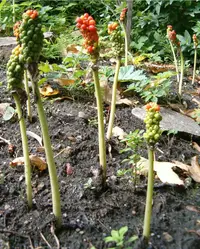
Tag the planting location with a durable label or stone marker in late spring, because the foliage disappears early and clear marking prevents accidental digging or overplanting in that spot.

Use Fine Grit Mulch

Apply a thin top layer of fine gravel or horticultural grit around the crowns to keep the neck of the tubers slightly drier, which helps reduce rot and discourages slugs from sitting against the emerging shoots.

Divide With Precision

Lift and divide clumps only when the plant is fully dormant, then replant tubers at the same depth and orientation, spacing them 10–15 cm apart to maintain good airflow and consistent flowering density.

Control Self-Seeding

If self-sowing is a problem, remove the spent flower heads before berries form, or collect and discard developing seed heads wearing gloves to prevent unwanted spread and keep the planting orderly.

Use Mesh Protection

In areas with rodents or squirrels, plant tubers inside shallow plastic bulb baskets or wrap small groups in rigid mesh before backfilling, which helps protect them from being dug up while still allowing normal root growth when growing Arum orientale.

Common Pests and Diseases

Aroid aphids

These insects cluster on young stems, spathes, and the underside of leaves, sucking sap and causing curling or distortion. Symptoms include sticky honeydew and sooty mold on nearby surfaces.

Solution

Prune and discard heavily infested flower stalks, then rinse remaining foliage with a strong but controlled stream of water. For ongoing control, use insecticidal soap or a light horticultural oil, repeating every 5–7 days until no new aphids appear, and avoid excess nitrogen fertilizer that promotes soft, aphid‑prone growth.

Arum rust

This disease produces orange to brown pustules on leaf undersides, with pale or yellow spots on the upper surface. Severe infections cause early leaf drop and weaken the tubers over time.

Solution

Remove and destroy affected leaves as soon as pustules appear and keep foliage as dry as possible by watering at soil level. Improve spacing and airflow, avoid overhead watering, and in recurring cases apply a labeled sulfur or systemic fungicide early in the season according to Arum orientale care instructions.

Bacterial soft rot

This disease causes water‑soaked, foul‑smelling, mushy areas at the base of the stems or on tubers, often starting where mechanical injury or frost damage occurred. Symptoms include collapse of leaves and rapid tissue breakdown in warm, wet conditions.

Solution

Promptly remove and discard any soft, rotting tissue and severely affected plants, keeping tools disinfected with alcohol or a 10% bleach solution. Plant only firm, healthy tubers into well‑drained soil, avoid overwatering and wounding, and rotate plantings to new sites if soft rot has been a recurring problem.

Leaf spot complex

This disease group, usually fungal, leads to small brown, purple, or tan spots that can merge into larger blotches, especially in damp, shaded positions. Symptoms include premature yellowing of foliage and reduced vigor when spotting is extensive.

Solution

Cut off and discard spotted leaves, keeping the area around the clump clean of fallen foliage. Improve light and airflow, water at the base in the morning, and if conditions stay wet, use a broad‑spectrum ornamental fungicide early in the season to protect new growth.

Slugs and snails

These pests chew irregular holes in young leaves and spathes, often leaving silvery slime trails on and around the plant. Damage is usually worst in cool, damp weather and in dense groundcover plantings.

Solution

Hand‑pick slugs and snails in the evening or early morning and reduce hiding places such as dense mulch or debris near the clump. Use iron phosphate bait around, but not directly on, the plants, and consider barriers like copper tape or sharp grit to protect emerging shoots and young leaves.

Interesting Facts

Early spring emergence

This species often emerges and flowers very early in spring, sometimes before surrounding vegetation has leafed out, which helps it capture more light in deciduous woodland habitats.

Distinctive marbled leaves

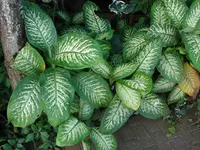
Its leaves are typically arrow-shaped with pale marbling or mottling on a darker green background, a pattern that helps camouflage the plant on the forest floor among leaf litter.

Specialist beetle visitors

The inflorescence, with its spadix and pale spathe, is mainly visited by small beetles and other ground-dwelling insects that move between plants and aid in pollination, rather than by showy pollinators like bees or butterflies.

Botan icon

Did you know?

Arum orientale naturally occurs from the Balkans and parts of eastern Europe into western Asia, and its scattered, rather localized distribution reflects its preference for specific microhabitats such as moist yet well-drained, partially shaded woodland and scrub margins.

FAQs about Arum orientale

Lack of flowering usually comes from insufficient light, depleted soil nutrients, or bulbs planted too deeply. Overcrowded clumps also bloom poorly; lifting, dividing, and replanting every few years often restores normal flowering.

Grow Healthy Plants with Botan Care

Keep your plants happy and healthy with plant identification, disease detection, and easy care guidance.

Botan plant care app — identify plants on mobile

Explore More Plants