Staking Flower Stems
Install thin, unobtrusive stakes and soft ties early in the season to support tall, brittle stems and prevent wind damage and lodging when the flower heads become heavy.

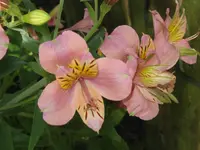
Peruvian lily, Alstroemeria ligtu, is a tuberous, clump-forming perennial grown mainly for its showy, long-lasting flowers. It produces upright stems with narrow leaves and clusters of lily-like blooms in pink, orange, red, or white tones, often with speckled or striped markings.
This species originates from central Chile, where it grows in open, often rocky habitats with cool, dry winters and warm summers. It tends to be moderately easy to grow if its dislike of waterlogged soil and extreme heat is respected, so learning how to care for Peruvian Lily focuses on drainage, moderate watering, and a sunny to lightly shaded position.

Care Difficulty
Moderate Care

Light Preference
Full Sun

Water Requirements
Moderate Water

Temperature Preference
Cool Climate

Hardiness Zone
7–10

Soil Texture
Sandy, Loamy, Organic-rich

Soil pH
Acidic (5.5–6.5), Slightly acidic (6.5–7.0)

Soil Drainage
Moist but well-drained

Fertilization
Light (every 4–6 weeks)
Scan your plant to receive care tips personalized for your specific plant
Available on iOS and Android
Alstroemeria ligtu performs best in bright conditions with protection from harsh midday sun.
Alstroemeria ligtu prefers evenly moist, well-drained soil that never stays soggy.
This species prefers mild, temperate conditions and dislikes both hard frost and extreme heat.
Alstroemeria ligtu prefers moderate, stable humidity but adapts to typical household levels.
Alstroemeria ligtu grows best in loose, well-aerated, freely draining soil that still retains moderate moisture.
This species is suitable for container growing when given a deep, stable pot with reliable drainage.
Alstroemeria ligtu responds well to moderate feeding during its active growing season.
Thoughtful pruning keeps Alstroemeria ligtu flowering well and maintains a tidy clump.
This species is usually grown in borders, so care focuses on dividing and transplanting established clumps.
Alstroemeria ligtu is most reliably propagated by division of its rhizomes, with seed used mainly for breeding or large numbers.
Alstroemeria ligtu has moderate cold tolerance but benefits from simple winter protection in cooler climates.

Plant Health Check
Not sure what's wrong with your plant? Check your plant's health inside the app.
This species survives harsh, dry Chilean summers as an underground tuber, entering a pronounced winter dormancy and resprouting when cool, moist conditions return.
It is naturally restricted to central Chile, where it grows on dry, open slopes and rocky hillsides in Mediterranean-type climates, tolerating poor, stony soils that many ornamentals cannot handle.
In its native range, this species forms natural hybrid swarms with closely related Alstroemeria taxa, contributing genes that have been used in breeding modern garden and cut-flower cultivars.

Alstroemeria ligtu was among the key parent species in early European breeding programs during the 19th and 20th centuries, helping to create the wide color range and characteristic flecked petals now associated with modern Peruvian lilies in the cut-flower trade.
Lack of flowering usually comes from insufficient light, overcrowded clumps, or nutrient imbalance. Mature clumps often need division every few years. Avoid high-nitrogen fertilizer, which promotes leaves instead of buds, and keep the plant out of deep shade.
Keep your plants happy and healthy with plant identification, disease detection, and easy care guidance.