Extend Bloom Period
Remove individual spent flower heads as soon as petals fade, cutting the stem back to a strong leaf node to encourage continued bud production and a longer flowering display.

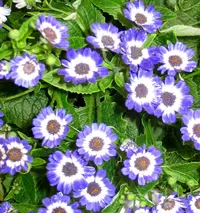
Common ragwort, often sold as Pericallis × hybrida, is a compact flowering plant grown mainly for its dense clusters of bright, daisy-like blooms. It is usually treated as a cool-season annual and is popular in containers, bedding displays, and seasonal indoor decoration.
Plants form low, leafy mounds with soft, sometimes slightly lobed leaves, topped by flat-topped flower heads in strong blues, purples, pinks, reds, or bicolors. They originally derive from Canary Islands species, so they favor mild conditions and dislike heat or drought.
Pericallis × hybrida prefers bright, indirect light, evenly moist but not waterlogged soil, and good air movement. These traits make it attractive but somewhat short-lived and moderate in difficulty if you want to care for common ragwort successfully.

Care Difficulty
Moderate Care

Light Preference
Partial Sun

Water Requirements
Keep Soil Moist

Temperature Preference
Cool Climate

Hardiness Zone
9–11

Soil Texture
Loamy, Peaty, Organic-rich

Soil pH
Acidic (5.5–6.5), Slightly acidic (6.5–7.0)

Soil Drainage
Moist but well-drained

Fertilization
Moderate (every 2–4 weeks)
Scan your plant to receive care tips personalized for your specific plant
Available on iOS and Android
Pericallis × hybrida prefers bright, gentle light to support heavy flowering without leaf scorch.
This plant needs consistently moist but not waterlogged soil for reliable flowering.
This species prefers cool to mild conditions and declines quickly in heat or frost.
This plant prefers moderate to high humidity and reacts quickly to very dry air.
This species needs light, well-aerated, consistently moist soil that never stays waterlogged.
This plant is well suited to containers, especially for cool-season color displays.
Pericallis × hybrida responds well to moderate feeding during its active growing and flowering period.
Pericallis × hybrida benefits from light, ongoing grooming to maintain compact growth and continuous bloom.
This seasonal bedding plant is usually grown for a single flowering period, so repotting focuses on short-term root health rather than long-term pot size increases.
Pericallis × hybrida is typically treated as an annual hybrid, so propagation is limited and often done by seed or softwood cuttings.
Pericallis × hybrida has low frost tolerance and is usually discarded after flowering, but container plants can be carried through mild winters with care.

Plant Health Check
Not sure what's wrong with your plant? Check your plant's health inside the app.
This ornamental is a complex hybrid derived mainly from Pericallis cruenta and Pericallis lanata, both native to the Canary Islands, which gives it strong cool-season growth and a preference for mild conditions.
Unlike many bedding plants, it flowers most heavily in cool, bright conditions and often declines quickly when exposed to sustained heat above typical spring temperatures.
Breeding has produced cultivars with unusually intense blues, purples, and bicolors that are relatively rare among mass-market flowering pot plants, making it a model species for pigmentation studies in ornamental breeding.

Modern molecular work has shown that this plant, long grown under the old name Cineraria, actually belongs in the genus Pericallis within the Asteraceae family, and its reclassification helped clarify evolutionary relationships among Canary Island daisies.
Lack of flowering usually results from insufficient light, excess heat, or nutrient imbalance, especially high nitrogen. Old, spent plants also flower poorly. Deadhead faded blooms, avoid heavy feeding, and keep conditions cool and bright to restore bud formation.
Keep your plants happy and healthy with plant identification, disease detection, and easy care guidance.