Staggered Succession Sowing
Sow small batches every 3–4 weeks from early spring to midsummer so flowering continues without long gaps as older plants tire and become woody.

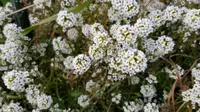
Sweet alyssum, Lobularia maritima, is a low, spreading annual or short-lived perennial known for its tiny, honey-scented flower clusters. It forms dense mounds or trailing edges that soften borders, rock gardens, and containers.
In its native Mediterranean habitat, it grows in coastal areas and rocky slopes, which explains its good tolerance to sun, wind, and relatively poor soils. The plant blooms over a long season and often self-seeds, which makes it easy to maintain and care for sweet alyssum in many gardens.
It generally prefers full sun to light shade, moderately moist but well-drained soil, and benefits from regular deadheading to stay compact and floriferous.

Care Difficulty
Easy Care

Light Preference
Full Sun

Water Requirements
Moderate Water

Temperature Preference
Cool Climate

Hardiness Zone
5–9

Soil Texture
Sandy, Loamy, Organic-rich

Soil pH
Acidic (5.5–6.5), Slightly acidic (6.5–7.0)

Soil Drainage
Well-drained

Fertilization
Light (every 4–6 weeks)
Scan your plant to receive care tips personalized for your specific plant
Available on iOS and Android
This plant thrives in bright outdoor conditions with several hours of direct light each day.
Lobularia maritima prefers consistently moist but not saturated soil.
This species grows best in cool to mild conditions and struggles in extreme heat or hard frost.
Humidity is rarely a concern for Lobularia maritima in typical outdoor conditions.
Lobularia maritima prefers light, free-draining substrate that never stays waterlogged.
This species adapts very well to container growing on patios, balconies, and along edges.
Lobularia maritima benefits from light, consistent feeding but is sensitive to excess nutrients.
Pruning helps Lobularia maritima stay compact, prolong bloom, and prevent leggy growth.
This annual is more often transplanted than repotted, as it is usually replaced each season.
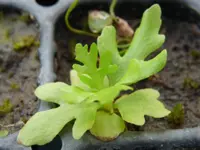
Lobularia maritima is most commonly propagated from seed and often self-sows in the garden.
Lobularia maritima is usually grown as an annual and needs little winter care in most climates.

Plant Health Check
Not sure what's wrong with your plant? Check your plant's health inside the app.
The tiny flowers produce abundant dilute nectar that is highly attractive to honeybees, hoverflies, and small solitary bees, making it a reliable resource in pollinator-friendly planting schemes.
In its native coastal habitats around the Mediterranean, this species tolerates salt-laden winds and sandy, low-fertility soils, an adaptation that allows it to colonize rocky shores and disturbed seaside ground.
Lobularia maritima can germinate, bloom, and set seed within a few months, which supports its use as a quick-cycling annual in bedding schemes and helps it reseed readily in suitable climates.

Genetic and breeding work on Lobularia maritima has produced modern cultivars that are significantly more heat-tolerant than historical forms, allowing continuous flowering in warmer climates where traditional sweet alyssum would typically stall in midsummer heat.
Poor flowering often comes from too much heat, old exhausted plants, or lack of deadheading. Trim back spent blooms, avoid strong fertilizer, and replant or resow when plants become woody or sparse to restore flowering.
Keep your plants happy and healthy with plant identification, disease detection, and easy care guidance.