bunchberry Care (Cornus canadensis)

Also known as: Bunchberry, Canadian bunchberry, dwarf cornel, crackerberry, creeping dogwood, dwarf dogwood, quatre-temps bunchberry, Canadian dwarf cornel, Canada bunchberry
bunchberry

About bunchberry

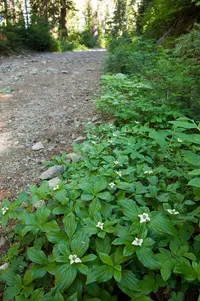
Bunchberry, Cornus canadensis, is a low-growing woodland groundcover in the dogwood family. It forms dense mats of creeping stems and small, oval leaves. In spring to early summer it produces white petal-like bracts around a tight cluster of tiny flowers, followed by bright red berries that stand above the foliage. This plant is native to cool, moist forests of northern North America and parts of eastern Asia. It prefers shade, consistently moist soil, and cooler temperatures, which can make garden culture more challenging in warm or dry climates. Understanding how to care for bunchberry starts with providing conditions that mimic a cool, humus-rich forest floor.

Main Plant Requirements

Care Difficulty

Hard Care

Light Preference

Partial Shade

Water Requirements

Keep Soil Moist

Temperature Preference

Cold Hardy

Hardiness Zone

2–6

Soil Texture

Loamy, Peaty, Organic-rich

Soil pH

Strongly acidic (4.5–5.5), Acidic (5.5–6.5)

Soil Drainage

Moist but well-drained

Fertilization

Minimal (feed rarely)

Get Personalized Care Plan

Scan your plant to receive care tips personalized for your specific plant

Available on iOS and Android

How to Care for the bunchberry

This shade-loving groundcover thrives in cool, forest-like light conditions.

  • Provide dappled or filtered light with 2–4 hours of gentle morning sun; avoid strong afternoon sun, which can scorch leaves.
  • Site bunchberry under deciduous trees or on the north/east side of buildings to mimic woodland understory light.
  • In hotter summers, increase shade from June to August; in cooler, northern climates it tolerates more open, bright shade.

This species prefers consistently moist, cool soil without becoming waterlogged.

  • Aim for soil that stays evenly damp; allow only the top 2–3 cm to dry slightly between waterings.
  • Use humus-rich, well-drained soil so water moves through but does not puddle, helping shallow roots stay aerated.
  • Reduce watering frequency in cool, rainy seasons; in hot, dry spells, water when leaves begin to lose turgor or edges curl.

This boreal woodland plant is naturally adapted to cool, temperate climates.

  • Active growth is best at 55–70°F (13–21°C), with flowers and foliage forming well in cool spring and early summer.
  • Dormant plants tolerate winter lows near -40°F (-40°C) under insulating snow cover in their native range.
  • Summer heat above 80°F (27°C) stresses plants; provide shade, mulch, and extra moisture during brief hot periods.

This woodland groundcover prefers consistently cool, moderately moist air rather than very dry indoor conditions.

  • Aim for 50–70% humidity, similar to a shaded forest edge, especially in heated or air-conditioned homes.
  • Leaves curling, browning at tips, or crisp margins often indicate air that is too dry for bunchberry.
  • Increase humidity by grouping plants, using a pebble tray with water below the pot base, or placing the container in a cooler, shaded microclimate.

Cornus canadensis requires cool, humus-rich soil that stays evenly moist yet drains freely.

  • Use a loose, loamy mix with 40–60% fine pine bark or leaf mold, plus peat or coco coir and a small amount of perlite for aeration.
  • Ensure drainage is rapid; the mix should feel springy, not compact, and never remain waterlogged after 1 day.
  • Target a slightly acidic pH of 5.0–6.5, avoiding alkaline mixes that can limit nutrient uptake and weaken growth.
  • Avoid heavy clay, poorly drained sites, or very sandy, nutrient-poor substrates; amend such soils heavily with composted bark and leaf mold.

This species can be grown in containers, but it remains healthiest when the setup mimics cool, shaded woodland conditions.

  • Choose a wide, shallow container that allows rhizomes to spread horizontally rather than a deep, narrow pot.
  • Use a thick-walled or clay pot to keep the root zone cooler and reduce heat stress on the fine roots.
  • Elevate the container slightly so drainage holes never sit in collected water, preventing prolonged saturation of the root zone.

Cornus canadensis is a light feeder and usually needs only modest nutrition in humus-rich soil.

  • Apply a thin layer of leaf mold or compost in early spring to mimic its natural forest habitat.
  • If growth is weak, use a balanced, slow-release fertilizer (around 10-10-10) at half strength once in spring.
  • Avoid summer and fall feeding to prevent soft growth before winter dormancy.
  • On poor soils, a light application of compost each year is often enough for caring for bunchberry.

Pruning Cornus canadensis is minimal and mainly focuses on tidying the groundcover mat.

  • Carry out light pruning in late winter or very early spring before new growth starts.
  • Snip away dead, diseased, or damaged stems with clean, sharp scissors or hand pruners.
  • Thin out congested patches to improve air flow and maintain an even, low carpet of growth.
  • Remove spent flower stalks or untidy runners if a neater appearance is desired.

This species is most often grown in the ground, with transplanting done infrequently and carefully.

  • Transplant in early spring or early fall when weather is cool and soil is moist.
  • Move plants only when growth is declining, clumps are overcrowded, or roots circle a container.
  • Lift with a wide soil ball, disturbing roots as little as possible to limit stress.
  • Replant into acidic, well-drained, humus-rich soil and water gently until re-established.

Cornus canadensis is commonly propagated by division, layering, or seed under cool, moist conditions.

  • Divide spreading clumps in early spring, keeping sections with healthy roots and shoots.
  • Gently pin down creeping stems for simple layering, then detach new rooted pieces after they establish.
  • Sow fresh seed outdoors in fall to allow natural cold stratification over winter.
  • Keep division and young plants in consistently moist, shaded soil to support rooting.

This woodland groundcover is very cold hardy and usually needs little winter care in the ground.

  • Tolerates frost and freezing in USDA zones where it is normally grown, dying back to the roots.
  • Apply a 3–5 cm layer of leaf mulch in late fall to moderate soil temperature and moisture.
  • In containers, move pots into a sheltered, unheated area to prevent root freeze-thaw damage.

Care Tips

Leaf-litter mulch

Maintain a 2–5 cm layer of shredded leaf mulch around the plants to mimic woodland conditions, keeping roots cool and evenly moist while slowly improving the organic content of the topsoil.

Gradual colony expansion

When a patch is well established, gently divide and replant rooted stolons in early spring while soil is cool and moist, spacing divisions 15–20 cm apart to create an even woodland carpet without stressing the parent colony.

Companion canopy planning

Plant under light, shallow-rooted shrubs or small trees rather than dense, thirsty species, so the berries receive dappled shade but are not outcompeted for moisture and nutrients.

Targeted slug management

Use iron phosphate slug bait or beer traps around young plants in early spring, as tender new growth is highly susceptible to slug and snail damage in cool, moist woodland beds.

Snow and freeze protection

In exposed sites, apply an extra layer of loose leaf mulch after the ground has started to freeze to buffer freeze–thaw cycles that can heave shallow roots, which is especially helpful when growing bunchberry near hardscapes or open lawn edges.

Common Pests and Diseases

Dogwood anthracnose

This disease causes tan to brown leaf spots that often enlarge along the veins, leading to blighted leaves and dieback of young stems, especially in cool, wet springs. Symptoms include premature leaf drop and thinning patches in a groundcover planting.

Solution

Remove and discard fallen leaves and blighted shoots to reduce spores, and avoid overhead watering to keep foliage dry. Improve air circulation, maintain moderate plant spacing, and in severe, recurring cases use a registered fungicide labeled for dogwood anthracnose applied at leaf emergence in early spring according to label directions.

Leaf spot (Septoria)

This disease produces many small, round to irregular purple or brown spots on leaves, which can merge and cause portions of the foliage to yellow and drop early. Symptoms include a patchy, tired look in late summer, especially in shaded, moist areas.

Solution

Rake and dispose of fallen leaves, thin nearby vegetation to increase airflow, and water at soil level rather than over the foliage. If the problem repeats yearly and is severe, a preventive fungicide spray in spring can help, combined with keeping plants healthy through consistent moisture and light mulching.

Scale insects

These insects appear as tiny, often oval or shell-like bumps on stems and sometimes leaf veins, feeding on sap and weakening the plant. This pest can cause stunted growth, yellowing leaves, and sticky honeydew that may lead to sooty mold.

Solution

Prune out and discard heavily infested stems, then wipe remaining scales from stems with a cotton pad dipped in diluted insecticidal soap or horticultural oil. For larger plantings, apply a horticultural oil spray during the dormant or early growing season, ensuring thorough coverage of stems and the undersides of leaves.

Dogwood borer

This pest is a clearwing moth whose larvae tunnel into stems and lower shoots, causing wilting, tip dieback, and sometimes small piles of frass (sawdust-like material) near entry holes. This pest tends to target stressed plants, especially those injured by mechanical damage or sunscald.

Solution

Inspect stems regularly, prune out and destroy infested shoots below visible tunneling, and avoid wounding the base of the plants during maintenance. Keep plants vigorous with consistent moisture and light shade, and in areas with known pressure consider using pheromone traps or carefully timed insecticidal treatments targeting newly hatched larvae as specified on the product label.

Interesting Facts

Miniature dogwood shrub

This species is a dwarf relative of tree dogwoods, forming a creeping mat only 5–20 cm tall but still producing the characteristic showy white bracts around its flowers.

Explosive pollen release

The tiny true flowers in the center of the white bracts use a spring-loaded mechanism that catapults pollen into the air in less than a millisecond, one of the fastest known movements in flowering plants.

Berries and wildlife

Its bright red berries are an important late-season food source for birds such as grouse and thrushes, even though they are mealy and not especially palatable to humans.

Botan icon

Did you know?

This boreal forest groundcover has a circumpolar distribution, occurring naturally across northern North America and extending into parts of northeastern Asia, making it one of the few dogwoods adapted to cold, subarctic environments on two continents.

FAQs about bunchberry

This species spreads slowly to moderately by underground stems and natural seeding, usually forming small patches rather than large carpets. In gardens it is not considered aggressive and rarely becomes a nuisance in suitable woodland conditions.

Grow Healthy Plants with Botan Care

Keep your plants happy and healthy with plant identification, disease detection, and easy care guidance.

Botan plant care app — identify plants on mobile

Explore More Plants