muskroot Care (Adoxa moschatellina)

Also known as: moschatel, townhall clock, Moschatel, Townhall-clock
muskroot

About muskroot

Muskroot, Adoxa moschatellina, is a small woodland perennial native to cool, shaded forests across much of Europe and parts of western Asia. It forms low carpets of soft green foliage and produces distinctive, tiny greenish flowers arranged in a tidy cube-like cluster. The plant prefers moist, humus-rich soil and consistent shade, often growing among deciduous trees or along damp forest edges. Its shallow roots and delicate stems make it better suited to quiet, undisturbed spots than to high-traffic garden areas. Gardeners who care for muskroot should focus on recreating its cool, stable woodland conditions to keep it healthy and long-lived.

Main Plant Requirements

Care Difficulty

Moderate Care

Light Preference

Partial Shade

Water Requirements

Keep Soil Moist

Temperature Preference

Cold Hardy

Hardiness Zone

3–7

Soil Texture

Loamy, Silty, Organic-rich

Soil pH

Acidic (5.5–6.5), Slightly acidic (6.5–7.0)

Soil Drainage

Moist but well-drained

Fertilization

Minimal (feed rarely)

Get Personalized Care Plan

Scan your plant to receive care tips personalized for your specific plant

Available on iOS and Android

How to Care for the muskroot

Adoxa moschatellina is a woodland perennial that prefers cool, shaded light conditions rather than direct sun.

  • Provide dappled or full shade with 1–3 hours of weak morning sun at most; avoid strong midday or afternoon sun to prevent leaf scorch.
  • Site plants under deciduous trees or shrubs so they receive brighter light in early spring, then deeper shade once the canopy fills in.
  • In hotter regions, choose north- or east-facing aspects and use leaf litter or low groundcovers to reduce glare and reflected light.

This woodland species needs consistently moist, cool soil, similar to a damp forest floor.

  • Water when the top 2–3 cm of soil feel slightly dry, aiming for evenly moist but never waterlogged conditions.
  • Use humus-rich, well-drained soil so excess water can drain away, reducing risk of root rot and sour smells from anaerobic soil.
  • In spring and early summer, moisture demand is highest; later in the season, watch for wilting, crispy leaf edges, or shrinking foliage as signs the soil is drying too much.

This plant prefers cool, temperate conditions and does not thrive in strong heat or severe, exposed cold.

  • Optimal active growth occurs around 45–65°F (7–18°C), matching cool spring woodland conditions.
  • The plant tolerates winter lows down to about 5–10°F (-15 to -12°C) when mulched, but roots should not freeze deeply in bare, exposed soil.
  • Prolonged heat above 80°F (27°C) stresses plants; provide deeper shade and extra mulch in summer to keep roots cool and reduce temperature swings.

This woodland perennial prefers cool, moderately moist air but does not need very high humidity.

  • Aim for 50–70% humidity, similar to a shaded, moist garden edge.
  • Tolerates short periods of drier air if soil stays evenly moist, but leaf tips may brown if both air and soil are too dry.
  • If indoor air is under 40%, group pots on a pebble tray with water to raise local humidity without wetting foliage.

This species thrives in loose, humus-rich soil that mimics a cool, moist woodland floor.

  • Use a moist, loamy mix with high organic matter, such as garden loam blended with leaf mold or compost.
  • Ensure free drainage by adding 20–30% coarse sand or fine grit so water does not stagnate around the shallow roots.
  • Target a slightly acidic to neutral pH of 6.0–7.0, avoiding highly alkaline or chalky sites that can limit nutrient uptake.
  • For Adoxa moschatellina planted in heavier soils, incorporate well-rotted compost and leaf mold to improve structure, aeration, and water movement.

This species can be grown in containers if the pot replicates a cool, consistently moist woodland soil environment.

  • Choose a wide, shallow container to accommodate its spreading rhizomes rather than a deep taproot system.
  • Use a heavier clay or ceramic pot to keep the moisture level steadier and reduce rapid drying in sun or wind.
  • Elevate the pot slightly on feet or bricks so drainage holes stay clear and excess water exits quickly after watering.

This woodland perennial is adapted to low-nutrient soils and usually needs little feeding in garden conditions.

  • If growth of Adoxa moschatellina appears weak in very poor soil, apply a light layer of compost in early spring.
  • Use a mild balanced NPK fertilizer at 1/4–1/2 strength, no more than once in early to mid spring.
  • Avoid summer and autumn feeding so shoots can harden before winter and the plant maintains its natural growth rhythm.

Adoxa moschatellina requires only light pruning to keep colonies tidy and healthy.

  • Best time is after flowering in late spring, once foliage begins to tire.
  • Remove dead, yellowing, or damaged stems at the base with clean scissors or hand pruners.
  • Thin out crowded patches by lifting small sections to maintain airflow and prevent excessive spreading.
  • Gentle cleanup pruning keeps growth low, even, and easy to manage in shaded borders.

This species is usually grown in the ground, so care focuses on gentle transplanting rather than frequent repotting.

  • Transplant in early spring or early autumn while the soil is cool and moist.
  • Move clumps only when growth is sparse, plants outgrow their patch, or soil needs improvement.
  • Lift and divide clumps carefully, keeping roots shaded and moist to limit stress.
  • Replant at the same depth into humus-rich, cool soil, then water thoroughly and keep evenly moist.

Adoxa moschatellina is most often propagated by division rather than by seed in gardens.

  • Divide established clumps in early spring just as new shoots appear, or in early autumn.
  • Lift a section, gently tease apart natural offsets, and retain plenty of roots with each division.
  • Replant divisions promptly into moist, humus-rich, shady ground and water well.
  • Seed propagation is possible in cool, shaded seedbeds, but requires fresh seed and consistent moisture.

This woodland plant is cold hardy in much of its range and usually needs minimal winter care outdoors.

  • In very cold climates, apply a 2–5 cm layer of leaf mulch over the root zone after the ground cools.
  • Container plants benefit from being overwintered in a cold, frost-free shed or unheated garage.
  • Keep soil barely moist in winter, avoiding waterlogged conditions around dormant crowns while still caring for muskroot.

Care Tips

Summer dormancy management

Mark clumps with discreet tags before foliage dies back in late spring so you do not accidentally disturb the crowns during summer dormancy when the plant is invisible above ground.

Leaf litter mulching

Maintain a thin, loose layer of deciduous leaf litter over the planting area to mimic woodland conditions, protect shallow rhizomes, and support beneficial soil fungi without smothering emerging shoots.

Gentle colony division

Divide established patches only every 4–5 years in early spring, lifting small sections with a wide hand fork to keep fine rhizomes intact and replanting divisions at the same depth to avoid setback.

Moisture buffering partner plants

Underplant near shallow-rooted, non-competitive woodland species such as ferns or pulmonaria to help buffer soil moisture and shade the surface without outcompeting this small plant.

Slug and snail monitoring

Inspect emerging shoots regularly in early spring and, if damage is seen, place wildlife-safe slug barriers or traps around colonies since early grazing can remove the limited photosynthetic leaf area needed for the rest of the year when growing muskroot.

Common Pests and Diseases

Downy mildew

This disease causes yellow to pale patches on leaves that later develop a greyish, downy growth on the undersides, especially in cool, damp woodland conditions.

Solution

Remove and dispose of affected foliage to reduce spore spread, avoid overhead watering, and improve air movement by lightly thinning surrounding vegetation; if it recurs in the same site, consider relocating plants to a slightly drier, better-ventilated position and avoid crowding colonies when growing muskroot.

Leaf spot fungi

This disease produces small brown to dark olive spots on leaves that can merge into larger blotches, often appearing after prolonged wet weather in spring.

Solution

Promptly remove and discard spotted leaves, keep plant debris off the soil surface, and water at soil level rather than from above; in repeatedly affected garden beds, increase spacing between clumps and consider rotating to a fresh site with better drainage and airflow.

Slugs and snails

These pests chew irregular holes in the soft foliage and can skeletonize young leaves, especially during cool, wet nights.

Solution

Hand-pick slugs and snails at dusk, use physical barriers such as copper tape or rough dry mulches, and place beer traps or covered boards as lures that can be cleared regularly; reducing dense ground litter around colonies also makes the habitat less favorable.

Vine weevil

This pest causes notched feeding damage along leaf edges by adults, while the grubs feed on roots and crowns, leading to sudden wilting and decline.

Solution

Inspect at night and remove adult beetles by hand, and if plants show unexplained collapse, lift affected clumps and destroy those with many white C-shaped grubs; in containers or nursery stock, use a biological control such as entomopathogenic nematodes according to label directions during the grubs’ active season.

Interesting Facts

Unusual cube-shaped flower

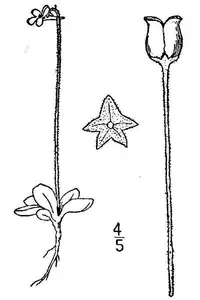
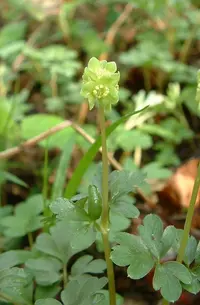
The tiny greenish flowers are arranged in a distinctive cube-like head, typically with 4 side-facing flowers and 1 facing upward, which is highly unusual among temperate woodland herbs.

Early spring woodland specialist

This species emerges and flowers very early in spring, taking advantage of bright light in deciduous woods before the tree canopy fully closes and shade increases.

Characteristic musky scent

Crushed foliage and flowers release a faint musky odor, which inspired both the common name muskroot and the species epithet moschatellina, meaning musk-scented.

Botan icon

Did you know?

Genetic and morphological studies place this plant in its own small family, Adoxaceae, and it has been important in clarifying relationships among former members of the honeysuckle family Caprifoliaceae in modern plant classification.

FAQs about muskroot

This woodland species spreads slowly to moderately by short rhizomes, forming low clumps or small patches over time. It is not typically aggressive and rarely becomes a nuisance in shaded garden beds or naturalistic plantings.

Grow Healthy Plants with Botan Care

Keep your plants happy and healthy with plant identification, disease detection, and easy care guidance.

Botan plant care app — identify plants on mobile

Explore More Plants