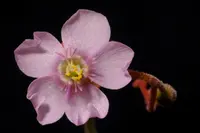
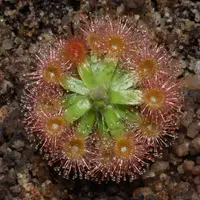
hairy butterwort Care (Pinguicula villosa)

hairy butterwort

About hairy butterwort

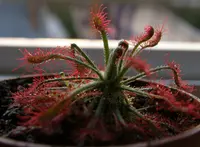
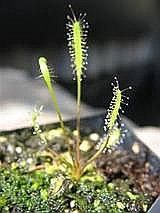
Hairy butterwort, Pinguicula villosa, is a small carnivorous plant that forms tight rosettes of sticky, glandular leaves close to the ground. The leaves trap tiny insects, which supply nutrients that are scarce in its native soils.

This species occurs in cold, boggy habitats of northern Europe, Russia, and North America, often among sphagnum moss in subarctic and arctic regions. Its need for cool temperatures, constant moisture, and very low-nutrient, acidic substrates makes it more challenging than many other carnivorous plants.

Because of these precise environmental needs, care for hairy butterwort is best suited to growers who can provide stable, cool conditions with bright but gentle light and consistently damp, soft water–irrigated media.

Main Plant Requirements

Care Difficulty

Hard Care

Light Preference

Partial Shade

Water Requirements

Keep Soil Moist

Temperature Preference

Cold Hardy

Hardiness Zone

1–6

Soil Texture

Peaty, Sandy, Organic-rich

Soil pH

Strongly acidic (4.5–5.5)

Soil Drainage

Waterlogged tolerant

Fertilization

Minimal (feed rarely)

Get Personalized Care Plan

Scan your plant to receive care tips personalized for your specific plant

Available on iOS and Android

How to Care for the hairy butterwort

This high-latitude carnivorous plant thrives in bright, cool conditions with gentle, diffuse light.

  • Provide 8–14 hours of low-angle sun and bright overcast light, typical of northern bogs, avoiding intense midday summer sun.
  • Allow soft morning sun and light, filtered afternoon sun; in open sites, protect from harsh reflection off water or pale substrates to prevent leaf scorch.
  • In shade, leaves elongate and lose stickiness; in excessive sun, foliage reddens and crisps at the edges, so adjust exposure seasonally as days lengthen.

Moisture management is critical for this bog species, which prefers consistently damp but not stagnant conditions.

  • Keep the soil evenly moist, not sopping; if the surface darkens and feels just barely damp, add water, using rain, distilled, or low-mineral water.
  • Ensure peaty, free-draining bog substrate; avoid standing water above crown level to limit rot while maintaining cool, moist roots.
  • If Pinguicula villosa leaves wilt, curl, or feel dry, increase moisture; yellowing, mushy leaves or a sour smell indicate chronic overwatering and poor aeration.

This species is adapted to cold, subarctic climates and requires cool conditions year-round.

  • Aim for 45–60°F (7–16°C) during active growth, with cooler nights; brief highs to 65°F (18°C) are tolerated if roots stay moist and shaded.
  • The plant withstands near-freezing conditions, down to about 32°F (0°C), and natural populations tolerate colder when insulated by snow and peat.
  • Prolonged heat above 70°F (21°C) stresses the plant; foliage may weaken and insect-trapping efficiency drops, so provide strong air movement and cooler nights when growing hairy butterwort.

This species needs consistently high humidity to keep its sticky leaf traps functional.

  • Aim for 70–90% humidity using an enclosed terrarium or covered tray setup.
  • Dry air leads to curled leaf edges, reduced dew, and browning tips on hairy butterwort.
  • Increase humidity with tight-fitting covers and shallow water trays, but allow some air exchange to prevent mold.

Use a very loose, nutrient-poor, acidic medium that stays cool and evenly moist.

  • Combine roughly 2 parts sphagnum peat or long-fiber sphagnum with 1–2 parts coarse sand or perlite for Pinguicula villosa.
  • Ensure the mix is airy and fast-draining yet moisture-retentive, with no fertilizer or compost added.
  • Target an acidic pH around 4.5–5.5 to mimic natural bog and tundra conditions.
  • Avoid dense, mineral-rich, or lime-containing substrates that compact, stay waterlogged, or burn sensitive roots.

This species can be grown in containers if kept cool, humid, and evenly moist.

  • Choose a shallow, wide pot to match the plant’s fine, shallow roots and support its small rosette spread.
  • Use plastic or glazed ceramic pots to slow evaporation and maintain consistently cool, damp media.
  • Stand pots in a shallow tray with distilled water, allowing only the lower layer of the mix to stay saturated.

This high-bog carnivorous species gains most nutrients from prey and needs very little supplemental fertilizer.

  • Skip routine feeding; many healthy Pinguicula villosa plants grow for years without added fertilizer.
  • If growth is weak, use a very dilute (1/8–1/4 strength) balanced NPK orchid or carnivorous-plant fertilizer.
  • Apply only in active growth, 1–2 times per month at most, onto the substrate, never on leaves.
  • Do not feed during winter dormancy; excess nutrients then increase rot risk and distort new growth.

Pinguicula villosa needs minimal pruning, mainly to keep the rosette clean and healthy.

  • Best time for grooming is during active growth in spring–summer, when recovery is fastest.
  • Gently remove dead or decayed leaves with clean tweezers to limit fungal problems.
  • Thin out badly damaged or crowded leaves only if they shade healthy ones, preserving the plant’s compact form.
  • Avoid cutting live tissue with blades; this species is small and easily damaged by rough tools.

This cold-adapted butterwort dislikes frequent disturbance, so repot only when clearly needed.

  • Repot every 2–3 years or when growth stalls, moss overtakes the pot, or roots circle the container.
  • Best timing is late winter to early spring, just before strong new growth starts.
  • Use a shallow container and fresh low-nutrient mix, such as long-fiber sphagnum with added sand or perlite.
  • Lift the plant gently, keep the fragile root ball intact, and water with pure, cool water to settle the medium.

Pinguicula villosa propagation is possible but slow and better suited to careful, patient growers.

  • Leaf pullings taken in late winter–spring root on damp long-fiber sphagnum under high humidity and cool temperatures.
  • Division of natural clumps is possible in early spring, keeping each offset with its own roots.
  • Seed germination needs consistently cool, moist, acidic conditions and can take many months.
  • Provide bright, cool light and very clean, low-nutrient media to reduce rot during establishment.

This species is cold-adapted and needs a cool dormancy rather than warm indoor overwintering for long-term health.

  • In climates with stable snow cover, outdoor plants usually tolerate deep cold when kept evenly moist, not waterlogged.
  • Mulch lightly around container sides or sink pots into the ground to insulate the root zone.
  • Move containers in harsh, bare, windy freezes to an unheated but frost-prone space for more stable cold conditions.

Care Tips

Cool-root setup

Place the pot inside a slightly larger container and surround it with moist long-fiber sphagnum or chilled distilled water packs to keep the root zone cool, which mimics its natural tundra-like habitat.

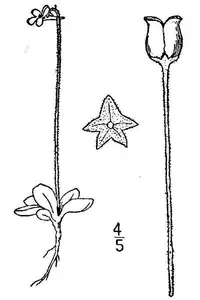
Gentle light acclimation

When increasing light intensity, shift the plant only a few inches closer to the light source every 5–7 days to prevent leaf burn and allow the sticky leaf surface to adapt gradually.

Seasonal dormancy cues

Shorten the photoperiod and slightly reduce temperatures over several weeks in late autumn to cue a natural dormancy, then reverse the process slowly in spring to avoid shocking the plant.

Prey load management

If many insects are available, occasionally remove excess trapped insects with fine-tipped tweezers to prevent mold growth and tissue rot on the leaf surface.

Quarantine and hygiene

When caring for hairy butterwort, always quarantine new carnivorous plants, use separate tools, and discard old sphagnum instead of reusing it to reduce the risk of fungal and mite infestations.

Common Pests and Diseases

fungal crown rot

This disease develops when the tight central rosette stays cold and waterlogged, especially in low airflow conditions. Symptoms include browning and collapse of the crown while outer leaves turn mushy and detach easily.

Solution

Remove all soft, brown tissue with sterile tools, keep the plant cooler but less wet, and allow the crown area to stay only lightly moist rather than saturated. Improve air movement, water with very pure cold water (RO or rain), and avoid overhead watering that keeps the rosette continuously soaked.

Botrytis gray mold

This disease thrives in the cool, very humid conditions often used for Pinguicula villosa and attacks old leaves and prey remains. Symptoms include gray, fuzzy mold on dead or damaged tissue that can spread into healthy leaves and the crown.

Solution

Carefully remove and discard all moldy or dead leaves and any old insect remains, then increase air circulation while keeping humidity high. Reduce water on the foliage, avoid overcrowding plants, and, if needed, use a mild fungicide labeled for ornamental plants, testing on a small area first.

aphids

These insects are sometimes attracted to the soft new leaves and flower stalks, especially during active growth. Symptoms include distorted young leaves, sticky honeydew, and clusters of small green, black, or reddish insects on non-glandular parts.

Solution

Rinse affected areas gently with cool distilled or rainwater, avoiding damage to the sticky leaf surfaces used for insect capture. For persistent colonies, use a gentle insecticidal soap or neem solution, applied sparingly to flower stalks and the pot rim rather than directly over the entire leaf surface, and repeat after 5–7 days if needed.

fungus gnats

These insects are attracted to constantly wet peat-based mixes often used for this cold bog species. Symptoms include tiny black flies around the pot and larvae feeding in the upper substrate, which can weaken fine roots and disturb the rosette base.

Solution

Allow the top few millimeters of the medium to approach just-damp rather than fully saturated while keeping the deeper layer moist and cool. Use yellow sticky traps for adults and consider a biological control such as Bacillus thuringiensis israelensis (BTI) applied to the water to target larvae without harming carnivorous leaves.

Interesting Facts

High Arctic specialist

This species naturally occurs in some of the most northerly latitudes of any butterwort, growing in subarctic and Arctic regions of northern Europe and North America on cold, wet tundra and bogs close to the tree line.

Dense leaf hair coating

Its leaves are unusually densely covered with long, white, glandular and non-glandular hairs that help protect the sticky surface from cold, excess moisture, and mechanical damage while still allowing it to trap tiny insects.

Tiny insect specialist

Compared with many other carnivorous plants, it typically captures very small prey such as springtails and minute flies that walk across the leaf surface rather than larger flying insects.

Botan icon

Did you know?

In extreme parts of its range, this plant can remain dormant under snow for many months, surviving as a tight winter bud (hibernaculum) that resumes growth rapidly once the snowpack recedes and soil temperatures rise above freezing.

FAQs about hairy butterwort

Flowering often fails when the plant misses a cool, bright winter rest. Short day length, temperatures that are too warm, or insufficient light intensity during its dormant phase are the most common reasons for reduced or absent blooms.

Grow Healthy Plants with Botan Care

Keep your plants happy and healthy with plant identification, disease detection, and easy care guidance.

Botan plant care app — identify plants on mobile

Explore More Plants