Control Spreading Edges
Install a shallow root barrier or dig a narrow spade-edge trench 5–8 cm deep around beds once a year to keep this mat-forming groundcover from invading adjacent lawn or paving.

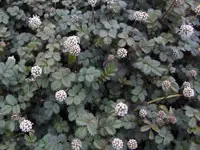
Glaucous pirri-pirri-bur (Acaena caesiiglauca) is a low, mat-forming perennial often used as a groundcover in rock gardens and between pavers. It has fine, fern-like blue-grey foliage that stays compact and creates a dense carpet effect.
This species is native to New Zealand, where it grows in open, sunny, and often rocky or coastal sites. It spreads by creeping stems and forms burr-like seed heads that can cling to fur or clothing.
The plant is generally easy to grow if given good light, drainage, and moderately moist soil. Gardeners who want to care for Glaucous Pirri-pirri-bur should note its spreading habit and occasional self-seeding tendency.

Care Difficulty
Easy Care

Light Preference
Full Sun

Water Requirements
Moderate Water

Temperature Preference
Cold Hardy

Hardiness Zone
6–9

Soil Texture
Sandy, Loamy, Rocky

Soil pH
Acidic (5.5–6.5), Slightly acidic (6.5–7.0)

Soil Drainage
Well-drained

Fertilization
Minimal (feed rarely)
Scan your plant to receive care tips personalized for your specific plant
Available on iOS and Android
This low-growing perennial prefers bright, cool conditions similar to open, high-country grasslands.
This plant prefers steady soil moisture but dislikes standing water around its roots.
This cool-climate groundcover handles a broad temperature range but grows best without extreme heat.
This species is adapted to dry, open sites, so humidity is rarely a concern for Glaucous Pirri-pirri-bur in typical homes or gardens.
This species prefers free-draining, moderately fertile soil that stays on the drier side once established.
This low, spreading groundcover can be grown in containers if drainage and lateral space are prioritized.
Acaena caesiiglauca is a low-feeding alpine groundcover that needs only light nutrition in average garden soil.
Acaena caesiiglauca benefits from light, periodic pruning to keep the mat dense and tidy.
This species is most often grown as a groundcover, so transplanting in the garden is more common than container repotting.
Acaena caesiiglauca is commonly propagated by division or from seed to expand groundcover patches.
This groundcover is generally cold hardy and needs little winter care in most temperate climates.

Plant Health Check
Not sure what's wrong with your plant? Check your plant's health inside the app.
The blue-grey foliage color comes from a waxy, glaucous coating on the tiny leaflets, which helps reduce water loss and reflect intense light in its native New Zealand habitats.
Its rounded seed heads form small, spiny burrs with backward-facing hooks that readily latch onto animal fur or clothing, allowing the plant to spread over long distances.
This species naturally grows as a very low mat, often only a few centimeters high, enabling it to stabilize thin, gravelly soils and cope with wind exposure in open, rocky sites.

In some cooler coastal gardens in the UK and similar climates, this species has become such a dense, competitive groundcover that it can edge out low native vegetation, illustrating both its toughness and the need for thoughtful Acaena caesiiglauca care in sensitive habitats.
This species spreads by surface stolons, forming low mats. In mild climates and free-draining soil it can extend steadily and may edge into adjacent planting areas, but it is usually manageable with edging and light annual trimming.
Keep your plants happy and healthy with plant identification, disease detection, and easy care guidance.