Variegated Catchfly Care (Silene dioica 'Clifford Moor')

Also known as: Red Campion, English Maiden

About Variegated Catchfly

Silene dioica 'Clifford Moor', commonly called variegated catchfly or red campion, is a hardy, clump-forming perennial grown mainly for its striking foliage. Leaves are green with irregular creamy-yellow margins, creating a bright, variegated mound that stays attractive even when not in bloom.

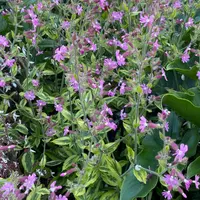
The plant sends up slender stems with pink, campion-type flowers that attract pollinators and give a soft, cottage-garden look. It originates from the wild red campion of Europe but this cultivar is selected for garden use.

This variety is generally easy to grow in temperate climates when given moderate light, moist but drained soil, and cool to mild summers, so learning how to care for Variegated Catchfly is straightforward for most gardeners.

Main Plant Requirements

Care Difficulty

Moderate Care

Light Preference

Partial Shade

Water Requirements

Regular Water

Temperature Preference

Cold Hardy

Hardiness Zone

5–8

Soil Texture

Loamy, Silty, Organic-rich

Soil pH

Acidic (5.5–6.5), Slightly acidic (6.5–7.0)

Soil Drainage

Moist but well-drained

Fertilization

Minimal (feed rarely)

Get Personalized Care Plan

Scan your plant to receive care tips personalized for your specific plant

Available on iOS and Android

How to Care for the Variegated Catchfly

This variegated perennial prefers bright conditions but is sensitive to strong, prolonged heat.

  • Provide 4–6 hours of morning sun with light or dappled shade from early afternoon, especially in hotter regions.
  • Tolerates partial shade (2–4 hours of direct light) but foliage of Variegated Catchfly may lose some color contrast in deep shade.
  • In summer, protect from harsh afternoon sun to prevent leaf scorch; in cooler seasons, slightly more direct sun supports compact growth and abundant flowering.

This plant prefers consistently moist, but not waterlogged, soil throughout the growing season.

  • Water when the top 2–3 cm of soil feels dry, soaking the root zone thoroughly, then let excess drain away.
  • During spring and early summer, increase watering frequency as growth and flowering peak; reduce slightly in late summer and autumn as growth slows.
  • Watch for yellowing, limp leaves and a sour soil smell as signs of overwatering, and for wilting with dry, crumbly soil as an indicator that Silene dioica 'Clifford Moor' needs water.

This hardy perennial tolerates cool conditions but grows best in mild temperatures.

  • Optimal growth occurs around 55–70°F (13–21°C), where foliage color is strong and flowering is steady.
  • Mature plants typically survive down to about 0°F (−18°C) in the ground with good drainage, dying back above ground and resprouting in spring.
  • Heat above 80–85°F (27–29°C) can cause stress; provide afternoon shade and mulch to keep roots cool during hot spells.

This plant grows well in typical outdoor humidity and rarely needs special humidity management.

Silene dioica 'Clifford Moor' prefers moist, fertile, well-structured soil that stays aerated and drains freely.

  • Use a loamy soil rich in organic matter, combining garden loam with 30–40% compost for structure and moisture retention.
  • Ensure drainage by avoiding heavy clay; if necessary, lighten it with sharp sand or fine grit at 20–30%.
  • Aim for slightly acidic to neutral pH, around 6.0–7.0, as strongly alkaline soils can reduce vigor and leaf color.
  • Avoid compacted or waterlogged sites; improve aeration by incorporating coarse organic material rather than peat-only amendments.

This species is suitable for container growing outdoors when moisture and stability are managed carefully.

  • Choose a container at least 25–30 cm deep to allow room for the fibrous roots and to buffer against drying between waterings.
  • Select a heavy or wide-based pot if the top growth becomes leafy and tall, reducing the risk of tipping in wind.
  • Use a free-draining mix and water until excess runs out, then discard saucer water promptly to prevent prolonged root saturation.

This variegated perennial benefits from light feeding but does not need heavy fertilization for good growth.

  • Apply a balanced, slow-release granular fertilizer (around 10-10-10) in early spring at half the label rate to support healthy foliage and flowers.
  • Top-dress with a thin layer of compost once a year to improve soil structure and provide gentle nutrients for Variegated Catchfly.
  • During the main growing season, avoid additional high-strength feeds to prevent soft, floppy growth and reduced variegation.
  • Stop feeding in late summer and do not fertilize in winter dormancy to allow natural hardening of new growth.

Silene dioica 'Clifford Moor' responds well to light, timely pruning that maintains shape and flowering performance.

  • In late spring and summer, shear back spent flower stems by one-third to encourage a tidier mound and possible repeat blooming.
  • Remove dead, damaged, or weak stems at the base with clean, sharp hand pruners to reduce disease risk.
  • Thin crowded shoots lightly to improve air flow and keep variegated foliage visible and well lit.
  • Cut back old, collapsed growth to ground level in late fall or very early spring to refresh the clump.

This plant is most often grown in the ground, so care focuses on occasional transplanting rather than frequent repotting.

  • Transplant or divide in early spring or early fall when temperatures are mild and soil is workable.
  • Look for signs such as congested crowns, reduced flowering, or roots circling a container if grown in pots.
  • Lift the clump carefully, tease apart or slice large sections with a clean knife, preserving several shoots and healthy roots per division.
  • Replant divisions at the same depth in well-drained soil, water thoroughly, and shade lightly for 3–5 days to limit transplant stress.

Silene dioica 'Clifford Moor' is commonly propagated by division and basal cuttings to maintain its variegated foliage.

  • Divide mature clumps in early spring or early fall, keeping each section with several buds and a solid root system.
  • Take non-flowering basal stem cuttings in late spring, using 5–8 cm pieces with a clean cut just below a node.
  • Insert cuttings into moist, free-draining medium, keep in bright, indirect light, and maintain even moisture until rooted.
  • Sow seeds only if variegation is not essential, as seedlings often revert to plain green foliage.

This hardy perennial usually needs minimal winter care in most temperate climates.

  • Tolerates typical winter frosts once established, especially in well-drained soil that prevents waterlogging and root rot.
  • After the first hard frost, cut back dead stems to reduce disease carryover and keep borders neat.
  • Apply a 3–5 cm layer of organic mulch around, but not on, the crowns to buffer freeze–thaw cycles.
  • Move container-grown plants to a sheltered, unheated spot and keep soil just barely moist through winter.

Care Tips

Pinch For Bushiness

Pinch out the soft shoot tips in early spring and again after the first flush of flowers to encourage compact, multi-stemmed growth and a denser display rather than tall, open, floppy stems.

Timed Deadheading

Shear back spent flower stems by about one-third immediately after peak bloom, then apply a light top-dressing of compost to stimulate a strong second flowering wave later in the season.

Edge Containment

Install a shallow edging strip or bury a root barrier 10–15 cm deep around beds to gently limit lateral spread, making clump renewal and division easier over the years.

Planned Clump Renewal

Lift and divide established clumps every 3–4 years in early spring, discarding weak woody centers and replanting only the vigorous outer sections to maintain strong variegation and flowering.

Slugs And Mildew Check

Inspect lower foliage and new shoots weekly in cool, damp weather for slug damage and in warm, still periods for powdery mildew, so you can intervene early and keep caring for Variegated Catchfly more effective with targeted controls.

Common Pests and Diseases

Leaf spot

This disease causes small brown, purple, or tan spots on leaves that may merge into larger patches, leading to premature leaf drop in damp conditions.

Solution

Remove and discard affected leaves, avoid overhead watering, and space plants to improve airflow. In repeatedly wet climates, apply a sulfur or chlorothalonil-based fungicide as a preventative at the first sign of spotting, following label directions.

Powdery mildew

This disease appears as a white, powdery coating on upper leaf surfaces, stems, and sometimes flower buds, often in warm days and cool, humid nights.

Solution

Increase spacing and air movement, water at soil level, and remove heavily affected foliage. If needed, use a potassium bicarbonate or horticultural oil product labeled for powdery mildew, applying in the evening to avoid leaf burn.

Rust

This disease produces orange to brown pustules on the undersides of leaves, sometimes with yellowing on the upper surface and gradual weakening of the plant.

Solution

Remove and destroy infected leaves as soon as pustules appear and keep foliage dry by watering at the base. In gardens with recurring rust, use a preventive fungicide labeled for rust on ornamental perennials and rotate with different active ingredients to slow resistance.

Aphids

These insects cluster on young shoots, flower stems, and the undersides of leaves, sucking sap and causing curling, distortion, and sticky honeydew that can attract sooty mold.

Solution

Spray colonies off with a firm stream of water and pinch back heavily infested shoot tips. For ongoing infestations, apply insecticidal soap or a light horticultural oil, making sure to cover the undersides of leaves and repeating every 5–7 days as needed.

Spider mites

This pest is more common in hot, dry spells and causes fine speckling, dulling of foliage color, and sometimes fine webbing between leaves and stems.

Solution

Increase humidity around plants and hose down foliage, focusing on leaf undersides, to physically remove mites. For persistent issues, use insecticidal soap or a miticide labeled for ornamental plants, and maintain regular rinsing during prolonged dry weather as part of Silene dioica 'Clifford Moor' plant care.

Interesting Facts

Stable variegation pattern

This cultivar shows a genetically fixed yellow and green leaf variegation, so new growth typically keeps its patterned margins rather than reverting fully to plain green like many unstable variegates.

Sport from red campion

It originated as a selected sport of Silene dioica (red campion), meaning it is a naturally occurring mutation chosen and propagated for its distinctive foliage rather than flower color.

Flowers still feed pollinators

Despite its ornamental variegated leaves, it retains the nectar-rich pink flowers of its wild parent, which are visited by moths and bees in mixed borders and wildlife-friendly gardens.

FAQs about Variegated Catchfly

This cultivar forms clumps and can slowly spread by short rhizomes and self-seeding, but it is not typically aggressive. Light deadheading and removing unwanted seedlings help keep it contained and in defined patches.

Grow Healthy Plants with Botan Care

Keep your plants happy and healthy with plant identification, disease detection, and easy care guidance.


Botan plant care app — identify plants on mobile

Explore More Plants