Rock-crevice planting
Tuck plants into narrow rock crevices or between stable stones so the crown stays cool and shaded while roots reach into gritty soil that drains quickly.

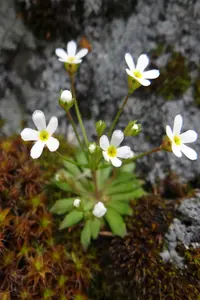
Androsace lactiflora is a small, rosette-forming alpine perennial in the primrose family, valued for its delicate, many-flowered white to pale pink clusters. The plant typically forms low cushions of narrow leaves, topped in bloom season by airy stems carrying numerous tiny flowers.
It occurs naturally in high mountain regions of Central Asia, where it grows in rocky, well-drained, often limestone-based soils. In cultivation it suits rock gardens, troughs, and crevice plantings, but can be short-lived if conditions are too wet or hot.
Androsace lactiflora prefers cool conditions, bright light, and sharp drainage, so gardeners who understand how to care for Androsace lactiflora usually find it manageable but not ideal for beginners in warm climates.

Care Difficulty
Hard Care

Light Preference
Full Sun

Water Requirements
Moderate Water

Temperature Preference
Cold Hardy

Hardiness Zone
4–7

Soil Texture
Sandy, Loamy, Rocky

Soil pH
Acidic (5.5–6.5), Slightly acidic (6.5–7.0)

Soil Drainage
Well-drained

Fertilization
Minimal (feed rarely)
Scan your plant to receive care tips personalized for your specific plant
Available on iOS and Android
This alpine prefers cool, bright conditions with protection from harsh midday sun.
This species prefers consistently moist but never waterlogged soil, especially in the growing season.
This alpine plant is cold tolerant but dislikes prolonged heat combined with high humidity.
This alpine species prefers relatively dry air and does not need elevated humidity indoors or outdoors.
This plant performs best in sharply drained, gritty soil that mimics alpine scree conditions.
This species is suitable for container growing, especially in shallow alpine troughs or gritty pots.
This alpine perennial grows best in lean soil and needs only modest feeding in cultivation.
Pruning needs for Androsace lactiflora are light and mainly focused on tidying spent growth.
This species dislikes frequent disturbance, so repot or transplant Androsace lactiflora only when clearly necessary.
Propagation is usually done from seed to maintain genetic diversity and strong alpine traits.
This hardy alpine generally tolerates cold winters but benefits from protection against excessive wet and freeze-thaw cycles.

Plant Health Check
Not sure what's wrong with your plant? Check your plant's health inside the app.
This species naturally occurs in subalpine and alpine zones of the Himalayas and western China, typically on moist slopes and stream margins, showing a clear adaptation to cool summers and strong light at higher elevations.
Its small white flowers are carried in loose, umbrella-like clusters on slender stems, with a pale yellow eye at the center of each flower that helps guide pollinators to the nectar source.
The plant forms low, neat rosettes of narrow green leaves that can slowly build into small mats, an efficient growth form for withstanding mountain conditions with fluctuating temperatures and wind exposure.
This alpine species usually flowers in late spring to early summer. In suitable cool, well-drained conditions, the main display often lasts 3–5 weeks, with scattered additional blooms if spent flowers and weak stems are removed promptly.
Keep your plants happy and healthy with plant identification, disease detection, and easy care guidance.