Rock crevice planting
Tuck plants into narrow rock crevices or between stable stones to mimic their alpine habitat, which keeps crowns cool, improves drainage, and reduces winter rot risk.

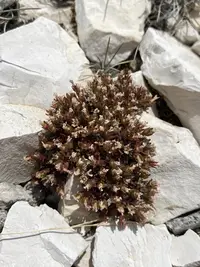
Mountain douglasia, Androsace montana, is a compact alpine perennial that forms tight, cushion-like mats close to the ground. It typically shows tiny rosettes of leaves topped with small white or pinkish flowers in late spring.
This species is native to rocky mountain regions of Europe, where it clings to gravelly slopes and crevices. Its slow growth and sensitivity to excess moisture make it more suitable for experienced gardeners.
Androsace montana prefers cool conditions, sharp drainage, and full sun to light shade. Understanding how to care for Mountain Douglasia starts with replicating its natural, rocky habitat and avoiding waterlogged soil.

Care Difficulty
Hard Care

Light Preference
Full Sun

Water Requirements
Low Water

Temperature Preference
Cold Hardy

Hardiness Zone
3–7

Soil Texture
Sandy, Loamy, Rocky

Soil pH
Acidic (5.5–6.5), Slightly acidic (6.5–7.0)

Soil Drainage
Well-drained

Fertilization
Minimal (feed rarely)
Scan your plant to receive care tips personalized for your specific plant
Available on iOS and Android
Alpine-grown Androsace montana prefers cool, bright conditions with protection from intense midday sun.
Watering for Androsace montana should keep the root zone lightly moist but never saturated.
This alpine species prefers cool summers and cold, well-drained winters typical of high-elevation climates.
This alpine species prefers cool, dry to moderately dry air and rarely needs humidity adjustment.
This plant needs sharply drained, gritty soil that dries quickly after rain or watering.
This species can be grown in containers when they are shallow, free-draining, and exposed to cool conditions.
This alpine plant needs only light feeding, as excessive nutrients can weaken growth and flowering in Mountain Douglasia.
Androsace montana needs only minimal pruning to keep the cushion tight and healthy.
This species is usually grown in rock gardens or troughs, so focus on careful transplanting rather than frequent repotting.
Androsace montana is most often propagated from seed, with division or offsets used more selectively.
This alpine species is cold hardy but benefits from good drainage and modest protection in wet winters.

Plant Health Check
Not sure what's wrong with your plant? Check your plant's health inside the app.
This species naturally forms low, dense cushion-like mats in high mountain habitats, an adaptation that reduces heat loss and protects growing points from cold and wind near the soil surface.
In the wild it typically grows on siliceous substrates such as granite or schist screes and rocky ledges, showing a strong preference for mineral, low-lime conditions compared to many other rock garden plants.
In its native European mountain ranges, it often flowers soon after snowmelt, taking advantage of the short alpine growing season with small white to pinkish flowers held just above the foliage cushions.
This alpine species performs best outdoors in cool, bright, well-drained rock gardens or troughs. Indoors, light, airflow, and temperature are harder to manage, so Mountain Douglasia indoor care is generally more challenging and less reliable long term.
Keep your plants happy and healthy with plant identification, disease detection, and easy care guidance.