Fancy-leaf Caladium Care (Caladium 'Red Flash')

Also known as: Angel Wings, Heart of Jesus
Fancy-leaf Caladium

About Fancy-leaf Caladium

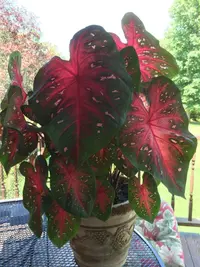
Caladium 'Red Flash' is a tropical, tuber-forming plant grown mainly for its large, heart-shaped leaves in striking shades of red, pink, and green. It is often used as a bold foliage accent in containers, shaded borders, or as a seasonal indoor display.

This caladium species originates from tropical South America, where it grows on warm, shaded forest floors. In cultivation it stays compact and clumping, with leaves emerging from a central tuber rather than from tall stems.

Humidity, warmth, and protection from strong sun are key factors that influence how easy it is to care for Fancy-leaf Caladium. It prefers bright but indirect light, consistently moist soil, and good drainage to avoid tuber rot.

Main Plant Requirements

Care Difficulty

Moderate Care

Light Preference

Partial Shade

Water Requirements

Keep Soil Moist

Temperature Preference

Tropical / Frost Sensitive

Hardiness Zone

9–11

Soil Texture

Loamy, Peaty, Organic-rich

Soil pH

Acidic (5.5–6.5)

Soil Drainage

Moist but well-drained

Fertilization

Moderate (every 2–4 weeks)

Get Personalized Care Plan

Scan your plant to receive care tips personalized for your specific plant

Available on iOS and Android

How to Care for the Fancy-leaf Caladium

Caladium 'Red Flash' grows best in bright, gentle light that protects its foliage from scorch.

  • Provide 3–5 hours of soft morning sun with bright, filtered light the rest of the day; avoid harsh midday and afternoon sun.
  • In partial shade, such as under high tree canopy or on an east or north side, leaves color well while staying protected.
  • Too much direct sun causes leaf burn and faded color, while too little light leads to dull, stretched growth in this Fancy-leaf Caladium.

Caladium 'Red Flash' prefers evenly moist, not saturated, soil during its active growing season.

  • Water when the top 2–3 cm of soil feels dry, aiming for consistently damp soil that never stays soggy.
  • Use loose, well-drained soil rich in organic matter so excess water can drain away and roots receive enough air.
  • Reduce watering sharply as leaves yellow and die back in fall; overwatering then risks tuber rot, while persistent drooping and crisp edges signal underwatering in summer.

This tropical caladium needs warm, stable temperatures to grow and color well.

  • Aim for 70–85°F (21–29°C) during active growth; it slows or stops below about 65°F (18°C).
  • Protect from temperatures under 55°F (13°C); foliage is damaged by light frost and tubers can die if exposed to freezing.
  • In hot spells above 90°F (32°C), provide extra shade and soil moisture, and avoid hot, reflective sites that can overheat the leaves.

This plant prefers high, stable humidity to keep leaves broad and vibrant.

  • Aim for 60–75% humidity; sustained levels below 50% increase leaf edge browning and tip burn.
  • Dry indoor air causes curling, papery margins, and stalled new leaves, especially for Fancy-leaf Caladium types.
  • Group plants, use a small humidifier, or place pots on a pebble tray with water to raise local humidity.

Caladium 'Red Flash' performs best in loose, moist, and organically rich potting media.

  • Use a peat- or coco-based mix with plenty of compost and fine bark to create a light, humus-rich structure.
  • Ensure rapid drainage by adding 20–30% perlite to prevent waterlogged conditions that promote tuber rot.
  • Aim for slightly acidic to neutral pH, around 5.5–7.0, which keeps nutrients available and reduces leaf deficiencies.
  • Avoid heavy garden soil or mixes that compact, since poor aeration around tubers reduces vigor and leaf size.

This species is very suitable for container growing, both outdoors in season and in sheltered spots.

  • Choose a wide, shallow pot so tubers can spread laterally while the mix stays evenly moist but not saturated.
  • Select heavier materials like ceramic if wind exposure is likely, as large leaves can make the plant top-heavy.
  • Use a potting mix that sits at least 2–3 cm below the rim to prevent water runoff when watering from above.

Caladium 'Red Flash' responds well to light, consistent feeding during its active growing season.

  • Use a balanced liquid fertilizer (around 10-10-10 or 20-20-20) diluted to 1/4–1/2 strength every 2–3 weeks in spring and summer.
  • Apply to moist soil, not dry, to reduce root burn and support steady leaf growth in Fancy-leaf Caladium.
  • Avoid high-nitrogen lawn products; foliage may scorch or growth may become weak and floppy.
  • Stop feeding when leaves yellow and die back in fall, and do not fertilize dormant tubers over winter.

Caladium 'Red Flash' needs only light, maintenance-style pruning to stay tidy and healthy.

  • In spring through late summer, remove yellowing, brown, or torn leaves by cutting them at the base with clean, sharp scissors or pruners.
  • Trim spent or collapsing stems to encourage fresh foliage and maintain a compact clump shape.
  • Cut out crowded, shading leaves if airflow is poor, which helps limit fungal leaf spots.
  • Disinfect tools before and after use to prevent spreading disease between plants.

Caladium 'Red Flash' grown in pots benefits from occasional repotting to refresh soil and space tubers.

  • Check for roots circling the pot, compacted mix, or slowed growth, which indicate the need for a larger container.
  • Repot in early spring before strong new shoots emerge, usually every 1–2 years.
  • Choose a pot 2–5 cm wider with drainage holes and use a light, peat-free, well-draining mix.
  • Handle tubers gently, keep them slightly moist but not waterlogged after repotting, and shade from harsh sun for 1–2 weeks to limit stress.

Caladium 'Red Flash' is most commonly propagated by dividing tubers rather than by seed or cuttings.

  • Divide tubers in late winter to early spring, just before planting time.
  • Use a clean knife to cut tubers so each piece has at least 1–2 visible eyes or buds.
  • Dust cut surfaces with a fungicidal powder or cinnamon, then let them dry for several hours before planting.
  • Plant pieces in warm (70–80°F), slightly moist, well-draining mix and keep humidity moderate until new shoots appear.

Caladium 'Red Flash' is frost-tender and needs clear winter protection in climates below about 55°F.

  • In cold regions, dig tubers after foliage dies back and before the first hard frost, then dry them for several days.
  • Store tubers in dry peat or vermiculite at 55–60°F in a dark, ventilated place.
  • In mild, frost-free areas, leave tubers in the ground but mulch the root zone 5–8 cm deep.
  • Move container plants indoors to a cool, dry, bright spot and keep soil barely moist until spring.

Care Tips

Staggered Planting

Start tubers in small nursery pots indoors 4–6 weeks before outdoor planting, then transplant in groups every 10–14 days to extend the foliage display across the warm season.

Shallow Tubers Setup

Position tubers only 2–3 cm below the soil surface with the eye facing up and keep the upper layer slightly drier, which reduces rot risk and encourages faster sprouting.

Seasonal Lifting Routine

In cooler climates, dig tubers in fall once foliage yellows, dry them for 7–10 days in a shaded, airy place, then store in dry peat or vermiculite at 60–70°F for reliable regrowth next year.

Protected Container Placement

In containers, place the pot within a slightly larger decorative cachepot or group it among taller plants to buffer sudden temperature swings and shield foliage from strong wind.

Preventive Pest Check

Inspect leaf undersides and stems weekly for aphids and spider mites, and at first sign of pests rinse foliage with a firm but gentle stream of water, then apply an insecticidal soap according to label directions to maintain healthy growth when caring for Fancy-leaf Caladium.

Common Pests and Diseases

Leaf spot

This disease causes small water-soaked lesions that turn tan or brown with darker margins, often starting along the leaf edges or between veins. Symptoms include yellowing and early drop of affected leaves, especially in warm, humid, crowded conditions.

Solution

Remove and discard spotted leaves, avoid wetting the foliage when watering, and increase airflow around plants. For recurring problems, use a copper-based or chlorothalonil fungicide labeled for ornamentals and rotate products to reduce resistance.

Bacterial blight

This disease produces translucent, greasy-looking spots that quickly enlarge, sometimes with a yellow halo, leading to tissue collapse and foul-smelling decay. Symptoms include rapid spread in warm, wet conditions and collapse of entire leaves or sections of the plant.

Solution

Immediately remove and discard all affected leaves and any mushy tissue, and avoid overhead watering or splashing between plants. Disinfect tools, reduce humidity, and if needed apply a labeled bactericide (such as copper formulations) while also spacing plants to improve drying time.

Tuber rot

This disease affects the underground tubers, causing soft, discolored, and sometimes foul-smelling areas that lead to poor emergence, weak growth, or sudden collapse of leaves. Symptoms include failure of planted tubers to sprout and hollow or mushy tissue when cut open.

Solution

Discard any tubers that are soft, shriveled, or spotted before planting, and always plant in a well-drained, airy mix to avoid waterlogging. Between seasons, store tubers dry at 60–70°F, dust with a fungicidal powder if rot has been an issue, and avoid reusing contaminated, poorly drained soil.

Spider mites

These pests are tiny sap-feeding arachnids that thrive in warm, dry indoor or greenhouse conditions and are attracted to the thin, colorful leaves. This pest causes fine stippling, dulling of leaf color, and fine webbing on the undersides of leaves and between stalks.

Solution

Rinse foliage thoroughly with lukewarm water, focusing on leaf undersides, and increase humidity around the plant. For persistent infestations, apply insecticidal soap or horticultural oil every 7–10 days, repeating several times while isolating the plant from others.

Thrips

These insects rasp and suck plant tissues, leading to silvery streaks, distorted new leaves, and small black specks of excrement on foliage. This pest is especially problematic on colorful caladium leaves grown in warm, bright greenhouse or indoor conditions.

Solution

Inspect and remove heavily damaged leaves, then hose down remaining foliage to dislodge insects. Use sticky traps to monitor adults and apply insecticidal soap, spinosad, or horticultural oil according to label directions, repeating treatments and keeping nearby plants under observation as part of overall Caladium 'Red Flash' plant care.

Interesting Facts

Distinct leaf coloration

This cultivar is recognized for large dark green leaves heavily overlaid with red to pink blush and bright red primary veins, creating a strong contrast that differs from many other fancy-leaved caladiums. The variegation pattern is relatively stable under suitable light, so mature leaves tend to keep their characteristic color distribution.

Landscape accent role

In warm climates it is widely used as a bold bedding plant for shaded gardens because the large leaves and intense red coloration remain visible even in low light. Breeders and landscapers often select it for mass plantings where a strong color block is desired without flowers.

Heat-tolerant for a caladium

Compared with some other fancy-leaf caladium cultivars, it is considered relatively tolerant of summer heat when soil moisture is adequate. This makes it a common choice in subtropical gardens where other caladiums may show faster leaf burn or decline.

FAQs about Fancy-leaf Caladium

Brown leaf edges usually result from low humidity, fertilizer salts building up in the soil, or irregular watering. Flush the pot thoroughly, trim damaged tissue, and maintain more stable moisture and moderate room humidity to prevent further damage.

Grow Healthy Plants with Botan Care

Keep your plants happy and healthy with plant identification, disease detection, and easy care guidance.

Botan plant care app — identify plants on mobile

Explore More Plants