


Shaded mulch ring
Maintain a 5–8 cm deep ring of leaf mold or fine bark around the crown, keeping it 3–5 cm away from the base to stabilize soil moisture and protect shallow rhizomes from heat and frost.

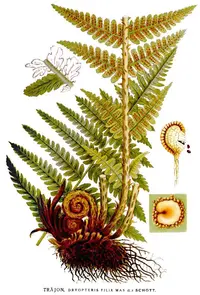
Male fern (Dryopteris filix-mas) is a hardy, clump-forming fern known for its upright, arching fronds and dense, fountain-like shape. It stays evergreen or semi-evergreen in mild climates, giving long-lasting structure in shaded beds.
This species is native to woodlands and rocky slopes across Europe, parts of Asia, and North America, where it grows in cool, moist, sheltered spots. It adapts well to temperate gardens and is often used under trees or along shaded borders.
Its tolerance of shade, cold, and occasional neglect makes it relatively easy for gardeners who want to learn how to care for male fern. It prefers humus-rich, consistently moist, well-drained soil and protection from harsh, direct sun.

Care Difficulty
Easy Care

Light Preference
Partial Shade

Water Requirements
Keep Soil Moist

Temperature Preference
Cold Hardy

Hardiness Zone
3–8

Soil Texture
Loamy, Peaty, Organic-rich

Soil pH
Acidic (5.5–6.5), Slightly acidic (6.5–7.0)

Soil Drainage
Moist but well-drained

Fertilization
Minimal (feed rarely)
Scan your plant to receive care tips personalized for your specific plant
Available on iOS and Android
This woodland fern prefers cool, shaded conditions that protect its fronds from harsh sun.
This fern needs consistently moist, but not waterlogged, soil to maintain healthy fronds.
This hardy fern tolerates a wide temperature range but grows best in cool to mild conditions.
This fern prefers consistently moist air for best frond health.
This species prefers cool, moist, humus-rich soil with steady drainage.
This fern can grow well in outdoor containers when moisture and stability are managed carefully.
Dryopteris filix-mas grows well in humus-rich soil and usually needs only light feeding in gardens.
Pruning Dryopteris filix-mas is mainly about cleaning and shaping the clump rather than cutting it back hard.
This fern is more often transplanted in the garden than repotted, as it prefers a stable position in moist, shaded soil.
Dryopteris filix-mas is most commonly propagated by division rather than by spores, which are slower and more technical.
This fern is cold hardy in most temperate climates and usually needs only minimal winter attention in the ground.

Plant Health Check
Not sure what's wrong with your plant? Check your plant's health inside the app.
The common name male fern comes from its robust, upright fronds and thicker rhizome compared to the more delicate so‑called female ferns, not from any true plant sex difference.
This species is strongly associated with cool, moist, shaded woodlands in Europe and parts of western Asia, where it often forms stable, long‑lived clumps on acidic to neutral soils.
On the underside of fertile fronds, the spore clusters (sori) form two regular rows on each side of the midrib, each covered by a kidney‑shaped indusium, which is a thin protective tissue flap.

In the 19th and early 20th centuries, male fern rhizomes were one of the most widely collected wild fern parts in Europe because their standardized extract was officially recognized in pharmacopoeias as a treatment against tapeworms, leading to localized depletion of natural populations in some regions.
This species does not produce flowers. It reproduces by spores, which form in clusters on the underside of mature fronds. Lack of blooms is normal and not a sign of poor health or incorrect care.
Keep your plants happy and healthy with plant identification, disease detection, and easy care guidance.

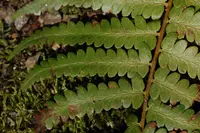
southern woodfern
Dryopteris ludoviciana
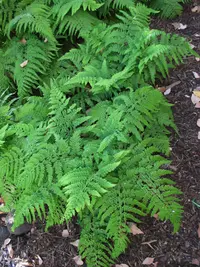
palapalai
Microlepia strigosa
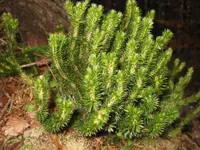
toothed clubmoss
Huperzia serrata

Japanese Holly Fern
Cyrtomium falcatum 'Rochfordianum'
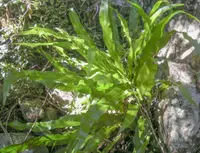
Elkhorn fern
Microsorum punctatum
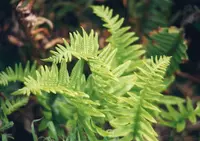
California polypody
Polypodium californicum
 POPULAR
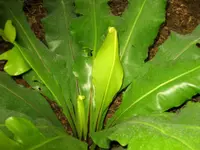
Bird's nest ferns
Asplenium nidus
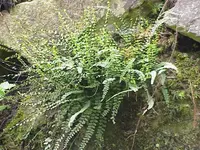
maidenhair spleenwort
Asplenium trichomanes