


Leaf litter mulch
Leave a 3–5 cm layer of hardwood leaf litter around the plant to mimic its native woodland floor, moderating soil moisture and temperature while slowly adding organic matter.

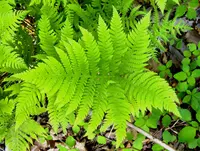
Broad beechfern, Phegopteris hexagonoptera, is a deciduous woodland fern native to eastern North America. It typically carpets forest floors in loose, spreading colonies. The fronds are soft, triangular, and arching, with a delicate texture that gives the plant a light, airy appearance rather than a stiff, upright look. It usually grows from creeping rhizomes, so it slowly forms wide patches rather than a single clump. This species prefers shaded sites with consistent moisture and humus-rich, well-drained soil. These traits make it a good choice for naturalistic shade gardens, and understanding how to care for broad beechfern starts with recreating its cool, forest-like conditions.

Care Difficulty
Moderate Care

Light Preference
Shade

Water Requirements
Keep Soil Moist

Temperature Preference
Cold Hardy

Hardiness Zone
4–8

Soil Texture
Loamy, Silty, Organic-rich

Soil pH
Acidic (5.5–6.5), Slightly acidic (6.5–7.0)

Soil Drainage
Moist but well-drained

Fertilization
Minimal (feed rarely)
Scan your plant to receive care tips personalized for your specific plant
Available on iOS and Android
This woodland fern prefers soft, filtered light similar to a deciduous forest floor.
This species needs evenly moist, cool soil that never stays waterlogged.
This hardy fern is adapted to temperate woodland climates with cool to mild conditions.
This woodland fern prefers consistently moist air and reacts quickly to very dry conditions.
This fern performs best in loose, humus-rich soil that mimics a moist forest floor.
This species adapts fairly well to container growing when moisture and stability are managed carefully.
This woodland fern needs only light feeding when grown in gardens or containers.
Pruning for Phegopteris hexagonoptera is minimal and focuses on cleanliness rather than shaping.
This fern is usually grown in the ground, so transplanting is more common than repotting.
Propagation of Phegopteris hexagonoptera is most practical by division of established clumps.
This fern is cold hardy in much of its range and usually needs little winter attention outdoors.

Plant Health Check
Not sure what's wrong with your plant? Check your plant's health inside the app.
The common name broad beechfern refers to its triangular fronds whose lower leaflets are arranged so the blade base forms a subtle hexagon-like outline, reflected in the species name hexagonoptera, meaning six-angled wing.
The lowest pair of pinnae (leaf segments) on each frond are set slightly apart from the rest, creating a small gap along the rachis that helps distinguish this species from similar woodland ferns in eastern North America.
Broad beechfern often occurs in rich, undisturbed deciduous forests, and botanists sometimes use its presence as an indicator of long-established, relatively intact woodland habitat with moist, moderately acidic to neutral soils.

Genetic and morphological studies place broad beechfern in a small, distinctive group of North American woodland ferns, and it has been used in research on fern biogeography to understand how eastern temperate forest species spread and diversified after the last glaciation.
This species spreads slowly to moderately by short rhizomes, forming loose colonies rather than dense mats. It usually stays well behaved in shaded beds, woodland gardens, and naturalistic plantings when given appropriate moisture and organic-rich soil.
Keep your plants happy and healthy with plant identification, disease detection, and easy care guidance.

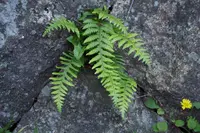
Japanese beech fern
Phegopteris decursive-pinnata
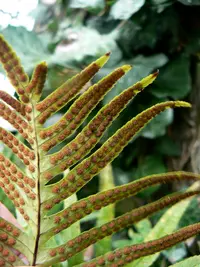
Southern Polypody
Polypodium cambricum
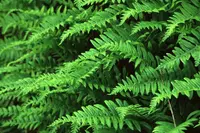
nested polypody
Polypodium calirhiza
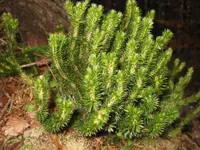
toothed clubmoss
Huperzia serrata
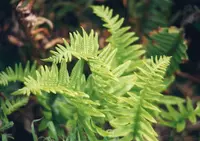
California polypody
Polypodium californicum
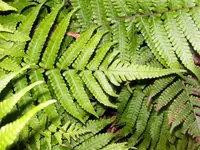
downy maiden fern
Thelypteris dentata
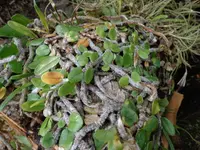
Microgramma vacciniifolia
Microgramma vacciniifolia
 POPULAR
Bird's nest ferns
Asplenium nidus