Wind-shaping training
In the first 2–3 years, lightly stake young shoots and prune to a single or few main leaders so the plant develops a strong, wind-resistant framework that will support heavy flowering later.

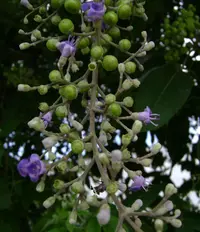
Simpleleaf chastetree (Vitex trifolia) is a woody shrub or small tree valued for its aromatic leaves and small clusters of purple to bluish flowers. It typically has a dense, rounded crown and can be grown as an ornamental hedge or specimen plant in warm climates.
This species is native to coastal areas of Asia and the Pacific, where it often grows near beaches and along shorelines. Its tolerance of wind, salt, and pruning makes it relatively easy to shape and maintain.
Gardeners who learn how to care for simpleleaf chastetree usually find it undemanding if given enough sun, warmth, and well-drained soil. It suits low-maintenance landscapes and can also be used for informal screening in mild regions.

Care Difficulty
Easy Care

Light Preference
Full Sun

Water Requirements
Moderate Water

Temperature Preference
Tropical / Frost Sensitive

Hardiness Zone
10–11

Soil Texture
Sandy, Loamy, Organic-rich

Soil pH
Slightly acidic (6.5–7.0), Slightly alkaline (7.0–7.5)

Soil Drainage
Well-drained

Fertilization
Minimal (feed rarely)
Scan your plant to receive care tips personalized for your specific plant
Available on iOS and Android
Vitex trifolia thrives in bright, open conditions with plenty of direct sun.
Vitex trifolia prefers evenly moist, well-drained soil that dries slightly between waterings.
This shrub grows best in warm, frost-free to lightly frosty climates.
Vitex trifolia grows well in typical indoor humidity but benefits from slightly raised moisture in very dry homes.
Vitex trifolia prefers well-drained, moderately fertile soil that does not stay wet for long.
This shrub adapts well to container growing when given a stable, well-drained setup.
Vitex trifolia benefits from light, balanced feeding but can tolerate lean soil, similar to many drought-tolerant shrubs.
Vitex trifolia responds well to thoughtful pruning that maintains size, form, and flowering wood.
This species is usually grown in the ground, but young Vitex trifolia plants or patio specimens benefit from occasional repotting or careful transplanting.
Vitex trifolia is commonly propagated from cuttings, with seeds used less often for home-scale production.
Vitex trifolia prefers mild, frost-free climates and needs some attention in colder areas.

Plant Health Check
Not sure what's wrong with your plant? Check your plant's health inside the app.
This species naturally grows along tropical seashores and sand dunes and tolerates windblown salt and sandy, low-nutrient soils better than most shrubs, which helps stabilize coastal habitats.
The leaves are typically divided into three narrow leaflets with a pale, often grayish underside caused by fine hairs that can reduce water loss and reflect intense sunlight.
Crushed leaves release a strong scent due to essential oils such as monoterpenes, and this aromatic chemistry is studied for roles in herbivore deterrence and plant–insect interactions.

In some Pacific and Southeast Asian coastal landscapes, this shrub forms dense thickets that act as a living barrier, helping protect inland vegetation and soils from salt spray, sand movement, and storm exposure.
Lack of flowers usually comes from insufficient light, heavy or improper pruning, or nutrient imbalance, especially excess nitrogen. Ensure strong sun exposure, prune lightly right after flowering, and use a balanced, low-nitrogen fertilizer if soil is poor.
Keep your plants happy and healthy with plant identification, disease detection, and easy care guidance.