Wind exposure planning
Site new plants where they receive consistent wind from one direction, as this encourages strong, tapered trunks and reduces the risk of windthrow in storms.

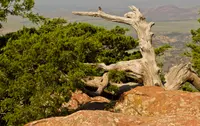
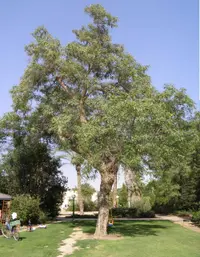
Ashe's juniper (Juniperus ashei) is an evergreen coniferous tree native to central Texas, Oklahoma, and parts of northern Mexico. It often forms dense woodlands on rocky hills and limestone outcrops.
The tree typically has a bushy, irregular crown, gray to reddish-brown bark, and small scale-like foliage. Female plants produce abundant bluish berry-like cones that attract wildlife.
This species is adapted to hot, dry climates and poor, shallow soils, which makes it tough but less suitable for small gardens. It prefers full sun, good drainage, and low to moderate moisture, so learning how to care for Ashe's juniper starts with matching its dry, sunny habitat.

Care Difficulty
Easy Care

Light Preference
Full Sun

Water Requirements
Low Water

Temperature Preference
Cold Hardy

Hardiness Zone
6–9

Soil Texture
Sandy, Loamy, Rocky

Soil pH
Slightly acidic (6.5–7.0), Slightly alkaline (7.0–7.5)

Soil Drainage
Well-drained

Fertilization
Minimal (feed rarely)
Scan your plant to receive care tips personalized for your specific plant
Available on iOS and Android
This drought-adapted conifer thrives in strong, direct sun from an early age.
This species is highly drought tolerant and prefers relatively dry soil once established.
This hardy conifer tolerates a wide temperature range once well established outdoors.
This species is highly tolerant of dry air, so humidity is rarely a concern indoors or outdoors.
Juniperus ashei thrives in lean, fast-draining mineral soils that mimic rocky limestone slopes.
This species can be grown in containers, especially as a young, dwarf, or pruned specimen.
This drought-adapted native tree needs only light feeding in poor soils, so fertilization is optional for healthy Juniperus ashei.
Pruning Juniperus ashei is mainly done to manage structure, remove problem wood, and maintain safe clearance.
This species is rarely container-grown long term, so guidance focuses on transplanting young Ashe's juniper into the landscape.
Juniperus ashei is most reliably propagated from cuttings by growers, while seed is used mainly for larger-scale or habitat projects.
This species is cold hardy in much of its range and usually needs minimal winter care once established in the ground.

Plant Health Check
Not sure what's wrong with your plant? Check your plant's health inside the app.
This species is a primary cause of seasonal cedar fever in central Texas, releasing large quantities of wind-borne pollen in winter that trigger allergic reactions in many people.
It is strongly associated with limestone and thin, rocky soils over karst bedrock, where its deep root system helps stabilize slopes and prevent erosion in central Texas and parts of northern Mexico.
Dense stands provide important cover and nesting sites for many birds and mammals, including serving as key nesting habitat for the federally endangered golden-cheeked warbler, which relies on its shredding bark to build nests.

This tree is unusually drought-resilient for its region, maintaining evergreen foliage and surviving prolonged dry periods by accessing deep water reserves through an extensive root system, which has allowed it to expand aggressively on overgrazed rangelands in central Texas.
This species is a true evergreen conifer. It keeps its scale-like foliage year-round, though older inner needles naturally brown and drop. Overall color can shift slightly with season or stress but the plant does not fully defoliate.
Keep your plants happy and healthy with plant identification, disease detection, and easy care guidance.