Common osier Care (Salix viminalis)

Also known as: Osier, basket willow
Common osier

About Common osier

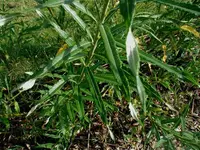
Common osier, Salix viminalis, is a fast-growing deciduous shrub or small tree in the willow family, often used for basketry and living structures. It forms dense clumps of long, upright stems with narrow, lance-shaped leaves that give a fine, elegant texture in the landscape.

This species is native to Europe and western Asia, typically found along rivers, wetlands, and damp lowlands. It is valued in gardens and on larger properties for erosion control, biomass production, and wildlife shelter.

Common osier grows best in full sun, moist to wet soil, and open sites with good air movement. Understanding how to care for Common osier mainly involves managing its strong growth and regular pruning needs.

Main Plant Requirements

Care Difficulty

Moderate Care

Light Preference

Full Sun

Water Requirements

Keep Soil Moist

Temperature Preference

Cold Hardy

Hardiness Zone

4–8

Soil Texture

Loamy, Clay, Silty

Soil pH

Acidic (5.5–6.5), Slightly acidic (6.5–7.0)

Soil Drainage

Waterlogged tolerant

Fertilization

Minimal (feed rarely)

Get Personalized Care Plan

Scan your plant to receive care tips personalized for your specific plant

Available on iOS and Android

How to Care for the Common osier

This fast-growing willow needs abundant direct light to maintain dense, healthy growth.

  • Provide 6–8 hours of direct sun daily; full sun is ideal for strong stems and dense foliage.
  • Tolerates light partial shade, especially with morning sun and light afternoon shade in hotter regions, but growth becomes looser in deeper shade.
  • In dry, hot summers, intense afternoon sun combined with drought can scorch leaves on Common osier, so support with adequate soil moisture and mulch.

This species thrives in consistently moist to wet soil and is more tolerant of over-wet than dry conditions.

  • Aim for soil that stays damp at root depth; allow only the top 1–2 cm to dry on lighter soils before irrigation, especially in the first 2–3 growing seasons.
  • During hot, windy weather, monitor leaves; drooping, curling, or dull foliage indicates insufficient moisture even if the surface appears damp.
  • Watch for yellowing leaves and a sour smell as signs of waterlogged, stagnant soil; ensure at least moderate drainage rather than standing water in compacted ground.

This hardy willow tolerates wide outdoor temperature ranges but grows best in cool to mild conditions.

  • Optimal active growth occurs around 55–75°F (13–24°C), typical of spring and early summer in many temperate regions.
  • Dormant wood usually survives down to about -20°F (-29°C) or lower once established, though young plants benefit from shelter from severe wind chill.
  • Mature plants tolerate short periods above 90°F (32°C) if soil remains moist; high heat with drought stress can cause leaf scorch and premature leaf drop.

Humidity is not a critical factor for this species in typical outdoor conditions.

This species prefers consistently moist, deep soils with high organic content.

  • Use a loamy or clay-loam soil rich in organic matter such as compost or well-rotted manure to support rapid growth.
  • Ensure the soil holds moisture but still has structure; avoid pure sand or very gravelly mixes that dry out too quickly.
  • Aim for slightly acidic to neutral pH (6.0–7.0), and avoid strongly alkaline or saline sites that restrict nutrient uptake.
  • On compacted ground, incorporate organic matter and coarse sand into the top 20–30 cm to improve aeration and root penetration for Salix viminalis.

This species can be grown in large containers outdoors, but only with careful moisture and stability management.

  • Choose a deep, heavy container that resists tipping, as tall stems and dense foliage make the plant top‑heavy in wind.
  • Use a moisture‑retentive mix with added compost and some loam, avoiding very light mixes that dry faster than the roots can tolerate.
  • Position the pot where it is sheltered from strong prevailing winds to reduce stress on the root ball and prevent rocking in the container.

Salix viminalis responds well to light feeding on poorer soils but established plants on fertile ground often need little extra nutrition.

  • Use a balanced NPK fertilizer at half strength or apply well-rotted compost in early spring to support new growth.
  • Feed every 4–6 weeks through the main growing season if soil is sandy or nutrient-poor, then stop by late summer.
  • For container-grown Common osier, use a slow-release fertilizer in spring to avoid nutrient swings and reduce leaching.
  • Avoid overfeeding; monitor leaf color and shoot vigor rather than following a fixed, high-dose schedule.

Pruning Salix viminalis manages size, renews vigorous stems, and maintains a healthy structure.

  • Carry out main pruning in late winter or very early spring before buds break, using clean, sharp loppers or a pruning saw.
  • Remove dead, diseased, crossing, and very weak stems first to open the canopy and improve air flow.
  • Shorten or thin crowded shoots to control height and width, encouraging strong, straight rods for basketry or screening.
  • Use coppicing or pollarding systems where appropriate, cutting stems back to a framework to stimulate dense new growth.

This fast-growing willow is usually field-grown, so transplanting young plants correctly is more important than frequent repotting.

  • Plan major transplanting for late winter to early spring while the plant is dormant and soil is workable.
  • Look for roots circling a container, slow growth, or frequent drying as signs a potted plant needs a larger pot or ground planting.
  • Move up 1–2 pot sizes or into a prepared ground hole with ample organic matter and consistent moisture.
  • Water thoroughly before and after moving, keep roots shaded and moist during handling, and mulch lightly to reduce stress and moisture loss.

Salix viminalis is commonly propagated from cuttings, which root rapidly under suitable moisture conditions.

  • Take hardwood cuttings in late winter or very early spring from healthy 1-year shoots, 20–30 cm long.
  • Insert cuttings two-thirds deep into moist, well-drained soil or coarse sand, keeping them upright and evenly spaced.
  • Maintain consistent soil moisture and good light but avoid waterlogging to prevent rot during rooting.
  • Softwood or semi-ripe cuttings in late spring to early summer also root well if humidity is kept high and wind exposure is low.

This willow is cold hardy in much of the US and usually needs minimal winter care once established in the ground.

  • Mature plants tolerate typical frosts and freezes; damage is rare except in very exposed, windy sites.
  • Apply a 5–8 cm mulch layer around the root zone in late fall, keeping it clear of the trunk, to moderate soil temperature.
  • For young or container plants, shelter pots from severe wind, group them together, or move to an unheated but frost-free spot in extreme climates.

Care Tips

Regular coppicing cycle

Establish a 1–3 year coppicing cycle and cut stems back to a low stool in late winter to maintain straight, usable rods and prevent the plant from becoming a tall, wind-prone thicket.

Rod selection and thinning

During the growing season, selectively remove weak, crossing, or twisted shoots so that the plant concentrates resources into fewer, straighter rods ideal for basketry or living structures.

Living structure training

While stems are still pliable in late spring to early summer, tie and weave young rods around sturdy stakes or frames to create living screens, arches, or fences, securing ties loosely so stems can thicken without girdling.

Root zone protection

Maintain a 30–60 cm grass-free zone around the base and use an organic mulch layer to reduce competition, stabilize soil moisture, and protect shallow roots from mechanical damage by mowers or string trimmers.

Water-edge management

If planting along ponds or streams, set plants slightly back from the waterline and use staggered spacing so roots stabilize the bank while allowing access for inspection and maintenance, which supports long-term success when growing Common osier.

Common Pests and Diseases

Willow beetles

These insects feed on leaves, causing skeletonized foliage and in severe cases almost complete defoliation during summer. This pest is common on basket willows grown in plantations or hedgerows.

Solution

Hand-pick beetles and larvae where plants are few, and prune out heavily infested twigs. For larger plantings, encourage birds and beneficial insects, and when damage is high use a targeted insecticide labeled for willow beetles, applied after leaf flush and following all label directions.

Willow leaf rust

This disease causes orange to yellow powdery pustules on the undersides of leaves, leading to early yellowing and leaf drop, especially in dense stands of wicker willow. Symptoms include repeated defoliation in late summer, which weakens plants over time.

Solution

Remove and destroy heavily infected leaves and thin nearby vegetation to improve air movement. In sites with repeated severe rust, select more open, sunny planting locations and consider resistant clones; fungicides labeled for rust on ornamentals can be used preventively where the disease is persistent and economically important for growing Common osier.

Willow scab

This disease produces dark, olive-brown lesions on young leaves and shoots which may wilt, blacken, and die back, especially during cool, wet springs. Symptoms include blighted shoot tips and a general scorched appearance on new growth.

Solution

Prune out and dispose of infected shoots back into healthy wood, disinfecting tools between cuts. Improve air circulation, avoid overhead irrigation, and in high-value plantings with a history of scab consider a spring fungicide program timed to bud break and early shoot expansion.

Black canker

This disease often follows willow scab, causing sunken, dark cankers on stems that can girdle branches and lead to dieback. Symptoms include cracked bark around infected areas and progressive decline of affected stems.

Solution

Cut out cankered branches well below visible damage and burn or discard them away from willows, cleaning tools with alcohol between cuts. Maintain plant vigor with correct watering and balanced fertilization, and avoid wounding stems, since injuries increase infection risk; in plantations, combine sanitation with control of willow scab to reduce new infections.

Aphids

These insects cluster on young shoots and undersides of leaves, sucking sap and causing leaf curling, distortion, and sticky honeydew that can lead to sooty mold. This pest often appears on vigorous new growth in spring and early summer.

Solution

Spray colonies off with a strong jet of water from a hose and pinch back heavily infested shoot tips. Encourage lady beetles and other natural enemies, and if populations remain high, apply insecticidal soap or a horticultural oil thoroughly to the undersides of leaves, repeating as needed according to product directions.

Interesting Facts

Traditional basketry wood

This species has been one of the main willows used in Europe for basketry and wickerwork because its long, straight, flexible one‑year shoots are uniform and easy to split and weave.

High biomass producer

Under suitable conditions, this willow can grow very fast and produce a dense stand of shoots, so short‑rotation coppice plantations use it as a renewable source of woody biomass for energy and raw material.

Powerful soil stabilizer

Its extensive, fibrous root system binds soil along rivers and ditches, so it is often planted in rows to reduce bank erosion and trap sediments in agricultural landscapes.

Botan icon

Did you know?

This species is widely used in environmental engineering projects for phytoremediation, where its vigorous growth and tolerance of nutrient‑rich, contaminated, or wastewater‑irrigated soils help capture excess nutrients and some pollutants while producing harvestable biomass.

FAQs about Common osier

This willow is very fast-growing, often adding 60–150 cm of new growth per year in moist, fertile soil. Growth slows in dry, compacted, or nutrient-poor conditions, and also if it is heavily pruned each winter.

Grow Healthy Plants with Botan Care

Keep your plants happy and healthy with plant identification, disease detection, and easy care guidance.


Botan plant care app — identify plants on mobile

Explore More Plants