Branch training
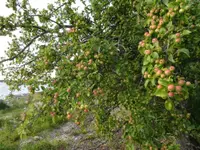
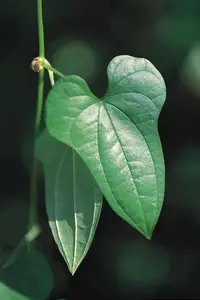
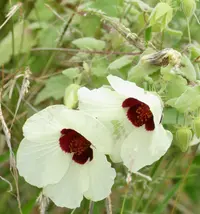
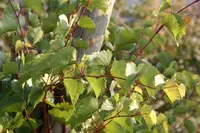
Start bending young, flexible shoots outward using soft ties and a stake or horizontal support to create a wide, open canopy that improves light penetration and fruiting wood development.

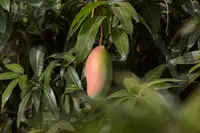
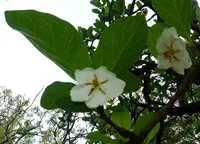
The mango tree, Mangifera indica, is a long-lived evergreen fruit tree grown in warm and tropical climates. It develops a dense, rounded crown with leathery, dark green leaves and showy clusters of small flowers that mature into large, fleshy fruits.
In the landscape it can become a sizable shade tree, while in containers it stays much smaller. It naturally occurs in South Asia but is now widely cultivated in many warm regions worldwide.
Mango trees grow best in full sun, warm temperatures, and well-drained soil, and they dislike waterlogged conditions. These traits mean care for mango tree is straightforward in suitable climates but challenging in cool or low-light locations.

Care Difficulty
Moderate Care

Light Preference
Full Sun

Water Requirements
Moderate Water

Temperature Preference
Tropical / Frost Sensitive

Hardiness Zone
10–12

Soil Texture
Sandy, Loamy, Organic-rich

Soil pH
Acidic (5.5–6.5), Slightly acidic (6.5–7.0)

Soil Drainage
Well-drained

Fertilization
Minimal (feed rarely)
Scan your plant to receive care tips personalized for your specific plant
Available on iOS and Android
Full sun is essential for strong growth and fruiting of this tropical tree.
Consistent but controlled moisture supports healthy root and canopy development.
Warm, frost-free conditions are critical for long-term survival and fruiting.
This species grows best in moderately humid air but adapts to many household conditions.
Mangifera indica benefits from deep, well-structured soil that drains freely yet retains some moisture.
This species can be grown in large containers when managed as a dwarf or pruned tree.
Nutrient support helps mango tree growth and fruiting, especially in containers or poor soil.
Structured pruning keeps Mangifera indica safer, more compact, and productive.
Container-grown or young mango trees need careful transplanting to avoid root shock.
Raising new Mangifera indica plants is mainly done from seed, with grafting used for named varieties.
Cold protection is essential, since Mangifera indica is highly frost sensitive.

Plant Health Check
Not sure what's wrong with your plant? Check your plant's health inside the app.
Genetic studies show that cultivated mango trees were domesticated mainly from a wild South Asian population in what is now northeastern India and Myanmar, then spread globally through human trade and selection.
The fruit of Mangifera indica produces a complex mix of volatile compounds such as monoterpenes and lactones, which create the characteristic mango aroma and help attract specific animal dispersers when the fruit is ripe.
The sap and peel contain resin canals with urushiol-like compounds, chemically related to those in poison ivy, which is why some people develop contact dermatitis when handling unripe fruit or sap.

Ancient archaeological evidence, including mango stones recovered from sites in India, indicates that Mangifera indica has been cultivated and selectively bred by humans for at least 4,000 years, making it one of the oldest continuously domesticated tropical fruit trees.
Lack of flowering is often due to too much nitrogen fertilizer, insufficient dry or cool season, or tree immaturity. Reduce high-nitrogen feeding, avoid heavy pruning before bloom, and ensure a distinct, slightly cooler, drier rest period.
Keep your plants happy and healthy with plant identification, disease detection, and easy care guidance.