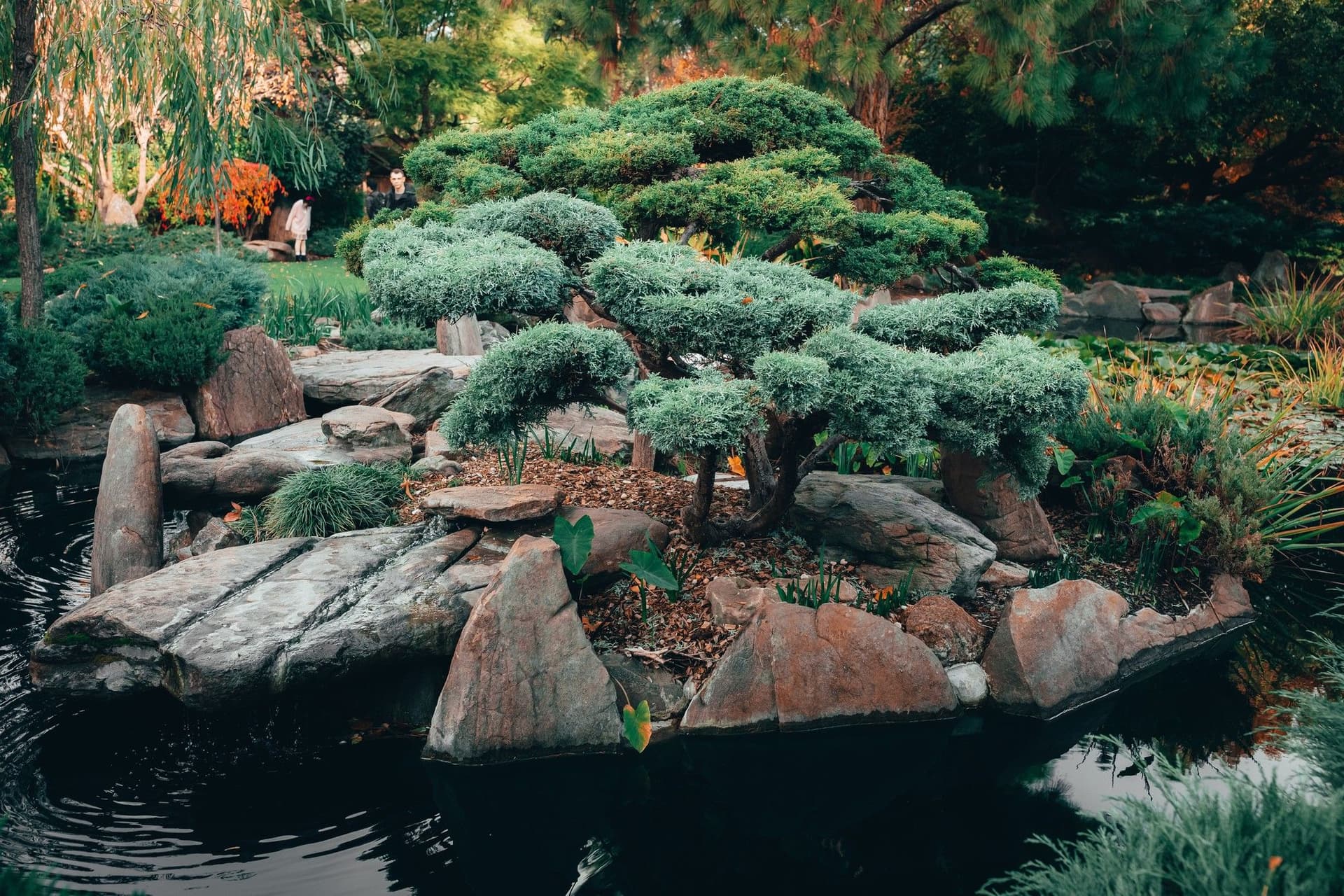

mango tree Identification (Mangifera indica)

Recognize mango tree by its long, narrow, simple leaves, usually 6 to 12 inches (15 to 30 cm) long, borne alternately along the twigs.

It also forms a dense, rounded crown on a stout trunk, with many small flowers held in large, branched terminal clusters.

Mangifera indica Identification

Check Your Plant ID

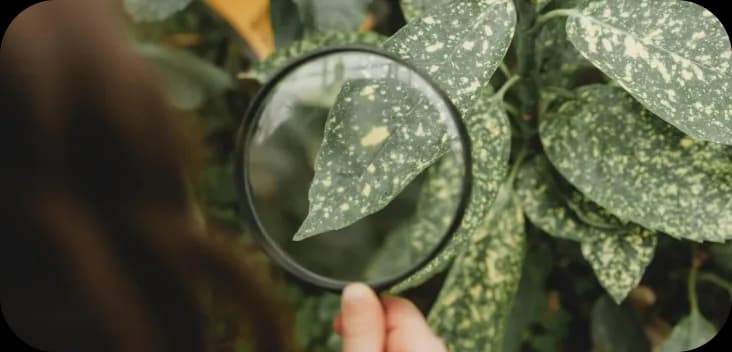
Check your plant ID by uploading a clear photo to Botan.

Clear images work best. Avoid photos taken too close or too far away

Check Mangifera indica for a dense, rounded canopy and long, simple leaves.

  • Leaves are alternate, leathery, and narrowly oval to lance-shaped with a pointed tip.
  • Mature leaves often measure 6-16 inches (15-40 cm) long and hang slightly downward.
  • Leaf margins are smooth, with a strong central vein and many fine side veins.
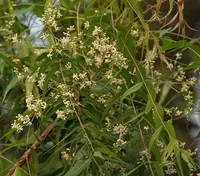
  • Flowers form in large, upright, branched clusters near twig ends.
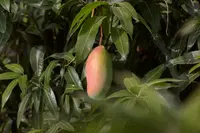
  • Fruits are fleshy, oval to kidney-shaped drupes, usually with a slight beak at one end.

Visible leaves, flower clusters, and beaked fruits together give the clearest field check.

Mangifera indica shows clear visual changes from early growth to flowering and fruiting.

  • Seedling: Seedlings usually have a single upright stem with long, narrow leaves that often emerge reddish or bronze before turning green.
  • Young plant: Young plants branch low and form a dense, rounded outline; leaves become broader, leathery, and commonly reach 6-12 inches (15-30 cm) long.
  • Flowering stage: At flowering, branch tips carry large, many-branched panicles, a loose flower cluster, packed with numerous small pale yellow to pinkish flowers.
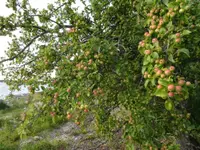
  • Fruiting stage: In fruit, the canopy shows hanging oval to kidney-shaped drupes, fleshy stone fruits, that enlarge and shift from green toward yellow, orange, or red.

In spring, Mangifera indica often shows large, branched flower clusters at shoot tips. At the same time, new leaves may emerge soft and coppery, red, or bronze before turning green. By summer, those flower clusters give way to hanging green fruits that enlarge and later ripen to yellow, orange, red, or mixed tones, creating one of the clearest seasonal identification clues.

A few tropical fruit trees can be mistaken for mango tree at a glance.

cashew(Anacardium occidentale)

Often confused because both are broadleaf evergreen trees with simple, leathery leaves. Cashew leaves are rounder and blunt-tipped, while mango leaves are longer, narrower, and more pointed. Cashew fruit carries a kidney-shaped nut outside the swollen stalk.

ambarella(Spondias dulcis)

Young plants can cause confusion from similar tropical habit and leaf size. Ambarella has compound leaves with many leaflets, not single blades. Its fruits hang in clusters, unlike the usually solitary or small-group fruits on mango.

Mangifera indica is widely accepted as native to the Indian subcontinent and nearby mainland Southeast Asia, though its exact original range is obscured by very early cultivation. That history limits its value as a strict geographic clue. Habitat is still somewhat useful. In the wild or naturalized, it is associated with lowland tropical forests and monsoon woodland, often in seasonally dry areas rather than cloud forest or swamp. Seeing a large fruit tree in those settings can help narrow identification.

  • Sap and peel irritation: The sap, skin, leaves, and stems contain urushiol-like chemicals. Skin contact can cause dermatitis in humans, especially in people sensitive to poison ivy.
  • Seed hazard: The large seed inside the fruit is not eaten and can be a choking or intestinal blockage risk if swallowed by pets. This is an ingestion concern for pets.

Confirm It from a Photo

Use Botan to identify or verify the plant from an image, which helps reduce mix-ups before you label or compare it.

FAQ

Recognize mango tree by its dense rounded crown, long narrow leathery leaves, and clusters of many small yellowish to pinkish flowers. Mature trees also show a stout trunk and rough gray-brown bark, useful for mango tree identification.

More Plant Identification Guides

From Plant ID to Plant Info

Identify a plant from a photo with Botan, then review care information, safety notes, and common problems for that species.

Botan app identifying a plant from a photo
Is Sugar Water Good for Plants?

4 min read · 14 Sept 2026

Is Sugar Water Good for Plants?

Sugar water may sound like an easy boost, but most rooted plants do not need extra sucrose. This guide explains how green tissues produce carbohydrates, when a sweetened solution can be useful, and why too much can cause problems.

Plant Care
Is Sugar Water Good for Plants?
10 Easy Garden Flowers to Grow

8 min read · 10 Sept 2026

10 Easy Garden Flowers to Grow

Discover 10 garden flowers that require minimal care. Learn which characteristics make plants easy to grow and follow tips on how to create a beautiful corner from beginner-friendly blooms on your property.

Beginner Guides
10 Easy Garden Flowers to Grow
How to Group Plants in Landscaping: A Practical Layout Guide

8 min read · 31 Aug 2026

How to Group Plants in Landscaping: A Practical Layout Guide

Good plant grouping can mean the difference between a well-planned garden and one that looks sloppy. This guide explores layers, spacing, cluster shapes, and the plants that thrive when you group them.

Plant Care
How to Group Plants in Landscaping: A Practical Layout Guide