
crab apple Identification (Malus sylvestris)

To recognize crab apple, look for a small, often thorny tree with alternate oval leaves that are finely toothed, and clusters of five-petaled white to pale pink flowers about 1 to 1.5 inches (2.5 to 4 cm) across.

The crown is usually rounded to irregular, with short side shoots and many slender twigs.

Malus sylvestris Identification

Identify Your Plant with Botan

Check your plant ID by uploading a clear photo to Botan.

Clear images work best. Avoid photos taken too close or too far away

Check the small tree form and fruiting details of Malus sylvestris.

  • Usually a small, rounded tree with a short trunk and many branching side shoots.
  • Leaves are simple and alternate, oval to egg-shaped, about 2-4 inches (5-10 cm) long, with toothed edges.
  • Twigs may carry sharp spines, especially on short side branches.
  • Flowers have five petals and open flat, white to pale pink.
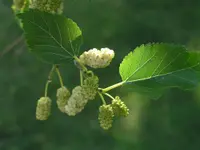
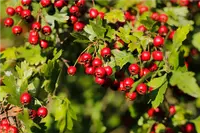
  • Fruits are small, round apples, often about 1-2 inches (3-5 cm) wide.

Spines plus very small apples are especially useful visual clues.

Malus sylvestris shows clear visual differences between early growth, flowering, and fruiting stages.

  • Young plant: Young plants are upright and twiggy, often forming a narrow crown with slender side branches; leaves appear relatively larger against the thin stems.
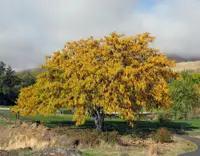
  • Mature plant: Mature trees develop a broader, rounded crown and a sturdier trunk, typically reaching 20-33 feet (6-10 m), with a denser framework of short spur-bearing branches.
  • Flowering stage: At flowering, crab apple is marked by clusters of five-petaled white to pale pink blossoms, opening along short spurs before the canopy looks fully filled.
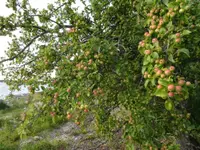
  • Fruiting stage: In fruit, the tree carries small rounded apples, usually yellow-green flushed red, about 1-2 inches (3-5 cm) wide, hanging visibly along the branch framework.

In spring, Malus sylvestris becomes easier to spot when clusters of white to pale pink flowers open before or with the young leaves. The fresh foliage is light green, then turns darker as it matures. By late summer into fall, small apple-like fruits become visible and often persist after leaf color shifts to yellow. After leaf drop, the bare outline, short spur shoots, and twiggy branching are easier to see.

Several apples and hawthorns can be mistaken for crab apple at a quick glance.

cultivated apple(Malus domestica)

It shares simple oval leaves, pink-white blossom, and apple-like fruit. A fast check is fruit size: cultivated apple usually bears much larger fruit, often over 2 inches (5 cm) wide, while Malus sylvestris usually has much smaller fruit. Trees are also often more obviously orchard-shaped or pruned.

midland hawthorn(Crataegus laevigata)

It can resemble it when flowering or fruiting, with white to pink flowers and red fruit. The quickest difference is the leaves: hawthorn leaves are distinctly lobed, while Malus sylvestris leaves are unlobed. Hawthorn twigs also usually carry sharp thorns.

Malus sylvestris is native to much of Europe, extending into western Asia. It occurs in mixed woodland edges, hedgerows, scrub, old field margins, and other semi-natural lowland habitats rather than deep forest. That setting helps with identification because truly wild plants are most often found in traditional hedgerow and woodland-edge landscapes across Europe, while similar crab apples in North America are usually planted, escaped, or belong to other species.

  • Seeds and core: The seeds inside the fruit contain cyanogenic compounds that can release cyanide when chewed and swallowed. This is an ingestion risk for humans and pets.
  • Fruit and stomach upset: The fruit is commonly handled and may be eaten, but large amounts, especially of unripe fruit, can cause digestive upset in humans and pets. The concern is ingestion.

Scan. Check. Confirm.

Use Botan to compare a photo and help identify or verify the plant, which is useful before spending time or money on the wrong one.

FAQ

Yes. In crab apple identification, the small pome fruits are useful: they are typically round, about 1 inch (2.5 cm) or less across, green to yellow with possible red flush, and contain several brown seeds.

More Plant Identification Guides

Scan Your Plant. Get the Details.

Identify a plant from a photo with Botan, then review plant details, care information, and common problems.

Botan app identifying a plant from a photo
When to Plant Hydrangeas: Best Time by Season and Type

6 min read · 30 Oct 2026

When to Plant Hydrangeas: Best Time by Season and Type

Hydrangeas grow best when you plant them in cool weather. This guide explains when to plant hydrangeas in your area, compares fall and spring planting seasons, and shows the right steps for each type.

Beginner Guides
When to Plant Hydrangeas: Best Time by Season and Type
How Fast Does Bamboo Grow Per Day, Month, and Year

10 min read · 7 Jul 2026

How Fast Does Bamboo Grow Per Day, Month, and Year

Bamboo grows extremely fast: some species can reach 5-6 m in just 3-4 months under the right conditions. This guide explains how much bamboo can grow per day, week, and year, and what affects its growth rate.

Plant Recommendations
How Fast Does Bamboo Grow Per Day, Month, and Year
How To Revive a Dying Plant: 6 Steps To Bring A Plant Back To Life

6 min read · 1 Sept 2026

How To Revive a Dying Plant: 6 Steps To Bring A Plant Back To Life

Drooping leaves and brown tips don't always mean the end, and a weakened plant can often recover with a little help. These six simple steps will help you revive a dying plant and restore its health.

Plant Care
How To Revive a Dying Plant: 6 Steps To Bring A Plant Back To Life