Early structural training
In the first 2–3 years, select 3–5 strong, evenly spaced main branches and lightly remove competing shoots to create an open, vase‑like framework that supports future flowering and easier harvesting or observation.

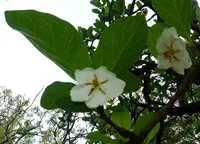
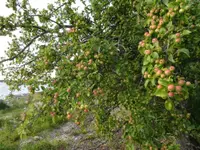
Tamilnadia uliginosa is a tropical tree species in the coffee family (Rubiaceae), typically found in moist lowland forests and swampy areas of South and Southeast Asia. It grows as a medium-sized tree with a rounded crown, simple opposite leaves, and tubular flowers that are followed by hard, woody fruits.
In cultivation, it is mainly valued as a botanical curiosity or for specialized collections rather than as a common garden or houseplant. Its need for consistently warm, humid conditions and ample space makes it better suited to tropical gardens or large conservatories.
Gardeners who want to care for Tamilnadia uliginosa should be ready to provide reliably moist but well-drained soil, high ambient humidity, and bright, filtered light.

Care Difficulty
Moderate Care

Light Preference
Partial Sun

Water Requirements
Regular Water

Temperature Preference
Tropical / Frost Sensitive

Hardiness Zone
10–12

Soil Texture
Loamy, Sandy, Organic-rich

Soil pH
Slightly acidic (6.5–7.0), Neutral (7.0)

Soil Drainage
Moist but well-drained

Fertilization
Minimal (feed rarely)
Scan your plant to receive care tips personalized for your specific plant
Available on iOS and Android
This species prefers bright outdoor positions with protection from harsh midday sun.
This plant prefers consistently moist, not soggy, soil, reflecting its swamp-forest origins.
This species grows best in warm, frost-free climates with only mild temperature swings.
This species benefits from moderately high humidity, especially in warm growing conditions.
Tamilnadia uliginosa prefers moist, well-structured soil that stays aerated yet does not dry out quickly.
This species can be grown in large containers when provided with stable, moist conditions.
This species grows in nutrient-poor sites and usually needs minimal feeding in garden soil.
Pruning is mainly needed to keep the crown healthy and structurally sound.
This tree is usually grown in the ground, with container culture reserved for young plants or special situations.
Propagation of Tamilnadia uliginosa is typically done from seed rather than vegetative methods.
This is a warmth-loving tree that dislikes prolonged cold and frost, so basic winter precautions are helpful in cooler climates.

Plant Health Check
Not sure what's wrong with your plant? Check your plant's health inside the app.
This species naturally occurs in seasonally waterlogged lowland areas, often along streams and in swampy forest margins in parts of South and Southeast Asia, reflecting its adaptation to fluctuating soil moisture.
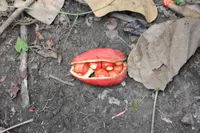
It produces hard, woody, roughly spherical fruits with a thick shell and internal chambers, a structure typical of some Apocynaceae that helps protect the seeds until they are dispersed.
As a member of the Apocynaceae, it has milky latex in its tissues, a common trait in the family that is associated with chemical defenses against herbivores and pathogens and is important to understand when Tamilnadia uliginosa care instructions mention handling precautions.
This species performs best outdoors in warm, humid, frost-free climates where it can develop a full canopy and root system. Tamilnadia uliginosa indoor care is possible only in bright, spacious conservatories or sunrooms with stable warmth.
Keep your plants happy and healthy with plant identification, disease detection, and easy care guidance.