Senegal mahogany Care (Khaya senegalensis)

Also known as: African Mahogany, Benin Mahogany, Dry Zone Mahogany
Senegal mahogany

About Senegal mahogany

Senegal mahogany (Khaya senegalensis) is a fast-growing tropical tree valued for its dense wood and neat, rounded crown. In cultivation it is usually grown as a landscape or shade tree in warm climates, or as a large container specimen when young.

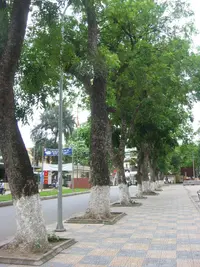
The tree has glossy, dark green leaflets and a straight trunk, giving it a formal, architectural look. It naturally occurs in dry and moist savannas of West and Central Africa, where it endures strong sun and seasonal drought.

These traits make it relatively tolerant of heat, variable rainfall, and less-than-ideal soils, although consistent moisture and good drainage support healthier growth. Understanding how to care for Senegal mahogany early on helps guide its size, structure, and long-term health.

Main Plant Requirements

Care Difficulty

Moderate Care

Light Preference

Full Sun

Water Requirements

Moderate Water

Temperature Preference

Tropical / Frost Sensitive

Hardiness Zone

10–12

Soil Texture

Sandy, Loamy, Clay

Soil pH

Slightly acidic (6.5–7.0), Neutral (7.0)

Soil Drainage

Well-drained

Fertilization

Minimal (feed rarely)

Get Personalized Care Plan

Scan your plant to receive care tips personalized for your specific plant

Available on iOS and Android

How to Care for the Senegal mahogany

This species develops best as a full-sun tropical tree with high light from an early age.

  • Provide 6–8 hours of direct sun daily; in hot inland areas, prioritize strong morning sun with slightly filtered light after 2–3 p.m.
  • Young Senegal mahogany trees tolerate light partial shade, but dense shade slows growth and produces sparse, elongated shoots.
  • In summer, monitor for leaf scorch on exposed, shallow-rooted young trees; in winter, avoid deep shade from buildings that can reduce next season’s growth.

This tree prefers deep, infrequent watering that moistens the full root zone rather than light surface sprinkling.

  • In well-drained soil, water when the top 5–8 cm feels dry, soaking the soil 20–30 cm deep, then allow partial drying before the next irrigation.
  • Increase frequency in the first 2–3 growing seasons and during hot, dry periods; reduce watering in cool or rainy seasons to avoid waterlogging.
  • Signs of overwatering include yellowing leaves, wilting in wet soil, and root rot odor; dry, curling leaves and slow growth in dusty soil indicate underwatering for Khaya senegalensis.

This tropical tree thrives in consistently warm, frost-free climates.

  • Ideal growth occurs at 77–90°F (25–32°C), with steady warmth promoting faster trunk thickening and canopy development.
  • Mature trees tolerate short spikes to 100–104°F (38–40°C) if soil moisture is adequate, but young plants can scorch or stall in extreme, dry heat.
  • Minimum safe temperatures are around 41–45°F (5–7°C); light frost can damage foliage and young shoots, and repeated freezes may kill small trees.

This species tolerates a wide humidity range and usually copes well with typical indoor air.

  • Aim for 30–60% humidity; it manages short dips lower without serious stress.
  • Dry air may cause leaf edge browning and slight curling, especially on young foliage.
  • Increase humidity near Senegal mahogany with a nearby open tray of water and stones or by grouping plants, rather than frequent misting.

Khaya senegalensis prefers freely draining, moderately fertile mineral soil with some organic matter.

  • Use a mix such as 50–60% sandy or loamy topsoil, 20–30% coarse sand, and 10–20% compost to balance structure and fertility.
  • Ensure rapid drainage; water should pass through the profile quickly without pooling around the roots.
  • Keep pH roughly neutral to slightly acidic, around 6.0–7.0, avoiding strongly acidic or saline substrates.
  • Improve aeration and prevent compaction by blending in coarse sand or fine gravel and avoiding heavy clay-based mixes.

This tree can be grown in containers for its juvenile stages or as a patio specimen if managed carefully.

  • Choose a deep, heavy pot that resists tipping, since the woody trunk and canopy become top-heavy as it matures.
  • Provide a wide surface area of soil in the container to support lateral root spread and improve moisture distribution.
  • Use a mineral-based, fast-draining mix in a pot with large drainage holes so water exits quickly and roots receive ample oxygen.

Fertilizing supports faster growth of young Khaya senegalensis, especially in containers or poor soils.

  • Use a balanced NPK granular or slow-release fertilizer, or well-rotted compost, for established trees in spring.
  • Feed container-grown seedlings every 4–6 weeks in the growing season with half-strength balanced liquid fertilizer.
  • Avoid fertilizing during winter or clear dormancy to prevent weak, soft growth.
  • Always water before and after applying fertilizer to reduce root burn risk.

Pruning Khaya senegalensis focuses on structural safety and removing weak material rather than heavy shaping.

  • Carry out main pruning in late winter to early spring, before vigorous growth resumes.
  • Remove dead, diseased, crossing, or storm-damaged branches first to maintain a sound framework.
  • Thin crowded interior shoots lightly to improve light penetration and airflow in the canopy.
  • Use clean, sharp loppers or a pruning saw, making smooth cuts just outside the branch collar.

Transplanting is most relevant for young Khaya senegalensis trees started in containers before field planting.

  • Look for roots circling the pot, poor drainage, or slowed growth as cues to move up 1 pot size.
  • Transplant in late spring to early summer, once soil is warm and frost risk has passed.
  • Gently tease circling roots apart, keep the original soil level, and water deeply to settle soil around roots.
  • Shade newly transplanted trees for 1–2 weeks and maintain even moisture to reduce transplant shock.

Propagation of Khaya senegalensis is usually done from seed under warm, consistently moist conditions.

  • Collect fresh, fully mature seeds and sow in late spring when temperatures exceed 70°F.
  • Use a free-draining mix, such as 50% coarse sand and 50% sterile composted bark or peat alternative.
  • Sow seeds shallowly, keep substrate evenly moist, and maintain bright, indirect light.
  • Provide bottom warmth if possible, and thin or pot on seedlings once they develop several true leaves.

Khaya senegalensis is a tropical to subtropical species and needs careful winter management in cold climates.

  • In USDA zones below 10, grow in large containers and overwinter indoors in bright, cool rooms above 50°F.
  • Outdoors in marginal climates, add 5–8 cm of mulch around the root zone, keeping it away from the trunk.
  • Avoid frost exposure; use frost cloth or temporary covers during brief cold events for young trees.

Care Tips

Root space planning

Use a deep, wide container or planting area and rotate the plant slightly at each repotting to encourage a broad, stable root system that can support rapid vertical growth.

Early leader training

In the first 2–4 years, select one strong central leader and remove or shorten competing upright shoots so the tree develops a straight, wind-resistant trunk suitable for long-term structure.

Wind hardening routine

If raised in containers, gradually expose young plants to steady but not extreme air movement for a few weeks before planting out to build thicker stems and reduce transplant shock.

Salt and drought monitoring

In warm, dry regions, periodically check leaf edges for browning and adjust irrigation or leach the soil with a thorough flush of clean water if salts build up from hard water or frequent fertilization.

Trunk and root protection

Avoid string trimmers and lawn mowers touching the trunk by maintaining a clear mulch ring; this reduces bark damage and root stress, which is critical when caring for Senegal mahogany as a long-lived shade tree.

Common Pests and Diseases

Mahogany shoot borer

This pest is a small moth larva that tunnels into young shoots and terminal buds, causing dieback, crooked stems, and loss of the main leader. Symptoms include frass (sawdust-like waste) at entry holes and distorted new growth.

Solution

Prune and destroy infested shoot tips as soon as dieback or entry holes are seen to break the life cycle, and avoid leaving cut material on the ground. In young trees, protect new flushes with fine mesh barriers where practical, and in high-risk areas coordinate timing of selective insecticide sprays with local extension advice to target emerging larvae on new growth.

Mahogany heartwood borer

This pest is a longhorn beetle whose larvae bore deep into stems and branches, weakening the wood and sometimes causing branch breakage or longitudinal cracks. Symptoms include oval exit holes, internal galleries, and sometimes sap exudation along the trunk.

Solution

Remove and destroy heavily infested branches or poorly formed trees to reduce breeding sites, and avoid leaving log piles or cut trunks near plantings. Maintain good tree vigor through correct watering and balanced nutrition so trees can compartmentalize damage, and use trunk inspections at least once a year to detect new infestations early.

Powdery mildew

This disease forms a white, powdery coating on young leaves and shoots, which can lead to leaf distortion, yellowing, and premature leaf drop in humid, shaded conditions. Symptoms include affected leaves that feel dusty to the touch and may curl or twist as they mature.

Solution

Improve air circulation around the canopy by selective pruning and avoid frequent overhead watering that keeps foliage moist for long periods. Remove and dispose of heavily infected leaves, and if needed apply a sulfur-based or potassium bicarbonate fungicide labeled for ornamental trees, following product directions carefully as part of general Khaya senegalensis care.

Leaf spot

This disease causes small brown or dark purple spots on leaves that may enlarge and merge, sometimes leading to partial defoliation in young trees or nursery stock. Symptoms include spots with yellow halos and, in severe cases, thinning foliage on stressed plants.

Solution

Collect and discard fallen leaves to reduce the source of infection, and avoid overhead irrigation that splashes water between leaves. Increase spacing between plants to enhance airflow, and apply a copper-based fungicide during wet periods if outbreaks are recurring or severe.

Termite damage

These insects can attack the lower trunk, exposed roots, or cut stumps, feeding on inner wood and sometimes hollowing stems, especially in dry areas. Symptoms include mud tubes along the trunk, weakened wood, and dieback in severe cases.

Solution

Remove old stumps, buried wood, and heavy mulch directly against the trunk, as these provide shelter and food for termites. For active infestations, use soil or bait termiticides applied by a licensed professional near structures, and keep the base of the tree visible and dry to allow regular inspection and early intervention.

Interesting Facts

Iconic African timber

This species is one of the major African mahoganies, producing a durable, moderately heavy hardwood valued for furniture, boat building, and high-quality plywood.

Savanna drought survivor

Native to dry savannas and riverine zones in West and Central Africa, it tolerates pronounced dry seasons thanks to a deep root system and tough, leathery leaves that reduce water loss.

Compound leaf architecture

Its leaves are paripinnate, meaning each leaf is divided into several opposite leaflets and usually ends without a single terminal leaflet, an adaptation that helps balance light capture with reduced overheating in intense sun.

Botan icon

Did you know?

In parts of the Sahel, long-lived individuals of this tree have been used as landmark and boundary trees for generations, and very old specimens can form prominent, umbrella-like crowns that dominate otherwise open savanna landscapes.

FAQs about Senegal mahogany

Growth is moderately fast in warm climates, often 60–100 cm per year when young, slowing as it matures. Rate depends on water availability, soil depth, and heat. Good Khaya senegalensis care prevents weak, elongated growth.

Grow Healthy Plants with Botan Care

Keep your plants happy and healthy with plant identification, disease detection, and easy care guidance.

Botan plant care app — identify plants on mobile

Explore More Plants