Formative tip pruning
In the first 3–4 years, tip-prune the leading shoots once per year to encourage a dense, multi-branched canopy that is less prone to wind damage and sunscald on the trunk.

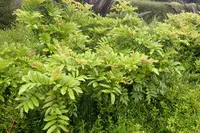
Makamaka, Ackama rosifolia, is an evergreen tree from the myrtle family, native to the warm rainforests of eastern Australia and nearby regions. In the wild it often forms part of the mid to upper canopy.
It has smooth bark, fine branches, and dense foliage with paired, glossy leaflets that give a soft, fernlike look. New growth may emerge flushed or pinkish before turning green.
This species grows steadily and can become a tall tree outdoors, but young plants are sometimes kept in large containers for sheltered patios or bright indoor spaces.
It prefers mild, frost-free conditions, consistent moisture, and well-drained soil, so learning how to care for Makamaka focuses on protecting it from cold, drought, and waterlogging.

Care Difficulty
Moderate Care

Light Preference
Partial Shade

Water Requirements
Moderate Water

Temperature Preference
Warm Climate

Hardiness Zone
9–11

Soil Texture
Loamy, Sandy, Organic-rich

Soil pH
Acidic (5.5–6.5), Slightly acidic (6.5–7.0)

Soil Drainage
Moist but well-drained

Fertilization
Minimal (feed rarely)
Scan your plant to receive care tips personalized for your specific plant
Available on iOS and Android
This species grows best as a forest-edge or understory tree with bright but softened light.
This tree prefers steady soil moisture without long periods of saturation or drought.
This species prefers mild, frost-free conditions similar to warm temperate or subtropical coastal climates.
This species prefers moderately humid air but adapts if extremes are avoided.
Ackama rosifolia prefers deep, moist, well-drained soil with plenty of organic matter.
This tree can be grown in large containers for some years, provided the pot is carefully managed for stability and drainage.
Ackama rosifolia grows steadily with modest feeding when cultivated in gardens or containers.
Ackama rosifolia benefits from light, structured pruning to maintain form and health.
This species is usually grown as a landscape tree, so focus on careful transplanting rather than frequent repotting.
Ackama rosifolia is typically propagated by seed or semi-hardwood cuttings under controlled conditions.
In mild, frost-free climates, Makamaka usually needs minimal winter care once established outdoors.

Plant Health Check
Not sure what's wrong with your plant? Check your plant's health inside the app.
When crushed, the leaves release a light rose-like fragrance, which is the reason for the species name rosifolia, meaning rose-leaved or rose-scented foliage.
This tree naturally occurs in warm temperate and subtropical rainforests of eastern Australia, where it regenerates in disturbed gaps and can grow into the mid to upper canopy.
Its fine-textured, pale timber has historically been used in Australia for joinery, interior fittings, and other light applications where a stable, workable rainforest hardwood was needed.

In its native range in New South Wales and Queensland, this species often grows along moist gullies and creek lines, helping stabilize soil and contributing to layered rainforest structure that supports diverse birds and invertebrates.
Growth is moderately fast in warm, frost-free climates. Young trees may add 30–60 cm a year, eventually reaching 8–15 m tall with a rounded crown, depending on climate, soil quality, and available root space.
Keep your plants happy and healthy with plant identification, disease detection, and easy care guidance.