Taiwan-fir Care (Cunninghamia konishii)

Taiwan-fir

About Taiwan-fir

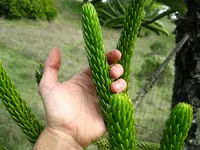
Cunninghamia konishii, commonly called Taiwan-fir, is an evergreen conifer grown mainly as an ornamental tree. It forms a narrow, upright crown with tiered branches and stiff, pointed needles that stay green year-round. Bark becomes attractively fibrous with age.

This species is native to high-elevation forests of Taiwan, where it grows in cool, moist mountain conditions. It can be slow to establish and prefers consistent moisture, good drainage, and full sun to light shade.

In cultivation it is considered moderately demanding, mainly due to its need for cool summers, even moisture, and space to reach its natural size. Gardeners who understand how to care for Taiwan-fir are more likely to keep it healthy long term.

Main Plant Requirements

Care Difficulty

Moderate Care

Light Preference

Full Sun

Water Requirements

Moderate Water

Temperature Preference

Cold Hardy

Hardiness Zone

7–9

Soil Texture

Loamy, Sandy, Clay

Soil pH

Acidic (5.5–6.5), Slightly acidic (6.5–7.0)

Soil Drainage

Moist but well-drained

Fertilization

Minimal (feed rarely)

Get Personalized Care Plan

Scan your plant to receive care tips personalized for your specific plant

Available on iOS and Android

How to Care for the Taiwan-fir

This slow-growing conifer prefers bright outdoor conditions with protection from harsh extremes.

  • Provide 4–6 hours of direct morning sun with light afternoon shade; in hotter regions, avoid intense sun after 2–3 pm to reduce needle scorch.
  • Young Taiwan-fir trees benefit from dappled or filtered light under taller trees until roots establish, then can handle more open exposure.
  • Watch foliage color and density: sparse, elongated growth indicates too much shade, while browning on the south or west side suggests excessive sun.

This species prefers consistently moist, well-drained soil rather than prolonged dryness or saturation.

  • In the ground, allow the top 3–5 cm of soil to dry slightly, then water deeply so moisture reaches the main root zone, encouraging deeper rooting.
  • During the first 2–3 years, monitor closely in summer drought; drooping or dull, slightly curling needles signal thirst, especially on new growth.
  • Cunninghamia konishii dislikes soggy soil; yellowing lower needles, soft new shoots, or a sour soil smell suggest overwatering or poor drainage that needs correction.

This conifer is adapted to cool, humid, mountainous climates but tolerates a fair temperature range in cultivation.

  • Optimal growth occurs around 50–75°F (10–24°C), with steady, moderate conditions supporting dense foliage and balanced shoot extension.
  • Mature trees are hardy to about 5–10°F (-15 to -12°C); brief dips slightly below may be tolerated, but young plants need protection from severe freezes.
  • In summer, aim to keep roots cool when temperatures exceed 86°F (30°C) by using mulch and avoiding heat-reflecting surfaces that can stress foliage.

This conifer prefers moderate, stable humidity but adapts to many garden conditions.

  • Aim for 40–60% humidity, which suits typical outdoor conditions in most temperate regions.
  • Taiwan-fir tolerates short dry spells if soil moisture is kept consistent and roots do not dry out completely.
  • Watch for browning needle tips and increased shedding as signs of low humidity stress, and group plants or add nearby mulch to buffer air dryness.

This species grows best in slightly acidic, moist yet free-draining soil with ample organic matter.

  • Use a loamy soil with a mix of mineral particles and organic material so roots receive both moisture and air.
  • Target a pH of 5.0–6.5, adding composted bark or leaf mold to gently acidify alkaline native soil.
  • Blend coarse sand or fine gravel into heavy clay sites to prevent waterlogging and improve drainage around the root zone.
  • Avoid compacted, poorly drained, or highly alkaline soils, which increase risk of root rot and nutrient lockout for Cunninghamia konishii.

This species can be grown in containers when young or kept dwarf with careful management.

  • Select a deep, heavy container that resists tipping, as the plant becomes tall and somewhat top-heavy over time.
  • Fill the pot with a fast-draining, slightly acidic mix combining pine bark fines, loam, and coarse grit for root health.
  • Raise the container on pot feet or bricks to ensure rapid drainage from the base and reduce the chance of water collecting around the roots.

This conifer benefits from light, balanced feeding during active growth but does not need heavy fertilization.

  • Use a balanced slow-release fertilizer (around 10-10-10) or well-aged compost applied in early spring for Taiwan-fir.
  • Feed once in spring and, if growth is weak, once again in midsummer; avoid late-season applications.
  • Apply at half the label rate for trees, keeping granules away from direct stem contact.
  • Stop feeding in late summer so new growth hardens before winter and do not fertilize during winter dormancy.

Cunninghamia konishii needs only light structural pruning to maintain a healthy, stable form.

  • Carry out pruning in late winter or very early spring before new growth starts.
  • Remove dead, diseased, storm-damaged, or rubbing branches with clean, sharp bypass pruners or a pruning saw.
  • Thin crowded interior branches slightly to improve light and airflow without cutting back into old bare wood.
  • Limit shaping cuts to small branch tips to maintain the plant’s natural conical form and avoid heavy topping.

This species is mainly grown as a landscape tree, so focus on careful transplanting rather than frequent repotting.

  • Transplant in late winter or early spring when the tree is dormant and soil is workable.
  • Look for circling roots in containers, slow growth, or the root ball drying out quickly as signs it has outgrown its pot.
  • Move to a slightly larger container or ground site with well-drained soil, keeping the root flare at soil level.
  • Minimize root stress by watering deeply before and after planting, handling the root ball gently, and mulching the surface lightly.

Cunninghamia konishii is usually propagated by seed or semi-hardwood cuttings under controlled conditions.

  • Collect ripe cones and sow seeds in late winter to early spring in a free-draining, slightly acidic mix.
  • Provide cool stratification if recommended by the seed source to improve germination rates.
  • Take semi-hardwood cuttings in late summer, treat bases with rooting hormone, and place in a humid, well-aerated medium.
  • Maintain gentle bottom warmth and bright, indirect light while keeping the rooting mix evenly moist but not waterlogged.

This conifer is moderately cold hardy but benefits from some winter preparation, especially when young or container-grown.

  • In colder regions, apply a 5–8 cm mulch layer around the root zone, keeping it slightly away from the trunk.
  • Shelter young trees from drying winter winds with a windbreak fabric if sited in exposed locations.
  • Move container plants to an unheated but frost-free or slightly sheltered spot, such as a cold frame or protected wall.

Care Tips

Wind-firm training

In the first 3–5 years, selectively shorten the longest leaders by 10–20% in late winter to encourage a sturdy central trunk and balanced scaffold branches that better resist storm damage.

Snow load management

In snowy regions, loosely tie major upright branches with soft horticultural tape before heavy snow is forecast to reduce splaying or breakage under wet snow loads.

Root-zone mulching

Maintain a 5–8 cm deep ring of coarse bark mulch over the root zone, kept 5–8 cm away from the trunk, to moderate soil temperature, conserve moisture, and protect shallow feeder roots from mechanical damage.

Gentle site acclimation

When transplanting from container to open ground, gradually expose the plant to stronger wind and sun over 10–14 days to reduce transplant shock and improve establishment when growing Taiwan-fir.

Phosphorus-focused establishment

At planting, mix a modest amount of slow-release, phosphorus-lean starter fertilizer into the backfill soil at label rates to support root growth without forcing soft, easily damaged top growth.

Common Pests and Diseases

Scale insects

This pest feeds on needles and young stems, sucking sap and causing yellowing, thinning foliage, and general decline, especially on stressed trees. Symptoms include sticky honeydew on lower branches or surfaces beneath the tree and sometimes sooty black mold on that residue.

Solution

Prune and dispose of heavily infested twigs, then hose down branches to dislodge remaining insects. For ongoing Cunninghamia konishii care, use horticultural oil or insecticidal soap, applied thoroughly to bark and needle surfaces in mild, dry weather, and repeat as needed to target newly hatched crawlers.

Spider mites

These insects are tiny arachnids that thrive in hot, dry conditions and cause fine stippling, bronzing, and premature needle drop. Symptoms include very fine webbing and dusty-looking foliage when branches are tapped over white paper.

Solution

Increase humidity around the tree and regularly hose the foliage with a firm stream of water, especially on the undersides of needles, to knock mites off. If populations stay high, apply insecticidal soap or a labeled miticide, repeating at 7–10 day intervals while monitoring for new damage.

Needle blight

This disease is caused by fungi that infect older needles, leading to browning from the tip inward, banding or spotting, and progressive thinning of the canopy from the inside of the tree outward. Symptoms include dead needles that often remain attached for some time, giving branches a scorched or patchy appearance.

Solution

Remove and discard affected needles and small twigs, and keep the area under the tree clear of fallen debris to reduce fungal spores. Improve air circulation by light thinning, avoid overhead watering, and in persistent cases use a registered copper or chlorothalonil-based fungicide as a preventive spray during moist, mild weather.

Canker disease

This disease results from fungal infection of branches or the trunk, producing sunken, discolored patches of bark and resin bleeding, with dieback of the affected section beyond the lesion. Symptoms include sudden browning of whole branch sections while nearby growth remains green.

Solution

Prune out infected branches at least 15–20 cm below visible symptoms during dry weather, disinfecting pruning tools between cuts with alcohol or a 10% bleach solution. Keep the tree vigorous by avoiding mechanical injury and water stress, and remove severely girdled branches or stems promptly to limit spread.

Aphids

These insects cluster on tender shoots and undersides of young needles, sucking sap and causing distorted new growth, reduced vigor, and honeydew that can lead to sooty mold on foliage and surfaces beneath the tree. This pest often appears during flushes of soft new growth in spring or early summer.

Solution

Rinse colonies off with a strong stream of water, focusing on new shoots and the undersides of foliage. If populations remain high, use insecticidal soap or a light horticultural oil, applied thoroughly and repeated as needed, and encourage natural predators such as lady beetles by avoiding broad-spectrum insecticides nearby.

Interesting Facts

Rare Taiwan endemic

This conifer is naturally restricted to high-elevation forests in Taiwan, where it grows on steep, often cloudy mountain slopes and plays a role in mixed conifer–broadleaf communities.

Distinct from Chinese fir

Although once treated as a variety of Cunninghamia lanceolata, morphological and genetic studies now generally support its recognition as a separate species, adapted to cooler, high-mountain conditions.

Conservation concern status

Wild populations are considered threatened by habitat loss and overharvesting, and the species appears on regional conservation lists, making ex situ planting and careful management important for long-term survival.

Botan icon

Did you know?

The wood of this species is naturally durable and pleasantly scented, so it has been valued locally in Taiwan for temple construction and traditional architecture, combining structural use with cultural significance.

FAQs about Taiwan-fir

This species is moderately slow-growing. In good conditions it typically adds about 15–30 cm of height per year when young, then slows with age. Cold, drought, poor soil fertility, and root disturbance all reduce annual growth.

Grow Healthy Plants with Botan Care

Keep your plants happy and healthy with plant identification, disease detection, and easy care guidance.


Botan plant care app — identify plants on mobile

Explore More Plants