Wind-hardening young plants
In the first 1–2 seasons, expose young trees gradually to stronger wind by removing temporary windbreaks over several weeks so roots and stems thicken and the plant anchors more securely before facing full-site exposure.

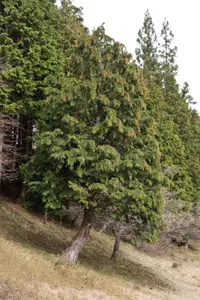
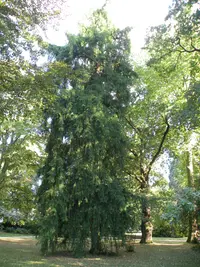
Hinoki cypress, Chamaecyparis obtusa, is an evergreen conifer valued for its dense, fan-like foliage and naturally elegant, pyramidal form. It is often grown as a garden specimen, hedge, or container plant, and many compact cultivars stay small enough for patios or small yards.
This species is native to Japan, where it grows in cool, humid mountain forests. It prefers consistent moisture, well-drained, slightly acidic soil, and protection from extreme heat or drying winds.
Once established in a suitable site, it grows slowly but steadily and generally needs little pruning. Understanding how to care for Hinoki Cypress helps maintain its foliage color, branching structure, and long life span.

Care Difficulty
Moderate Care

Light Preference
Full Sun

Water Requirements
Moderate Water

Temperature Preference
Cold Hardy

Hardiness Zone
4–8

Soil Texture
Sandy, Loamy, Organic-rich

Soil pH
Strongly acidic (4.5–5.5), Acidic (5.5–6.5)

Soil Drainage
Moist but well-drained

Fertilization
Minimal (feed rarely)
Scan your plant to receive care tips personalized for your specific plant
Available on iOS and Android
This species prefers bright outdoor conditions with protection from harsh extremes.
This conifer prefers evenly moist, never soggy soil once established outdoors.
This species is naturally adapted to cool-temperate outdoor climates.
This species prefers moderately moist air but usually adapts to typical indoor humidity if not too dry.
Chamaecyparis obtusa prefers airy, moist, well-drained soil that stays evenly damp but never waterlogged.
This species is suitable for long-term container growing if the pot is chosen and managed carefully.
This conifer grows steadily with modest feeding when grown in containers or nutrient-poor soil.
Pruning Chamaecyparis obtusa is mainly corrective, aimed at maintaining structure and removing problem growth.
This species is usually grown in the ground, with transplanting done carefully to avoid root damage.
Propagation of Chamaecyparis obtusa is most reliable from semi-hardwood cuttings taken under controlled conditions.
Established plants are generally cold hardy but young or potted specimens benefit from some winter precautions.

Plant Health Check
Not sure what's wrong with your plant? Check your plant's health inside the app.
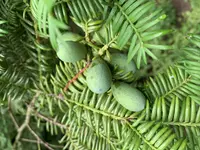
This species forms flattened, fan-like sprays of foliage with scale-like leaves arranged in distinct, overlapping rows, a structure that increases light capture in the shaded understories of its native forests in Japan.
The heartwood is pale yellow to light brown, strongly aromatic, and highly resistant to decay, which is why it has long been valued in Japan for temples, shrines, baths, and traditional woodworking.
Hinoki cypress grows relatively slowly, often adding only modest height each year, but individual trees can live for many centuries under favorable conditions, forming impressive trunks and broad, conical crowns.

In Japan, this species is one of the classic “five sacred trees” of Kiso, historically reserved for elite and religious use, and massive ancient specimens have been designated as natural monuments and protected cultural treasures.
Browning foliage often results from root stress, winter windburn, or excess fertilizer. Check for compacted or waterlogged soil, dry root balls, or salt buildup. Prune dead tips, water deeply but infrequently, and apply a light mulch layer.
Keep your plants happy and healthy with plant identification, disease detection, and easy care guidance.