Rotate mounting spot
Rotate the plant or its mount 90° every 1–2 weeks so all sides receive similar light and air exposure, which helps keep the rosette symmetrical and prevents one-sided leaning or shading out of inner leaves.

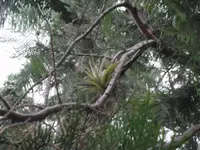
Tillandsia brachycaulos is a small epiphytic air plant that grows without soil, anchoring itself to bark, wood, or other surfaces. It absorbs water and nutrients mainly through its leaves. The plant forms a dense rosette of arching leaves that shift from green to bright red when approaching bloom, giving it strong decorative value in small spaces. It is native to warm regions of Mexico and Central America, where it grows in bright, airy habitats. This species is considered relatively easy to grow indoors if given strong indirect light, good air movement, and regular moisture, so learning how to care for Tillandsia brachycaulos is straightforward for most plant owners.

Care Difficulty
Moderate Care

Light Preference
Bright Indirect Light

Water Requirements
Moderate Water

Temperature Preference
Tropical / Frost Sensitive

Hardiness Zone
10–12

Soil Texture
Sandy, Rocky, Organic-rich

Soil pH
Acidic (5.5–6.5), Slightly acidic (6.5–7.0)

Soil Drainage
Well-drained

Fertilization
Light (every 4–6 weeks)
Scan your plant to receive care tips personalized for your specific plant
Available on iOS and Android
This species prefers bright, indirect light with some gentle direct sun for best color and growth.
This air plant absorbs water mainly through its leaves and benefits from thorough but well-timed hydration.
This air plant grows best in consistently warm, frost-free conditions.
This air plant prefers moderate to high humidity and reacts quickly to very dry air.
Tillandsia brachycaulos is an epiphyte and should never be planted in traditional potting soil.
This species is suitable for containers only as a mounted or resting air plant, not potted in substrate.
Light feeding supports healthy growth, but overfertilizing Tillandsia brachycaulos causes damage.
Pruning is minimal and mainly keeps Tillandsia brachycaulos clean and healthy.
This epiphytic air plant is not truly repotted, but it can be remounted or rearranged when crowded or unstable.
Propagation of Tillandsia brachycaulos is most reliable through offsets rather than seed.
This air plant is frost-sensitive and needs indoor protection in cold-winter climates.

Plant Health Check
Not sure what's wrong with your plant? Check your plant's health inside the app.
This species turns from bright green to intense red when approaching its flowering stage, a color change triggered by increased light exposure and hormonal shifts associated with reproduction.
The leaves have especially dense, silvery trichomes near the base and sparser ones closer to the tips, an adaptation that helps balance water uptake from mist and airflow with efficient gas exchange.
After flowering, this air plant often produces several offsets at once from the base, forming compact, spherical clumps instead of a single linear chain of pups like some related species.

In its native habitats from Mexico to Central America, this species is often found growing on exposed tree branches in seasonally dry forests, showing a notable tolerance for high light and intermittent drought compared with many other mesic, or moisture-loving, Tillandsia species.
Lack of blooming usually relates to insufficient light, inconsistent watering, or low air movement. Stable, bright conditions and a slight increase in light often trigger flowering. Once it blooms, the main rosette will slowly age while offsets develop.
Keep your plants happy and healthy with plant identification, disease detection, and easy care guidance.