Indian Ginger Care (Alpinia calcarata)

Indian Ginger

About Indian Ginger

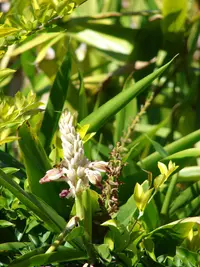
Indian ginger, Alpinia calcarata, is a perennial rhizomatous herb from the ginger family, grown mainly for its aromatic roots and lush foliage. It typically forms clumps of upright, cane-like stems with lance-shaped leaves and showy cream to pale yellow flowers with reddish markings. Native to South and Southeast Asia, it is often found in warm, humid lowland areas and light shade. The plant grows moderately fast and is considered relatively easy if frost-free conditions, consistent moisture, and well-drained, fertile soil are provided. Understanding how to care for Indian Ginger starts with giving it protection from cold, drying winds, and prolonged drought.

Main Plant Requirements

Care Difficulty

Moderate Care

Light Preference

Partial Shade

Water Requirements

Keep Soil Moist

Temperature Preference

Tropical / Frost Sensitive

Hardiness Zone

10–11

Soil Texture

Loamy, Silty, Organic-rich

Soil pH

Acidic (5.5–6.5), Slightly acidic (6.5–7.0)

Soil Drainage

Moist but well-drained

Fertilization

Light (every 4–6 weeks)

Get Personalized Care Plan

Scan your plant to receive care tips personalized for your specific plant

Available on iOS and Android

How to Care for the Indian Ginger

This rhizomatous ginger prefers bright, gentle light to support dense foliage and flowering.

  • Provide 3–5 hours of soft morning sun with bright, filtered light the rest of the day; avoid harsh afternoon sun, especially in hot summers.
  • Tolerates partial shade, and Indian Ginger often performs well with dappled light under taller shrubs or trees in warm climates.
  • Watch leaf color as a guide: pale, scorched, or crispy edges indicate too much direct sun, while sparse, stretched stems point to insufficient light.

This species prefers evenly moist, well-drained soil that never stays soggy for long periods.

  • Water when the top 3–5 cm of soil feels dry, letting water run through freely; avoid standing water around the rhizomes to reduce rot risk.
  • Increase watering frequency in warm, active growth periods when leaves feel firm and turgid, and reduce in cooler months as growth slows.
  • Yellowing, soft stems and a sour soil smell suggest overwatering, while rolled or browning leaf tips and very light soil indicate underwatering in Alpinia calcarata.

This tropical ginger grows best in consistently warm, frost-free conditions.

  • Aim for 70–85°F (21–29°C) for active growth, which supports strong shoots and regular flowering in suitable light and moisture.
  • Protect from cold: growth slows below about 60°F (16°C), and foliage is usually damaged at 40–45°F (4–7°C); hard frost can kill above-ground parts.
  • In hot regions, plants tolerate brief peaks up to 95°F (35°C) if soil moisture is steady and roots are mulched, but combine heat with partial shade to limit stress.

This species prefers moderately high humidity and reacts quickly to very dry air.

  • Aim for 50–70% humidity to keep foliage lush and reduce leaf-edge browning on Indian Ginger.
  • In dry homes, use a pebble tray or group plants together rather than misting, which gives only brief relief.
  • Watch for crisp brown tips, curling leaves, and stalled growth as signs humidity is too low and needs adjustment.

This rhizomatous plant performs best in moist, airy, organic-rich soil that drains freely.

  • Use a loose loam with 40–60% composted organic matter, blended with perlite or coarse sand to prevent waterlogging around the rhizomes.
  • Target a slightly acidic to neutral pH of 6.0–7.0, avoiding strongly alkaline mixes that can limit nutrient availability.
  • Ensure the mix holds moisture evenly but feels springy, not sticky; add fine bark or coconut husk chips to increase structure and air spaces.
  • Avoid compacted garden soil, heavy clay, or peat-only mixes, which restrict aeration and raise the risk of root and rhizome rot.

This species adapts well to container growing when the pot is matched to its spreading rhizomes.

  • Choose a wide, stable container that allows horizontal rhizome spread so new shoots can emerge freely around the clump.
  • Select a pot material that moderates moisture, such as thick plastic or glazed ceramic, to keep the root zone evenly damp but not saturated.
  • Raise the pot slightly on feet or blocks so drainage holes stay clear and excess water escapes quickly after each watering.

Alpinia calcarata responds well to moderate feeding during the warm growing season.

  • Use a balanced liquid fertilizer (for example 10-10-10) at 1/2 strength every 4–6 weeks in spring and summer.
  • In richer garden soil, apply a light layer of compost around the root zone once in spring.
  • For containers, a slow-release balanced fertilizer in early spring supports Indian Ginger indoor care without excessive growth.
  • Stop feeding in fall and winter to avoid weak, elongated shoots.

Pruning Alpinia calcarata focuses on removing old canes and maintaining a tidy, healthy clump.

  • Best time is late winter to early spring before strong new growth starts.
  • Cut dead, diseased, or storm-damaged stems at the base with clean, sharp pruners.
  • Thin out the oldest, most crowded canes to improve air flow and encourage fresh shoots.
  • Lightly shorten overly tall stems after flowering to control height and shape the clump.

Alpinia calcarata forms clumps that benefit from occasional division, repotting, or transplanting when crowded.

  • Look for roots circling the pot, cracking containers, or reduced vigor as signals to move the plant.
  • Plan transplanting or repotting in spring when temperatures are warming and growth is restarting.
  • Repot container plants every 2–3 years into a pot 2–5 cm wider, using a well-drained, rich mix.
  • Water thoroughly after moving, keep shaded for 3–5 days, and maintain even moisture to limit root stress.

Alpinia calcarata is most often propagated by division of its rhizomes rather than from seed.

  • Divide clumps in spring when new shoots just emerge and soil is warming.
  • Lift the root mass, then cut rhizomes into sections, each with at least 1–2 healthy buds and roots.
  • Replant divisions at the same depth in loose, moist, well-drained soil or potting mix.
  • Provide warm conditions (65–80°F), bright indirect light, and consistent moisture until new growth establishes.

Alpinia calcarata is frost-tender and needs protection in regions with cold winters.

  • In ground, add a 5–10 cm mulch layer over the root zone in late fall to buffer soil temperatures.
  • In climates with freezes, expect top growth to die back but aim to keep rhizomes from freezing solid.
  • Move container plants indoors or to a frost-free greenhouse before temperatures drop near 40°F.
  • Indoors, give bright light, slightly drier soil, and no fertilizer until spring growth resumes.

Care Tips

Manage Rhizome Spread

Plant in a wide container or defined bed and every 2–3 years lift and divide the rhizomes, discarding congested or woody centers, to keep clumps vigorous and prevent unwanted spread.

Root-Zone Mulching

Apply a 3–5 cm layer of fine bark or leaf mulch around the base, keeping it 2–3 cm away from the stems, to stabilize soil moisture and protect shallow rhizomes from heat and cold swings.

Wind And Height Support

In exposed spots, group several plants together and use low, discreet stakes or hoop supports for the tallest canes to reduce wind snap and keep the foliage standing upright and tidy.

Targeted Pest Monitoring

Inspect the undersides of leaves and tight leaf bases every 1–2 weeks for scale, spider mites, or mealybugs, and rinse foliage with a firm but gentle water spray before infestations become established.

Seasonal Indoor Transition

In cooler climates, move container plants indoors before nights drop below 55°F and gradually adapt light and airflow over 7–10 days to reduce shock, which is especially important when caring for Indian Ginger as a long-lived specimen.

Common Pests and Diseases

Rhizome nematodes

This pest lives inside the rhizomes and roots, causing stunted growth, weak shoots, and poor clump development.

Solution

Discard badly affected clumps, then replant only clean, firm rhizome pieces from healthy stock; in garden soil, rotate planting areas, improve drainage, and keep the bed free of plant debris to reduce nematode build-up, and for pots use fresh, high-quality potting mix and avoid reusing old, infested soil.

Shoot borer

This pest is a caterpillar that tunnels into young shoots, leading to yellowing central leaves, distorted growth, and dead shoot tips.

Solution

Cut out and destroy infested shoots as soon as bored holes or drying central leaves are seen, keep clumps thinned to improve light and airflow, and use light traps or manual caterpillar removal in small plantings to reduce populations.

Leaf roller

These insects roll or fold leaves and feed inside the shelter, leaving ragged edges, feeding patches, and deformed foliage.

Solution

Unroll affected leaves and remove or crush the larvae, prune and destroy heavily damaged leaves, and avoid dense, overfertilized growth that encourages soft, attractive foliage for these pests.

Leaf spot

This disease causes brown or dark lesions on leaves that may have yellow halos and can merge into larger dead patches under warm, wet conditions.

Solution

Remove and dispose of spotted leaves, water at the base to keep foliage dry, space and thin clumps for better airflow, and in persistent cases use a labeled copper or chlorothalonil fungicide according to Alpinia calcarata care instructions.

Bacterial wilt

This disease leads to sudden wilting of leaves and whole shoots even when soil is moist, often with dark, discolored vascular tissue in stems and rhizomes.

Solution

Dig up and destroy affected plants including rhizomes, avoid replanting ginger relatives in the same soil for several years, improve drainage, use clean planting material only, and disinfect tools after working on suspect plants to prevent spread.

Interesting Facts

Spurred flower structure

The flowers have a distinctive backward-curving spur at the base of the corolla tube, which is the origin of the species name calcarata, meaning spurred. This spur is linked to how the flower guides pollinators toward the nectar source.

Aromatic rhizome oils

The rhizomes contain essential oils rich in compounds such as 1,8‑cineole and camphor, which give the plant its strong, spicy aroma. These volatile oils are being investigated for antimicrobial and antioxidant properties in laboratory studies.

South Asian origin

This species is naturally distributed in moist tropical regions of South Asia, including Sri Lanka and parts of India. In cultivation it often behaves as an understory plant, preferring warm, humid sites with filtered light.

FAQs about Indian Ginger

Lack of blooms usually comes from insufficient maturity, low light, or nutrient imbalance. Ensure several months of warm growing weather, bright but indirect light, and a balanced fertilizer low in nitrogen to encourage flower spike formation.

Grow Healthy Plants with Botan Care

Keep your plants happy and healthy with plant identification, disease detection, and easy care guidance.

Botan plant care app — identify plants on mobile

Explore More Plants