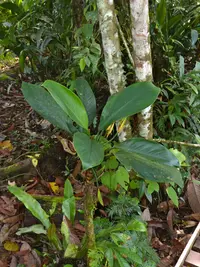
Tillandsia lorentziana Care

Tillandsia lorentziana

About Tillandsia lorentziana

Tillandsia lorentziana is an epiphytic air plant from the bromeliad family, usually found clinging to trees or rocks in parts of South America. It forms narrow, arching leaves covered in fine silvery hairs that help capture moisture and light, creating a soft, fuzzy appearance.

This species typically grows without soil and relies on good air movement and periodic wetting rather than constant moisture. It suits growers who can provide bright, indirect light and protection from frost. With its modest size and adaptable habits, it is considered manageable for beginners who want to learn how to care for Tillandsia lorentziana indoors or in protected outdoor spaces.

Main Plant Requirements

Care Difficulty

Moderate Care

Light Preference

Partial Shade

Water Requirements

Moderate Water

Temperature Preference

Tropical / Frost Sensitive

Hardiness Zone

10–12

Soil Texture

Rocky, Sandy, Organic-rich

Soil pH

Acidic (5.5–6.5), Slightly acidic (6.5–7.0)

Soil Drainage

Well-drained

Fertilization

Light (every 4–6 weeks)

Get Personalized Care Plan

Scan your plant to receive care tips personalized for your specific plant

Available on iOS and Android

How to Care for the Tillandsia lorentziana

This air plant prefers bright, indirect light that mimics bright forest or cliffside conditions.

  • Provide 6–8 hours of bright, filtered light daily; morning sun is fine, but protect Tillandsia lorentziana from harsh midday and afternoon sun.
  • Outdoors, place it where it receives dappled shade under a tree or shade cloth; indoors, use an east window or a bright spot near a south window with sheer curtain.
  • Watch color and leaf texture: pale, crispy tips indicate too much direct sun, while dark, limp, or elongated growth suggests insufficient light, especially in winter.

This species absorbs water through its leaves and depends on frequent but quick drying moisture.

  • Soak or thoroughly mist 2–3 times per week, allowing leaves to dry fully within 4 hours; increase frequency in hot, dry weather and reduce slightly in cool, humid conditions.
  • After soaking, shake off excess water and place the plant upside down or tilted so no water pools in the center, which reduces rot risk.
  • Signs of underwatering include curling, brittle leaves, while soft, darkened bases or a musty smell indicate overwatering and poor air movement.

This air plant prefers mild, frost-free conditions with steady warmth.

  • Aim for 65–80°F (18–27°C) for best growth, avoiding sudden temperature swings and very dry, heated air.
  • Protect it from cold; it is stressed below 45°F (7°C) and can be damaged or killed by frost, especially if wet overnight.
  • In hot spells above 90°F (32°C), increase air movement and watering frequency, but avoid placing the plant right next to heat sources or on scorching metal or stone surfaces.

This species prefers moderate humidity and reacts quickly to very dry air.

  • Aim for 50–70% humidity, as very dry indoor air leads to leaf tip browning and slowed growth.
  • Tolerates short dry spells if watered regularly, but extended exposure below 30% humidity causes leaf curling and a brittle feel.
  • Increase humidity by grouping plants, using a nearby tray with water and pebbles, or running a small humidifier during heating season.

Tillandsia lorentziana is an epiphyte and should never be planted in conventional potting soil.

  • Mount plants on cork, hardwood, or inert substrates using waterproof glue or ties, keeping the base exposed to air.
  • If a loose support medium is desired, use a very open mix such as large bark pieces, chunky charcoal, and coarse perlite with abundant air gaps.
  • Avoid peat-heavy or compact mixes that retain water around the base, which promote rot and anaerobic (oxygen-poor) conditions.
  • Rinse any chosen medium thoroughly and allow it to dry rapidly between waterings so moisture never stays trapped against the plant.

This species can be grown in containers if treated as a mounted or sitting epiphyte rather than a potted soil plant.

  • Use shallow, wide containers or mesh baskets that allow air flow around the entire plant and prevent moisture from pooling at the base.
  • Stabilize the plant with stones, wire, or hooks so it does not shift when misted or soaked, which can damage new growth.
  • Choose unglazed ceramic or wire containers when possible, as they dry faster and reduce the risk of persistent dampness around the plant.

This epiphytic air plant needs only light feeding to support healthy growth.

  • Use a low-dose, balanced NPK air-plant or orchid fertilizer diluted to 1⁄4–1⁄2 strength in water.
  • Mist or soak Tillandsia lorentziana with this solution every 3–4 weeks during the warm growing season.
  • Skip or reduce feeding to once in 6–8 weeks in winter or when growth slows.
  • Avoid heavy or granular fertilizers that can burn leaves or leave harmful residue.

Pruning focuses on cleaning and shaping, since the plant does not need structural cutting.

  • Best timing is after flowering or in early spring when new growth starts.
  • Gently remove dead, dried, or blackened leaves with clean scissors or by carefully tugging them free.
  • Trim spent flower spikes at the base once they fade to direct energy to pups and foliage.
  • Remove weak, badly damaged, or crowded offsets only if they shade the healthy central rosette.

This air plant is usually mounted rather than potted, so focus on remounting instead of classic repotting.

  • Remount when clumps outgrow the display, become unstable, or airflow is poor around the base.
  • Choose late spring to early summer so Tillandsia lorentziana can recover in warm, bright conditions.
  • Gently detach the plant, keeping roots and base intact, then tie or glue it onto new bark, cork, or inert decor.
  • Handle the base carefully, avoid burying it in substrate, and provide shaded, humid conditions for 1–2 weeks to limit stress.

Propagation relies mainly on offsets, with seed used for slow, long-term projects.

  • Allow pups to form around the mother plant and reach about 1⁄3–1⁄2 of its size before removal.
  • Detach offsets in spring or early summer using clean fingers or a sterile knife at the base junction.
  • Mount each pup on bark, cork, or wire, then keep in bright, indirect light with 50–70% humidity.
  • Seed germination needs very fine, moist but airy substrate, stable warmth, and patience, often taking many months.

This tropical epiphyte is sensitive to freezing temperatures and needs managed indoor conditions in winter.

  • Move outdoor plants indoors before temperatures drop near 40°F, using bright, indirect light.
  • Maintain indoor temperatures around 60–75°F with good air circulation and moderate humidity.
  • Reduce watering frequency, letting leaves dry fully within 4 hours after misting or soaking.
  • Avoid cold drafts from windows or doors and keep the plant away from heating vents.

Care Tips

Optimize air movement

Place plants where there is gentle, consistent air circulation (near an open window, ceiling fan on low, or a ventilated shelf) to dry foliage within 2–3 hours after misting or soaking and reduce rot risk.

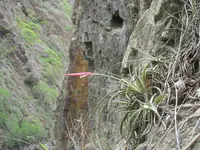
Use mounting anchors

Attach plants to cork bark, hardwood, or inert mounts with soft wire, fishing line, or elastic horticultural ties, leaving a small gap at the base so air can flow freely around the stem and new roots can grip naturally.

Seasonal light shifting

Shift mounts a little farther from south- or west-facing windows in summer and closer in winter to maintain bright, filtered light without exposing the leaves to prolonged, high-intensity midday sun that can cause leaf scorching.

Rinse after handling

After heavy handling, repotting-style work, or bringing new plants home, thoroughly rinse the foliage with room-temperature water to remove skin oils, dust, and debris and to dislodge any early pests before they establish.

Quarantine new plants

Keep newly acquired plants on a separate mount or shelf for 2–3 weeks, inspecting weekly for scale, mealybugs, or mites so any infestation is treated before caring for Tillandsia lorentziana in a mixed display.

Common Pests and Diseases

Scale insects

These insects attach to leaves and leaf bases, sucking sap and causing yellowing, slowed growth, and sticky honeydew that can support sooty mold. Infestations often hide in the overlapping leaf sheaths typical for this species.

Solution

Remove affected plants from any display, then gently pry off visible scale with a cotton swab dipped in isopropyl alcohol, paying special attention to leaf bases and the inner whorl. Rinse the plant under a firm, lukewarm water stream, improve air movement, and repeat alcohol spot-treatments weekly until no new scale appears.

Mealybugs

This pest appears as white, cottony clusters in the leaf axils and on the underside of leaves, where it feeds on sap and weakens the plant. Honeydew may lead to black sooty mold, especially in dense air plant displays with limited airflow.

Solution

Quarantine the plant, then thoroughly rinse it under running water, focusing on tight leaf overlaps. Spot-treat remaining mealybugs with a cotton swab dipped in 70% isopropyl alcohol, allow the plant to dry quickly in bright, airy conditions, and repeat inspection and treatment every few days until the infestation ends.

Fungal leaf spot

This disease causes small, water-soaked or brown spots that can merge into irregular patches, often appearing after long periods of leaf wetness or poor air circulation. Symptoms include dull, blemished foliage and slow decline in vigor.

Solution

Improve air circulation, shorten soaking times, and always let the plant dry fully within a few hours after watering, especially around the leaf bases. Trim off badly spotted leaves with clean scissors, avoid overhead misting in stagnant air, and, if the problem persists, apply a light foliar spray of a broad-spectrum fungicide labeled safe for bromeliads while keeping the plant out of direct sun until dry.

Bacterial soft rot

This disease leads to soft, mushy, foul-smelling tissue starting deep in the rosette or at the base where water pools. Symptoms include collapse of the central leaves and rapid breakdown of the surrounding tissues.

Solution

Discard severely affected plants, as bacterial rot spreads quickly inside the rosette. For mild cases, cut away all soft tissue with sterile tools, let the plant dry in a warm, very airy place, and prevent recurrence by avoiding water sitting in the center for long periods and by ensuring the plant dries fully after each soak, which is central to proper Tillandsia lorentziana care instructions.

Interesting Facts

High-altitude specialist

This species is native to montane regions of Bolivia and Argentina, where it often grows on trees or rocks at relatively high elevations with strong light and cool nights.

Narrow, arching leaves

It forms elegant rosettes of long, narrow, slightly arching leaves with fine trichomes (microscopic scales) that give the foliage a gray‑green, slightly silky appearance adapted to intercept moisture from fog and passing air.

Long-lasting inflorescence

Mature plants produce an upright, branched flower spike with pink to reddish bracts and violet flowers; the inflorescence can remain ornamental for an extended period in its native habitat before gradually drying.

FAQs about Tillandsia lorentziana

Lack of bright light, insufficient air movement, or irregular hydration often delays flowering. Plants also need maturity; younger offsets may take several years. A stable routine and good light are key for growing Tillandsia lorentziana successfully.

Grow Healthy Plants with Botan Care

Keep your plants happy and healthy with plant identification, disease detection, and easy care guidance.

Botan plant care app — identify plants on mobile

Explore More Plants