swamp fire Care (Tillandsia multicaulis)

swamp fire

About swamp fire

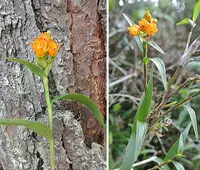
Swamp fire, Tillandsia multicaulis, is an epiphytic bromeliad that usually grows attached to trees rather than in soil. It forms clumps of narrow, arching leaves and can produce bright, colorful flower spikes.

In the wild, it occurs in humid forests of Central America, where it benefits from good air movement and regular moisture from rain and mist. The plant absorbs water and nutrients mainly through specialized leaf scales, which makes it relatively low-maintenance when airflow and humidity are adequate.

Because it does not rely on potting soil and tolerates a range of indoor conditions, many growers find it straightforward to care for swamp fire once its light and moisture needs are understood.

Main Plant Requirements

Care Difficulty

Moderate Care

Light Preference

Bright Indirect Light

Water Requirements

Moderate Water

Temperature Preference

Tropical / Frost Sensitive

Hardiness Zone

10–12

Soil Texture

Rocky, Organic-rich

Soil pH

Acidic (5.5–6.5)

Soil Drainage

Well-drained

Fertilization

Light (every 4–6 weeks)

Get Personalized Care Plan

Scan your plant to receive care tips personalized for your specific plant

Available on iOS and Android

How to Care for the swamp fire

Tillandsia multicaulis needs bright, indirect light that mimics high, filtered canopy conditions.

  • Provide 6–8 hours of bright, filtered light daily, such as dappled shade under a tree or 1–3 hours of gentle morning sun.
  • Protect from harsh midday and afternoon sun, which can scorch leaves and fade the red tones often seen on swamp fire forms.
  • In summer, increase distance from hot windows or reflective walls; in winter, move closer to bright windows or use supplemental grow lights.

This epiphytic air plant absorbs water through its leaves and dries best with strong air movement.

  • Soak or thoroughly mist 2–3 times per week in warm seasons, allowing leaves to dry fully within 2–4 hours after each watering.
  • In cooler months, reduce to about 1–2 waterings per week and extend drying time between soakings to prevent rot at the leaf bases.
  • Signs of underwatering include curling, brittle leaf tips, while overwatering shows as soft, darkening bases on Tillandsia multicaulis rosettes.

This species prefers consistently warm, frost-free conditions similar to a subtropical climate.

  • Aim for 65–80°F (18–27°C) for best growth, with good air circulation around the leaves at all times.
  • Protect from cold; growth slows below 55°F (13°C) and tissue damage can occur near 40°F (4°C), especially with moisture on the leaves.
  • It tolerates short heat spells up to about 90–95°F (32–35°C) if shade, extra air movement, and more frequent watering are provided during hot periods.

This epiphytic plant prefers moderate to high air humidity to keep its leaf scales functioning well.

  • Aim for 50–70% humidity, using a hygrometer to avoid air that is too dry indoors.
  • It tolerates brief dips to 30–40%, but swamp fire dries quickly and then needs more frequent misting or rinsing.
  • Curling, browning leaf tips, and slow growth indicate humidity stress; boost levels with grouped plants, pebble trays, or a nearby humidifier.

Tillandsia multicaulis does not grow in conventional potting soil and instead needs an open, soil-free mounting medium.

  • Use a loose mix such as orchid bark, cork, or tree fern fiber, allowing the plant to sit on or be tied to the surface rather than buried.
  • Ensure extreme drainage and high aeration by keeping the crown above any retained moisture so water runs off within minutes.
  • If placing in a decorative container, fill with large chunks of bark, lava rock, or gravel to hold the plant while leaving wide air gaps.
  • Avoid peat-heavy mixes, standard potting soil, or compact materials that trap water around the base, which encourages rot.

This species is suitable for container display as long as the container is used as a support, not as a traditional pot with soil.

  • Choose shallow or open-sided containers so air circulates freely around the leaves and base of the plant.
  • Stabilize top-heavy clumps by wedging the base between large pieces of bark, rock, or gravel rather than packing material tightly.
  • Use non-porous containers only if there are large ventilation openings; otherwise, prefer breathable materials that avoid stagnant, humid pockets.

Tillandsia multicaulis benefits from light, occasional feeding to support foliage color and flowering.

  • Use a balanced water-soluble air plant fertilizer or very dilute balanced NPK (around 1⁄4 strength).
  • Feed every 4–6 weeks in the growing season while plants are actively producing new leaves or offsets, caring for swamp fire with restraint.
  • Mist or soak plants in the fertilizer solution, then allow excess to drain and dry quickly.
  • Reduce feeding to 1 light application or none in winter when growth is slow.

Pruning needs for Tillandsia multicaulis are minimal and focus on cleanliness rather than reshaping.

  • Trim completely dry or brown leaves at the base using clean, sharp scissors or small snips.
  • Remove spent flower spikes once fully faded to direct energy into new offsets and overall vigor.
  • Gently thin crowded or shading offsets only if air circulation is poor around the clump.
  • Handle plants carefully during pruning to avoid bruising the leaves, which can lead to rot.

Tillandsia multicaulis is usually mounted or placed loosely rather than potted, so transplanting focuses on repositioning rather than root disturbance.

  • Move or remount when plants outgrow their support, shade each other heavily, or airflow becomes restricted.
  • Best timing is spring to early summer, when light and humidity favor recovery and renewed growth.
  • Typical intervals are every 2–3 years, or when the clump becomes unstable or difficult to handle.
  • During transplanting, loosen old ties, gently separate offsets if desired, then secure plants to new mounts without burying the base.

Propagation of Tillandsia multicaulis is most practical through offsets that form around the mother plant after flowering.

  • Allow pups to reach about 1⁄3–1⁄2 the size of the parent before removing for best survival.
  • Separate offsets in spring or early summer, when warmth and longer days support new root and leaf growth.
  • Twist or gently pull pups away at the base, keeping the growing point intact, then attach to a mount or place in a porous holder.
  • Provide bright, indirect light, good air movement, and slightly increased humidity to encourage establishment after division.

Tillandsia multicaulis is not frost hardy and requires specific winter care in cold climates.

  • Keep plants above 40°F; aim for 55–70°F indoors during winter months.
  • Move mounted or container plants indoors before the first frost in USDA zones colder than 10.
  • Place in bright, indirect light away from cold drafts, heater vents, or very dry air sources.
  • Allow leaves to dry fully within a few hours after misting to minimize rot in cool conditions.

Care Tips

Optimize air circulation

Mount plants on open, airy surfaces like wire, cork, or hardwood and space them at least 5–8 cm apart to reduce moisture lingering in leaf bases and lower the risk of rot or fungal issues.

Secure but flexible mounting

Use soft plant ties, fishing line, or coated wire to attach the plant firmly while allowing the base to expand, and check mounts every 3–6 months so roots and offsets are not constricted.

Manage offset clusters

After flowering, allow 2–3 pups to form into a small clump, then remove and remount extra offsets with a sterile blade to maintain good airflow and prevent the cluster from becoming too dense and shaded inside.

Seasonal light repositioning

Shift mounted plants closer to a bright window or under grow lights in late autumn and winter, then move them slightly back from harsh exposures in summer to keep growth compact and avoid leaf scorch.

Targeted pest checks

Inspect leaf bases, the underside of lower leaves, and mounting crevices every few weeks, and at the first sign of mealybugs or scale, remove affected parts and treat the plant off its mount with a light application of insecticidal soap before remounting to support long-term Tillandsia multicaulis plant care.

Common Pests and Diseases

Mealybugs

This pest feeds in sheltered spots at the leaf bases and in the tight rosettes, sucking sap and causing yellowing, stunting, and distorted growth. Symptoms include white, cottony clusters tucked deep between leaves where air movement is low.

Solution

Remove affected plants from nearby air plants, then flush the rosettes thoroughly under a strong but gentle stream of water, repeating weekly until no insects remain. Allow the plant to dry upside down, then spot-treat hidden clusters with a cotton swab dipped in isopropyl alcohol, and improve air circulation and reduce excess fertilizer to make Tillandsia multicaulis care less favorable for reinfestation.

Scale insects

These insects attach to the tougher leaf sheaths and bases, appearing as small brown or tan bumps that do not rub off easily. Symptoms include patchy yellowing and a sticky residue from honeydew on the leaves or mounting surface.

Solution

Isolate the plant, then carefully scrape or rub off individual scales with a cotton swab or soft toothbrush while supporting the leaves. Rinse the plant well, let it dry in bright, airy conditions, and repeat mechanical removal every 7–10 days until no new scale appears, avoiding heavy oil-based sprays that can suffocate the leaves in low-airflow setups.

Fungal leaf spot

This disease appears as small water-soaked spots that turn brown or black on older leaves, often starting where water sits in low-light, poorly ventilated conditions. Symptoms include slowly enlarging spots that may coalesce and cause localized tissue collapse.

Solution

Trim out badly spotted leaves with sterile scissors and discard them, then adjust watering so the plant dries within a few hours after soaking or misting. Increase airflow and light, and if spots continue to spread, use a low-residue fungicide labeled for ornamentals applied lightly, ensuring the plant dries thoroughly afterward.

Bacterial rot

This disease starts deep in the rosette where water stagnates, causing a soft, foul-smelling base and leaves that detach easily. Symptoms include rapid collapse of central leaves and dark, wet lesions at the leaf bases.

Solution

Remove and discard any plants with advanced rot, as recovery is unlikely and the infection can spread to nearby air plants. For very early symptoms, cut out affected tissue with sterile tools, allow the plant to dry completely in bright, airy conditions, and avoid soaking the plant; switch to light misting that dries quickly and never leave water sitting in the central rosette.

Interesting Facts

Swamp fire coloration

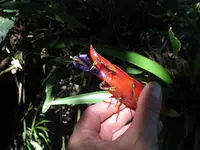
This species is popularly called swamp fire because its inflorescences develop bright red to orange bracts that contrast strongly with the blue to violet flowers, giving the appearance of a small flame emerging from the foliage.

Clustered growth habit

Instead of forming a single rosette, it typically grows in multi-stemmed clumps, with several flowering spikes arising from a shared base, which is the origin of the name multicaulis meaning many stems.

Fog and cloud adaptation

Native to humid, high-elevation cloud forests of Mexico and Central America, it is adapted to capture moisture directly from fog and mist with specialized leaf scales called trichomes that rapidly absorb water over the leaf surface.

Botan icon

Did you know?

In parts of its native range, this species often anchors itself on tree branches alongside mosses and orchids in relatively cool, shaded cloud-forest canopies, forming part of complex epiphyte communities that significantly increase habitat structure and moisture retention for small invertebrates and other organisms.

FAQs about swamp fire

Lack of strong light, insufficient air movement, or no temperature drop between day and night are common reasons. A mature plant also needs regular, balanced feeding and good hydration to build enough energy to flower well.

Grow Healthy Plants with Botan Care

Keep your plants happy and healthy with plant identification, disease detection, and easy care guidance.

Botan plant care app — identify plants on mobile

Explore More Plants