Shell ginger Care (Alpinia zerumbet)

Also known as: Shell ginger, Shell-flower
Shell ginger

About Shell ginger

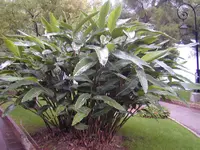
Shell ginger, Alpinia zerumbet, is a tropical rhizomatous perennial from the ginger family, grown mainly for its bold foliage and showy flowers. It forms dense clumps of upright canes with long, arching leaves and drooping clusters of pink and white, shell-like buds that open to yellow, red-marked flowers.

In nature it occurs in warm, humid regions of East Asia and the Pacific, often in partial shade at forest edges or gardens. The plant prefers consistently moist, well-drained soil and sheltered, bright conditions, which makes it moderately easy to grow where temperatures stay warm.

Gardeners who learn how to care for Shell ginger usually find it reliable, provided it is protected from cold and given enough light and moisture.

Main Plant Requirements

Care Difficulty

Moderate Care

Light Preference

Partial Shade

Water Requirements

Regular Water

Temperature Preference

Tropical / Frost Sensitive

Hardiness Zone

9–11

Soil Texture

Loamy, Sandy, Organic-rich

Soil pH

Acidic (5.5–6.5), Slightly acidic (6.5–7.0)

Soil Drainage

Moist but well-drained

Fertilization

Moderate (every 2–4 weeks)

Get Personalized Care Plan

Scan your plant to receive care tips personalized for your specific plant

Available on iOS and Android

How to Care for the Shell ginger

Alpinia zerumbet prefers bright, gentle light that mimics dappled tropical sun.

  • Provide 3–5 hours of morning sun with bright, filtered light the rest of the day; avoid harsh, direct afternoon sun, especially in hot summers.
  • Tolerates partial shade, but in very dense shade Shell ginger produces fewer flowers, longer weak stems, and duller foliage.
  • In hot climates, shift plants to more shade in midsummer to prevent leaf scorch; in cooler regions, choose a spot with more direct sun to support strong growth.

This species prefers evenly moist, never soggy soil and reacts quickly to extremes in watering.

  • Water when the top 3–5 cm of soil feels dry, aiming for consistently damp soil around the root zone without standing water.
  • Use rich, well‑draining soil; signs of overwatering include yellowing lower leaves, soft stems, and a sour smell, while crisp leaf edges and curling leaves signal underwatering.
  • Reduce watering in cool seasons when growth slows, but do not allow complete drying, as Alpinia zerumbet has shallow roots that stress quickly.

This ginger thrives in warm, frost‑free conditions with only moderate temperature swings.

  • Ideal growth occurs at 65–85°F (18–29°C), supporting active foliage and flower production through the growing season.
  • Tolerates brief drops to about 40°F (4°C), but foliage damage starts near 32°F (0°C) and repeated frosts can kill the rhizomes without mulch protection.
  • Handles short heat waves up to 95°F (35°C) if soil moisture is maintained and the site has some afternoon shade, especially during dry, windy periods.

This species prefers moderate to high humidity and reacts quickly to very dry air.

  • Aim for 50–70% humidity for Shell ginger, as prolonged levels below 40% often slow growth and crisp leaf tips.
  • Watch for brown, curling leaf edges and rolled or drooping foliage as signs of humidity stress rather than underwatering.
  • Increase humidity with a nearby humidifier, grouped plants, or a wide pebble tray under the pot, but avoid misting that keeps leaves wet for long periods.

This rhizomatous plant prefers deep, moist, well-aerated soil that drains freely yet holds consistent moisture.

  • Use a loose, loamy mix based on peat or coco coir with added compost to provide organic matter and steady moisture for Alpinia zerumbet.
  • Improve drainage and aeration by blending 20–30% perlite or coarse sand so water moves through without leaving the root zone waterlogged.
  • Aim for slightly acidic to neutral pH around 6.0–7.0, avoiding strongly alkaline soils that can reduce nutrient availability and cause chlorosis.
  • Avoid heavy clay, compacted ground, or mixes that stay soggy; amend dense soils with coarse bark, perlite, and organic matter before planting.

This species adapts well to container growing when the pot supports its tall, clumping growth.

  • Choose a wide, heavy container to counterbalance tall foliage and prevent the pot from tipping in wind or on balconies.
  • Select a pot deep enough to accommodate thick rhizomes and spreading roots, leaving room for several new shoots to emerge.
  • Use a container material that matches your climate: terracotta for faster drying in humid areas, or glazed/plastic to retain moisture in hot, dry conditions.

Alpinia zerumbet benefits from moderate feeding to support lush foliage and flowering during the warm season.

  • Use a balanced, water-soluble fertilizer (such as 10-10-10 or 20-20-20) at 1/2 strength every 4–6 weeks in spring and summer.
  • Alternatively, top-dress with a thin layer of compost or apply a slow-release granular fertilizer at the start of the growing season.
  • Rinse soil with plain water once or twice during summer to reduce salt buildup from fertilizers.
  • In fall and winter, stop feeding Shell ginger or reduce to very light applications if growth continues indoors.

Pruning Alpinia zerumbet focuses on tidying clumps and encouraging fresh, vigorous canes.

  • Best timing is late winter to early spring, before strong new growth begins.
  • Cut dead, diseased, or frost-damaged canes to ground level using clean, sharp pruners.
  • Thin out the oldest or most crowded stems to open the clump and improve air flow, which supports healthier foliage.
  • After flowering, remove spent flower stalks to keep the plant neat and direct energy into new shoots.

Transplanting or repotting Alpinia zerumbet helps manage clump size and maintain strong growth in containers or beds.

  • Look for roots circling the pot, pushing from drainage holes, or noticeably slower growth as signs it needs a larger container.
  • Plan to repot container plants every 2–3 years in spring, when active growth resumes and recovery is fastest.
  • Choose a pot 2–5 cm wider with well-draining, rich mix; handle rhizomes gently and spread roots out when replanting.
  • Water thoroughly after moving, keep in bright shade for 3–7 days, and maintain even moisture to reduce root stress while it re-establishes.

Alpinia zerumbet is most commonly propagated by division of its rhizomes rather than by seed.

  • Divide mature clumps in spring or early summer, when soil is warm and shoots are actively growing.
  • Lift the clump, then cut rhizomes into sections with 2–3 healthy shoots and a good root portion using a clean knife or saw.
  • Replant divisions at the same depth in loose, well-drained soil, firm gently, and water thoroughly to settle roots.
  • Keep new divisions in bright, indirect light with consistently moist, not waterlogged, soil until strong new growth appears.

Cold sensitivity means Alpinia zerumbet needs some winter protection in climates with freezing temperatures.

  • In USDA zones 9–11, the plant usually overwinters in the ground with minimal damage, especially in sheltered spots.
  • In cooler regions, add a 5–10 cm layer of mulch over the root zone to insulate rhizomes from short frosts.
  • Move container plants indoors before temperatures drop near 40°F, placing them in bright light and slightly reduced watering.
  • After hard frost, cut back browned stems in late winter, leaving any still-green canes to support spring regrowth.

Care Tips

Wind protection

In exposed gardens, install a low, porous windbreak or plant Shell ginger behind a fence or shrub border to prevent leaf shredding and reduce water stress from strong winds.

Clump renewal

Every 3–4 years, lift and divide the congested rhizomes in late spring, discarding woody, exhausted centers and replanting only the plump, actively growing pieces to keep the clump vigorous and flowering well.

Mulch management

Maintain a 5–8 cm layer of organic mulch around, but not touching, the stems to cool the root zone and suppress weeds, and rake it back slightly in cooler regions at the start of spring to let the soil warm faster.

Container anchoring

For tall plants in pots, choose a wide, heavy container and add a thin layer of coarse gravel at the bottom to lower the center of gravity and prevent the top-heavy clump from tipping in wind.

Cold-season handling

In regions with light frost, cut back frost-damaged canes to live tissue and leave the leaf litter or add extra mulch over the root zone through winter so rhizomes survive to resprout, which is key for caring for Shell ginger long term.

Common Pests and Diseases

Spider mites

This pest feeds on leaf sap, leading to stippled, dull foliage and fine webbing on the undersides of shell ginger leaves, especially in dry, warm conditions. Symptoms include gradual yellowing and reduced vigor.

Solution

Rinse foliage thoroughly with a strong but gentle stream of water, including the undersides of leaves, and repeat every few days until populations drop. Increase humidity, isolate heavily infested plants, and use insecticidal soap or horticultural oil according to label directions for targeted Alpinia zerumbet care.

Leaf spot

This disease produces small water-soaked or brown lesions that may enlarge, merge, and cause sections of the shell ginger leaf to yellow and die. Symptoms include irregular dark spots often surrounded by a yellow halo, especially in overcrowded or poorly ventilated plantings.

Solution

Remove and discard affected leaves, avoid overhead watering, and space plants to improve airflow and leaf drying. If spotting continues to spread, apply a copper-based or other labeled ornamental fungicide, following directions carefully and keeping foliage dry between waterings when possible.

Bacterial wilt

This disease causes sudden wilting and yellowing of leaves, often starting on one side of the plant, even when soil is moist. Symptoms include rapid collapse of canes and dark, discolored vascular tissue inside stems.

Solution

Remove and destroy affected canes and any severely infected clumps, and avoid replanting shell ginger in the same soil for several years. Disinfect cutting tools between plants, improve drainage, and avoid waterlogged conditions that favor bacterial spread.

Rhizome soft rot

This disease affects the underground rhizomes, which become soft, water-soaked, and foul-smelling, leading to yellowing foliage and plant collapse. Symptoms include poor new growth, stunted canes, and brown, mushy tissue when rhizomes are inspected.

Solution

Dig up affected plants, cut away all soft or discolored rhizome sections, and discard them rather than composting. Replant only firm, healthy pieces in well-draining soil, reduce watering until new growth establishes, and avoid planting too deeply or in sites that stay saturated.

Mealybugs

These insects cluster in leaf sheaths and along stems, sucking sap and excreting sticky honeydew that can support sooty mold growth. Symptoms include yellowing foliage, distorted new growth, and white cottony masses at leaf bases or on rhizome crowns.

Solution

Wipe visible pests with cotton swabs dipped in isopropyl alcohol and rinse foliage with water to remove honeydew. For larger infestations, use insecticidal soap or horticultural oil, repeating every 7–10 days as needed and inspecting regularly at leaf bases and along the pseudostems.

Interesting Facts

Shell-like flower buds

The plant forms drooping clusters of waxy flower buds that resemble strings of small sea shells, which open to reveal white petals with a yellow and pink throat.

Distinct variegated foliage

The widely grown cultivar 'Variegata' has bright green leaves streaked with creamy yellow, a stable variegation pattern that makes it popular as an ornamental in subtropical and tropical landscapes.

Warm-climate understory species

In its native range in East Asia and the Western Pacific, this species often grows as an understory herb in warm, humid forests, where it receives filtered light rather than full sun.

Botan icon

Did you know?

In parts of Okinawa, Japan, large leaves of this species are traditionally used to wrap and steam a local rice cake called muchi, taking advantage of the leaves’ size, flexibility, and mild aromatic properties.

FAQs about Shell ginger

Lack of flowers usually comes from immature age, insufficient warmth, or heavy pruning. This species often needs 2–3 years, consistently warm conditions, and older canes left uncut, because flower spikes form on mature stems, not new shoots.

Grow Healthy Plants with Botan Care

Keep your plants happy and healthy with plant identification, disease detection, and easy care guidance.

Botan plant care app — identify plants on mobile

Explore More Plants