Elephant's Ear Care (Alocasia reginula 'Black Velvet')

Elephant's Ear

About Elephant's Ear

Elephant's ear Alocasia reginula 'Black Velvet' is a compact tropical aroid grown mainly for its dramatic foliage. It stays small, making it suitable for indoor spaces and shelves.

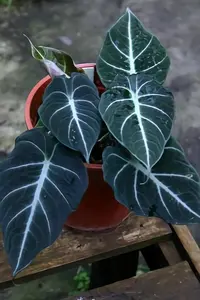
The plant has thick, almost black, velvety leaves with striking silver-white veins and a low, clumping growth habit. It comes from humid forest floors in Borneo, where it grows in shaded, protected spots.

Its slow growth, preference for stable warmth, and need for evenly moist but airy soil make it moderately demanding rather than beginner-easy. Understanding how to care for Elephant's Ear improves long-term success, especially with light and watering balance.

Main Plant Requirements

Care Difficulty

Moderate Care

Light Preference

Bright Indirect Light

Water Requirements

Keep Soil Moist

Temperature Preference

Tropical / Frost Sensitive

Hardiness Zone

10–11

Soil Texture

Loamy, Peaty, Organic-rich

Soil pH

Acidic (5.5–6.5), Slightly acidic (6.5–7.0)

Soil Drainage

Moist but well-drained

Fertilization

Light (every 4–6 weeks)

Get Personalized Care Plan

Scan your plant to receive care tips personalized for your specific plant

Available on iOS and Android

How to Care for the Elephant's Ear

This species prefers bright, filtered light that mimics a forest understory.

  • Provide 6–8 hours of bright, indirect light each day; morning sun through an east window or shaded patio is ideal for Elephant's Ear.
  • Avoid harsh midday and afternoon sun, which can cause silver veins to fade and leaf scorch; use sheer curtains or position behind taller plants outdoors.
  • Tolerates partial shade, but growth slows and leaves shrink in very low light; move slightly closer to the light source in winter to compensate for shorter days.

Alocasia reginula 'Black Velvet' needs evenly moist but not waterlogged soil.

  • Water when the top 2–3 cm of soil feels dry; in active growth this may be every 5–10 days, but rely on touch rather than a fixed schedule.
  • Use a sharply draining mix and a container or bed that sheds excess water quickly; persistent soggy soil leads to yellowing leaves and root rot.
  • Reduce watering in cooler months when growth slows, watching for drooping, curling leaves as a sign of underwatering and mushy stems as a sign of overwatering.

This plant prefers warm, stable conditions without sudden temperature swings.

  • Aim for 70–80°F (21–27°C) for best growth; short periods at 65–70°F (18–21°C) are acceptable but may slow new leaves.
  • Protect from cold; growth stops below about 60°F (16°C), and prolonged exposure below 55°F (13°C) can cause leaf loss, especially with wet soil.
  • Never expose to frost; move plants indoors or to shelter before temperatures approach 40°F (4°C), and provide shade and extra humidity during heat above 85°F (29°C) to prevent stress.

Alocasia reginula 'Black Velvet' requires consistently high humidity for stable growth.

  • Aim for 60–80% humidity; growth slows and leaves dull in drier rooms.
  • In dry air, leaf edges may brown, curl, or develop small crispy patches between veins.
  • Increase humidity with a nearby humidifier, clustered plants, or a pebble tray, but avoid misting that leaves water sitting on foliage.

Alocasia reginula 'Black Velvet' needs a loose, airy, organic-rich mix that drains rapidly yet holds gentle, even moisture.

  • Use roughly 40% peat or coco coir, 30% fine bark, 20% perlite or pumice, and 10% compost for structure and nutrients.
  • Aim for slightly acidic to neutral pH around 5.8–6.8 to support nutrient availability and root health.
  • Ensure the mix feels springy and chunky, so roots get oxygen and water moves through without forming soggy pockets.
  • Avoid heavy garden soil, pure potting compost, or mixes that stay wet for more than 2–3 days after watering.

This compact species is very suitable for container growing.

  • Choose a snug but not tight pot so the shallow root system can anchor without leaving a large, constantly wet soil mass.
  • Select a stable, heavier container if the foliage makes the plant top-heavy, especially in taller decorative covers.
  • Use a pot material that matches your watering style, such as terracotta to dry faster or plastic/ceramic to retain more moisture.

Alocasia reginula 'Black Velvet' benefits from light, consistent feeding during its active growing season.

  • Use a balanced liquid fertilizer (such as 10-10-10 or 20-20-20) diluted to 25–50% strength every 4–6 weeks in spring and summer.
  • Alternatively, use a small amount of slow-release fertilizer in early spring for compact Elephant's Ear indoor care.
  • Skip feeding in late fall and winter when growth slows or dormancy starts.
  • Apply to moist soil only, avoiding contact with leaves, to reduce root and leaf burn risk.

Pruning needs for Alocasia reginula 'Black Velvet' are minimal and focus on cleanliness and plant health.

  • Carry out light pruning during active growth in spring or summer so wounds heal quickly.
  • Remove yellowing, dead, or damaged leaves at the base with clean, sharp scissors or pruners.
  • Cut back crowded or crossing stems to improve airflow and reduce fungal issues.
  • Disinfect tools before and after use to limit spread of pests and diseases.

This compact Alocasia prefers slightly snug pots and only needs repotting when clearly root bound.

  • Repot every 2–3 years or when roots circle the pot, push through drainage holes, or growth slows noticeably.
  • Plan repotting for spring, just as new growth begins, to support recovery and renewed root growth.
  • Move up only 2–5 cm in pot diameter and use a well-drained aroid mix to prevent waterlogging.
  • Handle roots gently, keep the original soil ball mostly intact, water lightly, and keep humidity high for 1–2 weeks after repotting.

New plants are most reliably produced by division of Alocasia reginula 'Black Velvet' rhizomes or offsets.

  • Divide clumps in spring or early summer when repotting, choosing sections with at least 1 healthy growth point and several roots.
  • Gently separate or cut rhizomes with a sterile knife, then dust cut surfaces with sulfur or cinnamon to reduce rot.
  • Pot divisions in a small container with airy, moist but not wet mix, and keep humidity at 60–70%.
  • Provide warm conditions around 70–80°F and bright, indirect light until new leaves confirm successful establishment.

This tropical Alocasia is frost-sensitive and needs warm, protected conditions during winter in most climates.

  • Bring container plants indoors before temperatures drop below 55°F, placing them in bright, indirect light.
  • Maintain indoor temperatures around 65–75°F and keep soil slightly drier, never fully dry or soggy.
  • Do not fertilize in winter; resume feeding only when new growth appears in spring.
  • Increase ambient humidity with trays or humidifiers and keep the plant away from drafts, heaters, and cold windows.

Care Tips

Acclimate After Purchase

After bringing the plant home, keep it in its nursery pot for 2–3 weeks to let roots adjust to new light and humidity before repotting or changing its location.

Use Clear Pest Check

Place the pot on a light-colored saucer and wipe leaves weekly so tiny pests like spider mites or thrips are easier to spot early against clean surfaces.

Rotate For Even Growth

Turn the pot 90° every 1–2 weeks so new leaves develop evenly and the plant does not lean strongly toward one side of the light source.

Winter Root Protection

In cooler months, place the pot on a wooden board or insulating mat instead of directly on cold windowsills or tile floors to prevent root stress from cold surfaces.

Quarantine New Plants

Keep any new plants at least 1–2 m away for 2–3 weeks and inspect them closely before placing them nearby, which helps prevent pest spread when caring for Elephant's Ear.

Common Pests and Diseases

Spider mites

This pest thrives in warm, dry indoor air and feeds on the underside of leaves, causing tiny yellow specks and dull, rough-looking foliage. Symptoms include fine webbing between petioles and leaves, especially on stressed plants.

Solution

Rinse foliage thoroughly with lukewarm water, focusing on leaf undersides, then wipe leaves with a soft cloth. For ongoing control, use a neem oil or insecticidal soap spray every 5–7 days for several cycles and raise humidity to 60–70% while improving air movement around the plant.

Root rot

This disease develops when the plant is kept in consistently wet, poorly aerated potting mix, leading to black, mushy roots and collapsing leaves. Symptoms include yellowing foliage that does not recover after watering and a sour smell from the soil.

Solution

Remove the plant from its pot, trim all soft, dark roots, and repot in a fresh, chunky aroid mix that drains quickly. Allow the top 3–4 cm of soil to dry between waterings, use a pot with drainage holes, and keep the plant slightly on the drier side, as recommended in detailed Alocasia reginula 'Black Velvet' plant care guidelines.

Rhizome rot

This disease affects the thickened stem base below the soil line, often after cold, wet conditions or heavy watering during dormancy. Symptoms include a soft, foul-smelling rhizome and sudden leaf collapse while the potting mix remains wet.

Solution

Unpot the plant, cut away all mushy rhizome tissue with a sterile tool, and dust the remaining healthy sections with a fungicidal powder or ground cinnamon. Repot in a fresh, airy mix, water lightly until new growth appears, and avoid watering when soil is cool and the plant is not actively growing.

Leaf spot (fungal or bacterial)

This disease causes small water-soaked or brown spots that may enlarge, sometimes with a yellow halo, especially in plants kept with wet leaves and poor airflow. Symptoms include patchy, disfigured foliage that may eventually yellow and die back.

Solution

Remove and discard affected leaves, avoid splashing water on the foliage, and water only at the soil level. Improve air circulation, reduce overcrowding with other plants, and if spotting continues, apply a copper-based or broad-spectrum fungicide according to the label while keeping leaves dry.

Mealybugs

These insects hide in leaf axils and along veins, appearing as small white cottony clusters that suck sap and weaken the plant. Symptoms include sticky honeydew, distorted new growth, and slow decline if left untreated.

Solution

Physically remove visible insects with a cotton swab dipped in 70% isopropyl alcohol, then wipe leaves and petioles thoroughly. Follow up with repeated applications of insecticidal soap or neem oil every 7–10 days and isolate the plant from others until no new mealybugs appear.

Interesting Facts

Naturally miniature foliage

This species stays naturally compact, with mature leaves often remaining under 15 cm long, unlike many other Alocasia that form large, towering foliage.

Velvety, light-absorbing leaves

Its leaf surface is covered with fine, short hairs that scatter light, creating a matte, velvety look and making the silvery veins appear more pronounced.

Contrasting silver venation

The pale, metallic-looking veins sit slightly raised above the dark leaf blade, a structural contrast that helps visually emphasize the leaf’s main vascular network.

Botan icon

Did you know?

Alocasia reginula was originally described from Borneo, where it grows as a small understory plant on the forest floor, adapted to filtered light under dense tropical canopy rather than open, sunlit habitats.

FAQs about Elephant's Ear

Crispy brown edges usually come from low humidity, underwatering, or fertilizer burn. Check that the pot drains well, flush excess salts occasionally, and maintain moderate, stable humidity to prevent further leaf damage on new growth.

Grow Healthy Plants with Botan Care

Keep your plants happy and healthy with plant identification, disease detection, and easy care guidance.

Botan plant care app — identify plants on mobile

Explore More Plants